Oregon Wild Blog
Oregon Wild Blog RSSLookout for that Old-Growth!
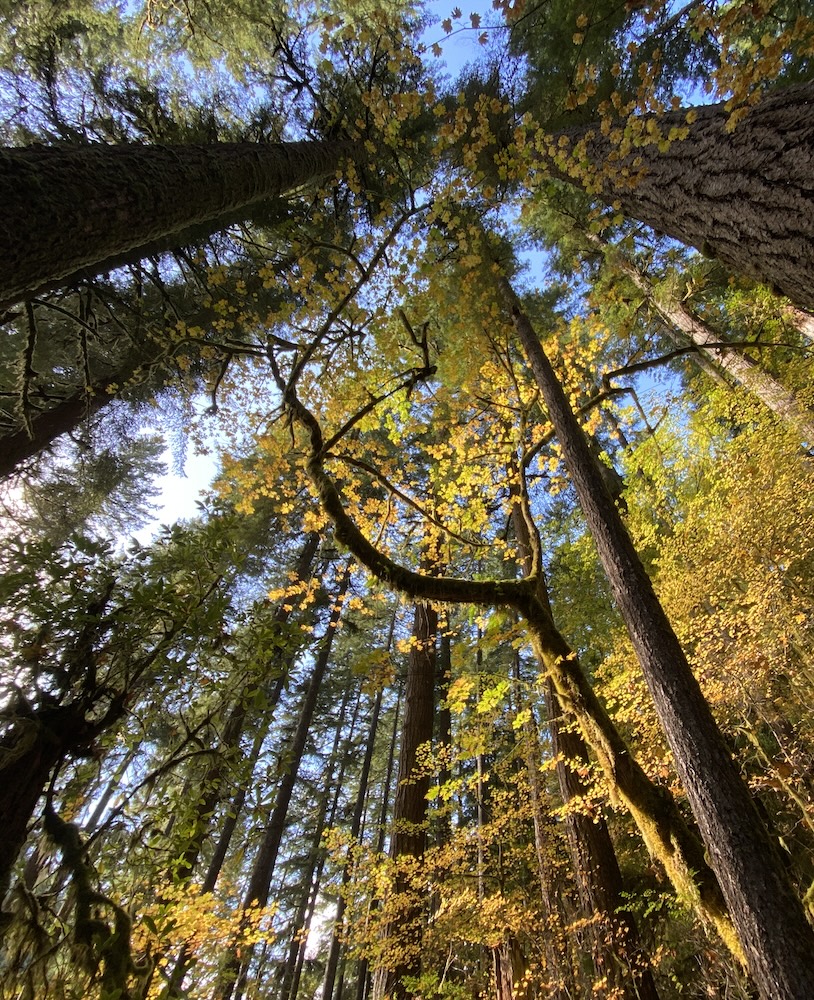
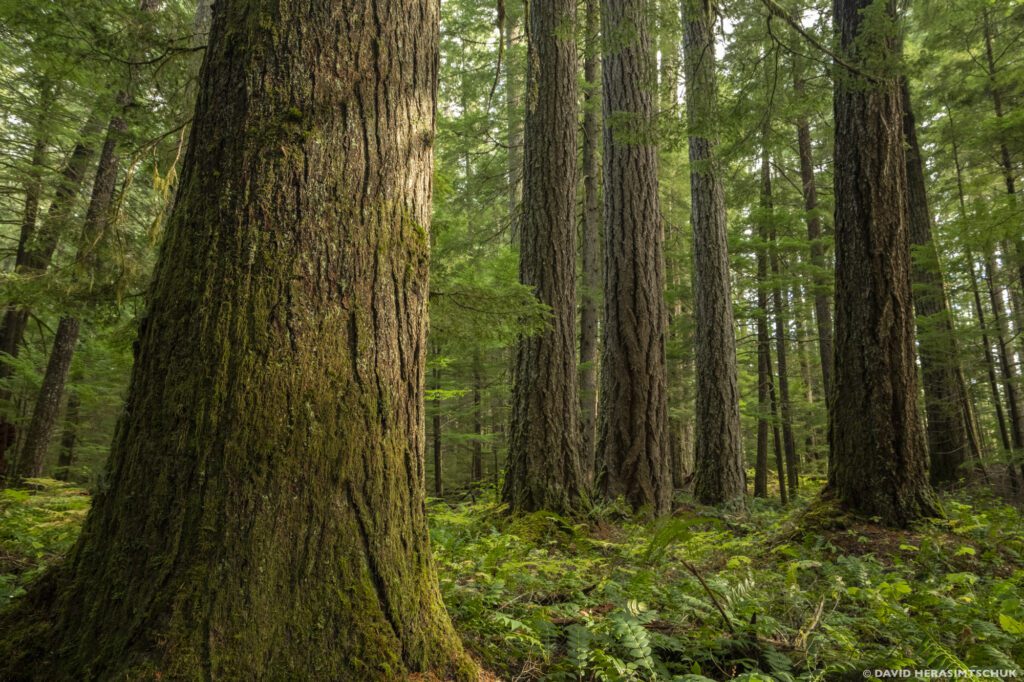
The Lookout Creek Trail in the Willamette National Forest offered 13 Eugene hikers stunning old growth and creek crossings.
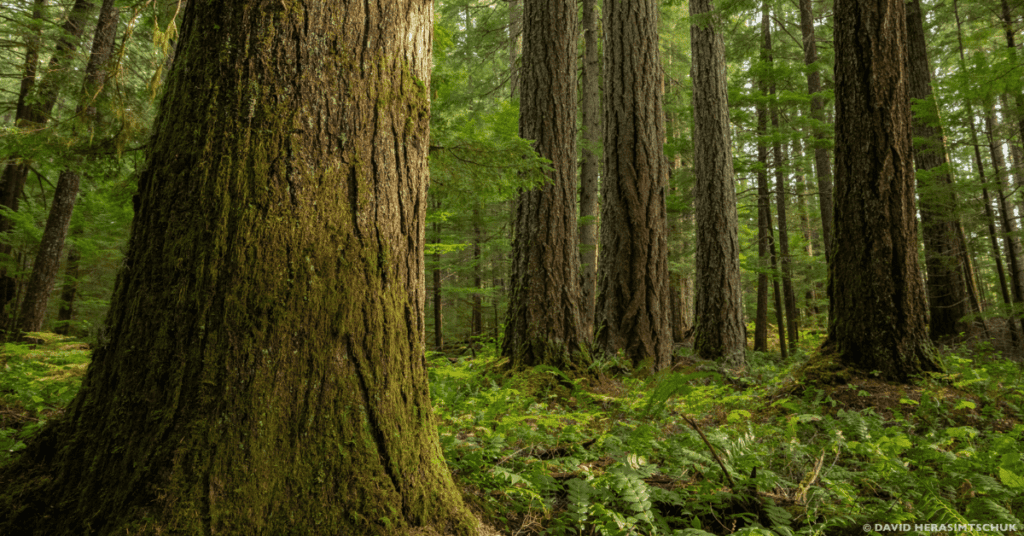
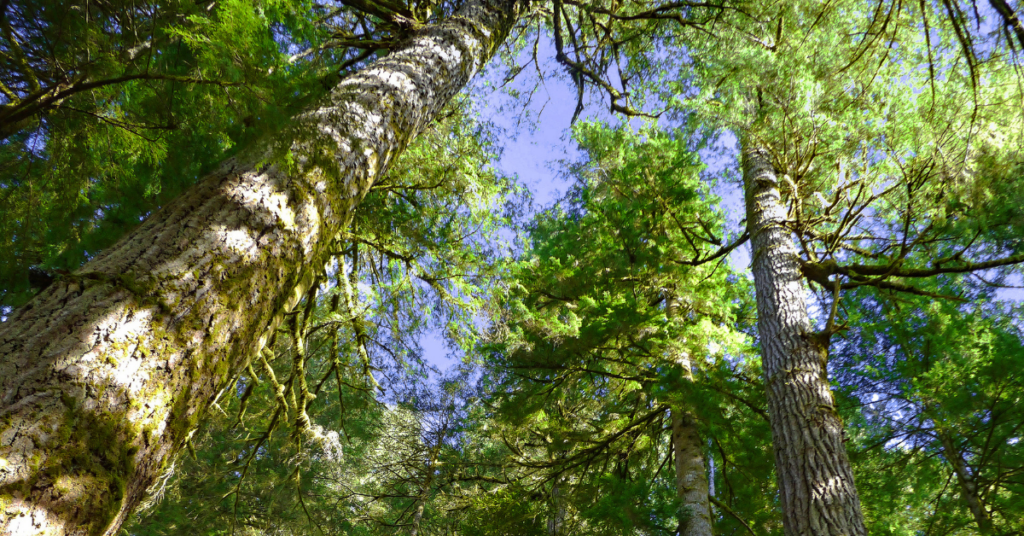
Last Saturday, Chandra and I, along with an 11 person contingent of Eugeneians, enjoyed a marvelous hike along Lookout Creek in the HJ Andrews Experimental Forest. No one could have guessed that just a few miles from the motorboats and RVs at Blue River Reservoir, what a spectacular old growth forest we'd find. Right off the road, we started noticing lots of old growth red cedar. For 3.5 miles, we took a meandering trail over Lookout Creek, crossing many small tributaries where Chandra pointed out the change in vegetation. At one crossing, we found delicious salmonberries; near others: red huckleberry and wild blueberries. To eager questions of "what is that?" Chandra explained about the curious saprophytes we encountered: the largest Pine Drops she'd seen and Coral Root Orchids.
Once we left the woods, thinking back on all the ups and downs of the day, we decided that walking back down the road would be best. We were rewarded by a steady decline and a tremendous view of Lookout Mountain, which had remained veiled to us by the lofty canopy all day. We left the woods with a feeling of "just right," and returned to Eugene thinking back to the old growth which is a reason why many of us, old or new, are here in the Willamette Valley.
Oregon's best Congressman
During the late 1970s and early 1980s Oregon's best congressman was from Ohio.
-by Andy Kerr
Big Timber reigned supreme and Republican Mark Hatfield, the pacifist timber beast, was senior senator and dean of the delegation. Democrat Jim Weaver of Eugene, representing Oregon's 4th District, was the strongest voice for wilderness, wild rivers and old trees. Second best for the wild was Republican Senator Bob Packwood. In 1980 Democrat Ron Wyden was elected in Oregon's Third District and evidence of a changing and greening delegation. The rest of the delegation ranged from awful to horrible.
John Seiberling, heir to a tire fortune, was chair of the Subcommittee on National Parks and Public Lands of the Interior and Insular Affairs (some said that Seiberling would make the entire state of Oregon a Wilderness if he could. St. John, as Oregon wilderness activists belovedly referred to him, wouldn't go that far, but he'd have saved all the forest and desert roadless areas in a heartbeat if he could.)
Seiberling visited Oregon several times, holding both field hearings and taking field trips to see the controversial areas in question. Usually the smartest and most astute guy in the room, Seiberling was a gentle man that could hold forth equally on French poetry (recitation in French, of course) or cubic feet of wood growth per acre per year.
Seiberling took a field trip to the Umpqua National Forest in the early 1980s. Douglas County was ground zero in the wilderness war. The Umpqua had no designated Wilderness and conservationists prioritized three of nineteen inventoried roadless areas (Boulder Creek, Mount Thielsen and the Rogue-Umpqua Divide [all now units of the National Wilderness Preservation System]). The field trip took a couple of days and the Forest Service tried to control the itinerary. Timber industry and conservation representation were carefully limited with two representatives of each side. The Forest Service staff were all in full dress uniform, but were limited in numbers as well. At one point, taking a little walk in the woods to see some point, we came to a little clearing with coffee and doughnuts on a table with not a person around. It was provided by the Forest Service, but the hospitality detail hid in the woods lest the agency have more boots on the tour than allowed
The Forest Service tried to keep the tour route along major highways that had scenic buffers. I'd suggested to Andy Wiessner, Seiberling's trusted staffer, that John, as we approached the turnoff, demand an unscheduled detour up the Rock Creek road off the North Umpqua Highway. John did. All Forest Service staff protested (too much) and the caravan turned north. We went a few miles up and came to an overlook. As we all gazed over the infamous "O&C checkerboard" of alternating sections (square miles) of public (Bureau of Land Management) forestlands and private timberlands, the Forest Service was in full spin mode. They said that we were looking at BLM and private, not national forest. Seiberling offered to further modify the tour to go looking for equally horrid Forest Service clear-cuts. The Smokies demurred. A timber industry representative gamely tried to portray the devastation as good forestry as did the lower-level Forest Service employees. The latter were quieted by their superiors before they had their heads handed to them by St. John as did the timber guy. It is the only time I ever heard Seiberling raise his voice. "Don't try to tell me this is good!" he inveighed. After John finished his chastising sermon, we all silently got back in the vans and drove on.
The tour ended in Roseburg (it then rhymed with Nuremberg). The industry and their locals got some exclusive face-time with John.
Conservationists had their own quality time the evening before at the Steamboat Inn. The good wine flowed freely as the conversation. John and I did a spontaneous duet (the last time I have ever sang), as his powers of recitation were far beyond classical French.
After the industry face time with John ended, the entourage was off to the airport for a flight up to Portland via the Coast Range to see some roadless areas from above (and all those clear-cuts in between). Weaver hated flying and begged off and drove back to Eugene. I suspect Weaver also had gotten wind of an industry demonstration awaiting Seiberling at Roseburg International Airport. As we entered the air field, our Forest Service vans were surrounded by demonstrating loggers and millworkers. No police were present and the vans started to rock. The Forest Service was in full mission-mode: get the delegation safely on the planes and out of here (I concurred with that mission). A District Ranger (Vietnam vet, I’m pretty sure) was driving our van and one protester who got too close was decked with a left jab out the driver's window. The vans rocked more, but continued forward.
A 3-foot high cyclone fence separated the demonstrators from the aircraft and us, so we all quickly emptied the vans and headed straight for the aircraft. All but John Seiberling. I was belted next to a Republican staffer and we were wondering what the delay was. We crawled out of the plane and found Seiberling addressing the crowd. He never shouted and their shouting diminished as he continued to talk. The hand-painted signs they were holding stopped shaking or even ended up resting upside down on the ground. Seiberling told them why he thought Wilderness was important, but so were their jobs. He asked them if it was not better for him to come out and take a look rather than just make decisions in Washington, DC. He talked about 10 minutes as those of us on our side of the fence marveled at this statesman that was John Seiberling. On the other side of the fence, Jim Geisinger, then of Douglas Timber Operators now of Associated Oregon Loggers, stood with his head in hands in despair of how his carefully orchestrated demonstration was turning out.
Seiberling’s aides were literally pulling him to the aircraft. As John Seiberling said goodbye to those millworkers and loggers, they gave him a heartfelt round of applause.
-Andy
Note: Seiberling passed away Saturday, August 2 at the age of 89.
Words from the wild
Many talented authors call Oregon home and derive their inspiration from the natural world around us.
I was happy to meet Liz Nakazawa yesterday. She shared her book, Deer Drink the Moon, an anthology of poems inspired by special places in Oregon. The selections are organized by Oregon ecoregion and are written by Oregon poets (including poet laureate William Stafford). Liz generously gave a copy of the book to Oregon Wild.
The anthology spurred me to think about other writers in Oregon who share a passion for describing the beauty and wonder of our natural landscape. One of our favorites is John Daniel, author of Rogue River Journal and a past presenter at Oregon Wild Wednesday. His stories of his time spent in solitude along the Wild Rogue are inspiring and a reminder of how special wild places are.
I'd love to hear about others' experiences with Oregon outdoor literature. Please feel free to add a comment below and tell us about a local author you like or a story about Oregon that meant something to you.
-Regna
Dude, where are my glasses? At the bottom of Boulder Lake of course.
Oregon Wild summer hike to Boulder Lake July 19, 2008
We had a great hike to Boulder Lake with swimming, snow and under water treasure hunts. After hiking up to Bonney Meadows and checking out the wildflowers and old-growth forests along the way it seemed time to test the waters in Boulder Lake.
Several hikers waded in up to their knees... then all of a sudden we had two swimmers. As hike leader I was slacking as I didn't lead the way, but I quickly turned to follower and jumped in, followed by 3 more hikers. It was quite refreshing, and a great afternoon for a swim or foot soak in Boulder Lake... after hiking over 3 foot deep snow banks 30 minutes beforehand.
In case anyone missed it, Emmet gets the award for amazing feat of the week. Apparently he forgot to take his glasses off before swimming - shortly after getting out of the water he noticed they were gone. Talk about a hopeless task of trying to find your lost eye glasses underwater, without, well, your glasses. And in proving his good luck and just how crystal clear the waters of Boulder Lake are, Emmet somehow miraculously found his glasses at the bottom of Boulder Lake. Thus answering the question of "Dude where are my glasses?".
It was a great hike, and I think we all had a great time. I've posted several photos as well. Thanks to Helen and Marlene for sending me their photos.
Backcountry fishing on the Salmon River
Eight intrepid anglers join Oregon Wild and Trout Unlimited to explore the wilds of the Salmon River.
Head to Mount Hood on any given summer Saturday, and it can be hard to imagine finding quiet and solitude. At times the traffic, noise, and crowds can be downright maddening. People love this mountain, and all of its forests, lakes, and rivers. So much so that sometimes we are in danger of loving them to death.
The good news is that if one is willing to sweat a little, you can still find beautiful wild places around Mount Hood, and that groups like Oregon Wild and Trout Unlimited are working hard to keep them that way. On Saturday, July 19th, we partnered to take a small group of folks out to see one such place, the Salmon River Meadows Wilderness Proposal, and to enjoy a day of back country fishing for beautiful native cutthroat trout.
The drive out of Portland
on Saturday morning was marked by clouds and occasional drizzling rain. Inevitably, the conversation in my car turned
to concerns about turn-out. When one’s
alarm goes off at 7:00 AM on a gray, rainy morning in Portland,
it can be hard to stay motivated to get out of bed and travel up to Mount Hood to spend the day outdoors.
But as we neared the rendezvous location not far from Trillium Lake, the clouds parted, the sun came out, and suddenly we were treated a beautiful day with the snow-capped peak of Mount Hood posing in all it’s glory. Our fear that the snooze bar and a couple of extra hours of sleep would win out over scenic vistas and fishing proved to be unfounded. Not only did everyone who signed up for the trip join us, but everyone was actually early (with several anglers arriving earlier than their hike leaders.) I blame the lack of coffee at my house.
After some car shuffling and a short drive to the trail head,
we were off. Tom Wolf (TU’s Oregon
Council President) and I had scouted the area the day before, exploring various
options for accessing the river. This
2,200 acre area is wild country. Though
the meadows themselves are flat, there are no easy ways to access them (or the
river.) Cross-country travel can involve
serious bush whacking and hikes along steep slopes (as Tom and I experience the
hard way). Though you can get into
meadows off Highway 26, this time of year they are covered in chest high grass
and flowering lupine—beautiful, but trying to hike through the stuff can be
hazardous to one’s ankles and knees.
Rather than subject our 8 trip participants to rhododendron
thickets, climbing over old-growth logs, and swift-water crossings of the
Salmon, we decided to stick to the trail and fish just upstream of an old log foot
bridge over the river. It proved to be a
wise choice. We arrived at the bridge to
find a nice warm patch of mosquito-free sunshine, and rigged up our rods. Several trip participants were new to the art
of fly fishing, and Tom and I gave a bit of instruction on stringing up a fly
rod, knot tying, and pinching down the barbs of hooks. It wasn’t long before our little group was
eager to hit the water, and off we went.
This area of the Salmon is tough fishing. It is fast, cold water (flowing faster and
colder than normal due to the huge snowpack on Mount Hood
this year), and surrounded by thick rhododendron and vine maple. This made casting tough, especially for the
anglers just beginning to get the hang of fly casting. Many flies were sacrificed to the Fish Gods
that morning.
But when we grew frustrated with back casts that landed in
sword ferns, all we had to do was look up to be amazed by some towering
old-growth douglas firs and red cedars.
This
part of Mount Hood experienced
several large forest fires in the early 1900’s, and many of the big tress were
killed. But some survived, and the area
was allowed to recover naturally. On a
hike into the Salmon River area today, one can
experience both beautiful native trees that are 75 to 90 years old, and the
occasional towering giant that is 250 years old and older. Some of these ancients are marked by black
fire scars, testament to the past (and to the fact that old-growth trees tend
to survive fires better than younger trees.)
As the day went by, casting and technique improved, and soon
a number of folks had found willing native cutthroat rising to their
flies. Though small, these fish are beautiful,
and their abundance in the Salmon River is a
good indication that it is still a healthy watershed.
Breaking for lunch gave us time to get to know each other a bit more, and I was amazed by the diversity of folks who came to join us. Some were recent college grads and AmeriCorps volunteers. One family of long-time Portland residents came looking to get into the art of fly fishing and enjoy a nice hike. Some had never fished for anything before, and came on the trip to learn. Some were seasoned veterans looking to explore a wild place.
If one is looking for wildness, beauty, and solitude, the Salmon
River Meadows area has all that in spades.
Unfortunately, it is easy to take such places for granted. A century of logging and development has
taken a toll on Mount Hood’s wild lands. Most of the mountain’s low elevation meadows
have been developed, and stands of native forest—untouched by logging and road
building—are becoming increasingly rare all across Oregon.
The good news is that the Salmon River Meadows area is part of federal Wilderness legislation currently being considered in Congress. Wilderness designation would safeguard this area forever from logging and other development, and ensure that future generations also have a chance to come and enjoy a peaceful day of fishing on the river. After finishing our lunch and hiking back to the trail head, the intrepid back country anglers of the Salmon River each took a postcard to sign and mail in to Oregon’s Senators Ron Wyden (D) and Gordon Smith (R), urging them to act quickly to pass Mount Hood Wilderness legislation.
After that short, steep, dusty hike back to our vehicles, we headed off to Trillium Lake, just a short distance from the Salmon River. It was a good spot to practice fly casting, go for a swim, take in the beauty of Mount Hood, and appreciate the wild solitude of the river we had just come from. While our little party was the only group in the Salmon River Meadows, there were dozens and dozens of families enjoying Trillium Lake. Boats bobbed like rubber duckies out on the lake, and every square inch of the shore was packed with sunbathers, fishermen, dog walkers, and picnics. The parking lot was overflowing, and efforts to practice fly casting off the dam were constantly interrupted by passing motor homes and pickup trucks.
After a day spent enjoying the quiet beauty of the Salmon River, it was a good reminder of how precious our
remaining wild places are.
Check out higher resolution photos from this trip here.
Big win for wolves
A Montana judge backs up conservationist claims that wolf delisting in the west was premature.
It was a pleasant note to read in my e-mail inbox this morning. A forwarded e-mail from the environmental defenders over at Earthjustice delivered the good news: gray wolves were temporarily back on the Endangered Species List.
The short version of the story is that US Fish and Wildlife messed up in looking at the science, erred in allowing the disastrous Wyoming management plan to be approved, and shouldn't have removed the wolf from the ESA list.
Judge Donald Molloy also said that we were likely to win on the merits as the full case was heard (this was just a preliminary injunction). And since hundreds of wolves could be killed while the main case was being heard, Judge Molloy reinstituted protections for wolves in the meantime.
Hooray for wolves!
Crabtree or Bust
Frostbite in July? Only on an Oregon Wild hike scouting adventure.
On the drive back from Sweet Home, it started bubbling up. My knee, that is. Eight hours earlier, I was on all fours working to dig snow out from underneath the car I was riding in. Now, I was getting my first real understanding of frostbite.
To be fair, the little blister on my knee was no bigger than a house fly, and didn’t hurt at all, but the work that stuck it there on my leg was somewhat more intense. The whole fiasco started at around 11:00 am as four current and former Oregon Wilders—Jonathan, Chandra, Jeremy, and I—made our way through a maze of BLM roads near the edge of the Willamette National Forest outside of Sweet Home.
We were looking for Crabtree Valley to scout a hike that had originally been scheduled for May but postponed to late July after our more-than-usual dumping of snow in the Cascades this winter. We all
thought July would be safe. That is, until we came around a bend in the road and encountered a thirty foot stretch of road covered in two feet of snow. Our first attempts at crossing over the snow were met with initial resistance followed by gentle nudges back onto dry land. After a BLM truck showed us the way, we figured it was our turn to finally charge through on the tire tracks they had left.
It was not to be so.
An hour later (after pushing and jacking and trying to find some sort of traction) the BLM truck reappeared and realized our situation. Thanks to the tools provided by our new BLM friends, we were able to dig our way out from the snow after another 45 minutes, cheering loudly as our car made its way out.
With the first part of our trip over, I took stock of lessons learned:
- Pants are a good idea. Even in July.
- Snow is fun in limited quantities and not when it is underneath cars.
- Old snow is worse for driving than new snow.
- Operation “Let the snow melt” is not a viable strategy when you only are out in the field for a day.
Ultimately, and again thanks to our BLM saviors, we discovered the road we were trying to get down when we got
stuck was the wrong way. With new directions in hand, we found our way to an alternate trailhead and began a long descent down an old, rutted out road on our way to Crabtree Lake.
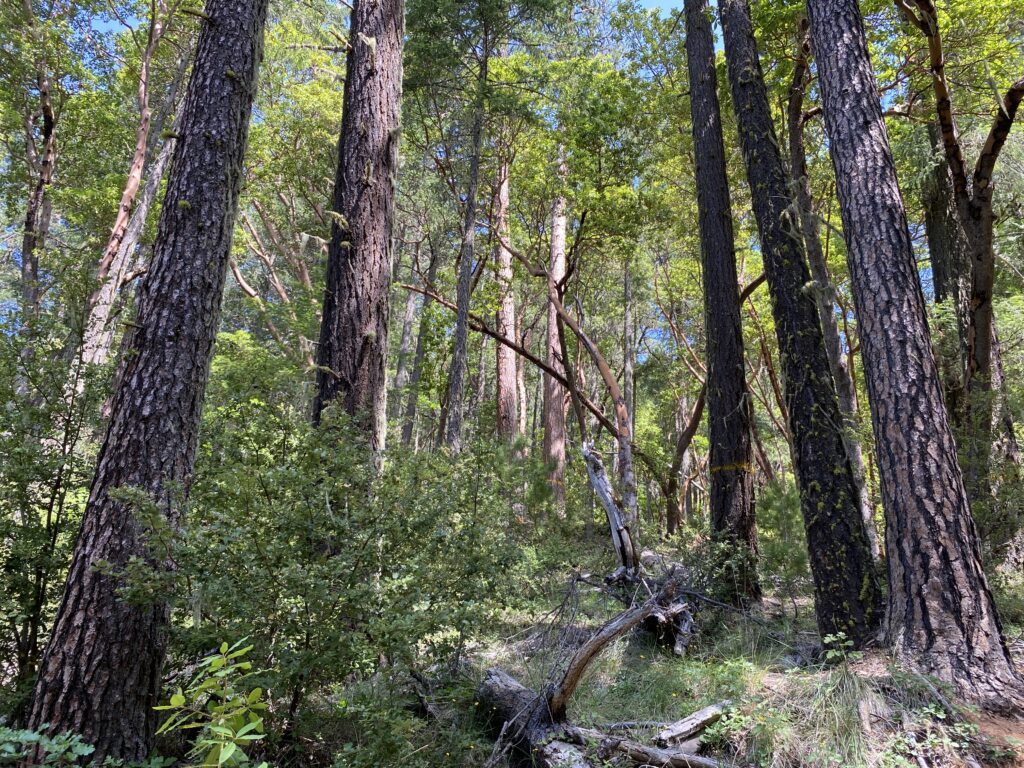
The path down was replete with paintbrush flowers, beargrass and plenty of impressive old growth. Still, we knew that the real prize was down near the lake where 800-900 year old Western redcedars and Douglas firs stood tall.
Our first order of business was to see if we could track down the real giant, King Tut. This mythical Doug fir was discovered by loggers several decades ago and may be the oldest Doug fir in the entire state. It would not reveal itself easily though, and the four of us trudged through dense underbrush as we searched for the ancient tree. After 45 minutes worth of dodging branches and dancing around thorns (and seeing some other really big trees not named King Tut) we decided to bag the search for King Tut for the day.
To our delight, trees named after pharaohs are not the only impressive thing around these parts. On the east side of the lake, we walked through a towering forest that framed the water below. After circumnavigating the lake (and subjecting ourselves to some even hairier bush-wacking) we were ready to make the slog back up to the car. Before we did, we took time to treat ourselves and our sweaty faces to the cool waters of Crabtree Lake.
Frostbit, trapped in the snow, thorn-covered bush-wacking, and gigantic trees. All in a day's work at Oregon Wild.
Vote Oregon Wild
Be sure to stop by the Patagonia store in Portland and vote for Oregon Wild.
This is it; the final stretch to determine which environmental group will receive $4,000 from the Portland Patagonia store. It's called Voice your Choice. It's all about customer votes!
It's simple. Patagonia is awarding $4,000 to the environmental group that receives the most in-store votes.
Can it be any easier?
You can help Oregon Wild receive a $4,000 donation by just voting.
All we need is for you, your friends, and family to stop in and vote by Sunday, July 19---this weekend. You don't need to buy a thing, just vote. (or buy that new shirt if you must)
Oregon Wild staff will be at the store to answer any questions about our important work on Friday from 3:00 to 6:00pm. Stop by and say hi.
Just visit the Patagonia store in the Pearl District in Portland to vote-- (did I mention that no purchase is necessary?) Plus, you can vote EACH DAY, great if you work or live nearby. The Patagonia store is located at 907 NW Irving in Portland. More information and a map are on their webpage.
Store hours are:
Mon-Fri: 10am-7pm
Saturday: 10am-6pm
Sunday: 11am-6pm
Oregon Wild can make big things happen with a $4,000 donation from Patagonia. Please help us get it by visiting the Portland Patagonia store and voting for Oregon Wild.
It will make a difference; it's easy to do.
Thanks!
From Requa to Link River
Ani Kame'enui and Sean Stevens venture to the Klamath Basin, from the mouth to the headwaters of the Klamath River.
When we arrived in Requa, California on a Sunday evening in June, Sean Stevens and
I peered through the wind and fog to see the Klamath River
opening wide to the Pacific. As we meandered down the overlook path, I took a
deep breath of ocean air, and absorbed the reality of this hotly disputed river
as it poured into the sea. In the end, it just looked like a river, wide and
green, and didn’t resemble the controversy, strife, or debate it presents among
agricultural, tribal, federal, and environmental stakeholders. But the Klamath
is much more than a river; it is an icon of rich tribal history, the clash
between nature and industry, and regional contradictions.
Sean and I set out to capture video footage of the Klamath River, from the cool coast of California to the desert of southern Oregon. We made our way up Highway 96, around the endless curves that make the drive through the Six Rivers and Klamath National Forests both beautiful and trying. It is a remote basin, there is no doubt. The towns are small, people often hidden behind small storefronts or in wooded neighborhoods up gravel roads. Town after quiet town, the river rolled on, as we went deeper into Klamath country, where the river reigns.
As we passed through the Hoopa Reservation, we stopped in Weitchpec to take in the confluence of the Trinity and the Klamath. The clear, blue Trinity is quickly absorbed into the green mystery of the Klamath. Only days before, I had stood on the banks of the South Fork of the Trinity River in the backcountry of Shasta-Trinity National Forest to ponder the few basin Chinook that continue to use the South Fork as spawning grounds. The Trinity is a valuable friend to the Klamath—it provides cleaner, cooler waters, and safer migratory habitat for Klamath salmon.
Upriver we stopped in Somes Bar to meet a friend and explore
the edges of the Salmon River, the most
graceful of the Klamath tributaries. The clear, cold, beautiful Salmon River is home to some of the basin’s last
remaining spring Chinook, and remains one of the region’s most unspoiled
watersheds. When salmon come home to the Klamath, they often use the refuge of
the confluence with the Salmon River to find a
cool, deep pool to rest and recover. The Salmon River
is a hotbed of restoration—work on the river originates from grassroots
campaigns and long-time friends of the river that work to retain the Salmon’s
pristine presence in the basin.
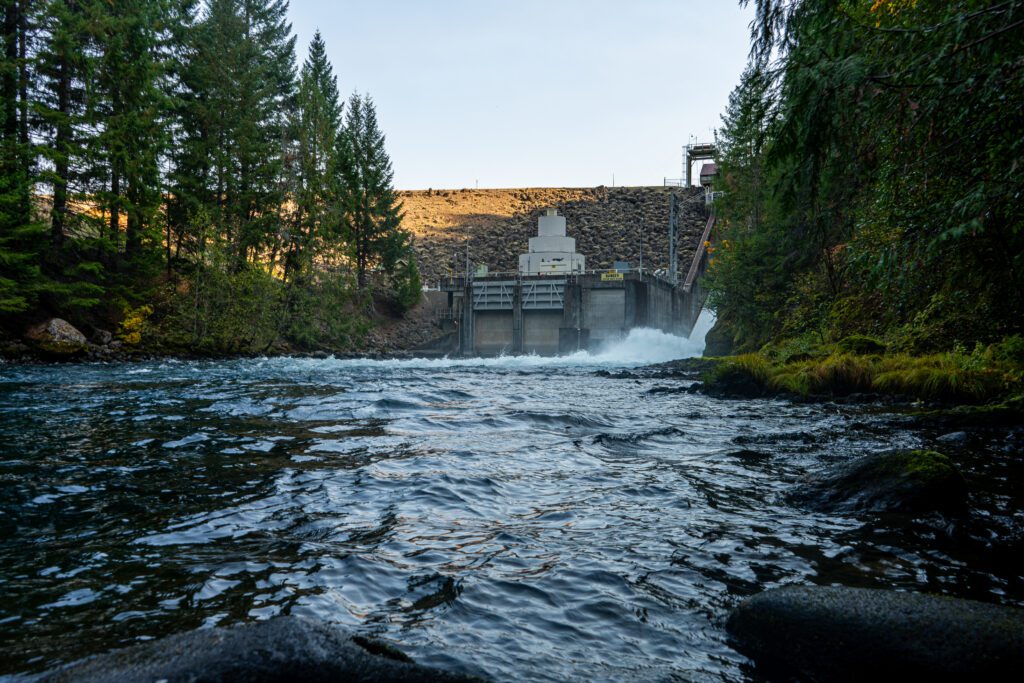
As we wound our way through northern California, we watched whitewater rafts celebrate the river’s rapids, tribal fishermen check monitoring stations, and tourists search for the perfect fishing spot. By late afternoon, we made our way to Iron Gate Dam, the first of the major PacifiCorp Klamath Hydroelectric Project dams and home to the Iron Gate Hatchery. Iron Gate is a force, an earthen dam, and the youngest of the Klamath dams, built in 1962. Iron Gate marks river mile 190 and the last mile Klamath River salmon reach as they migrate upriver. As afternoon turned to evening, we scampered unsteadily on pumice scree to make our way to a vantage point for Iron Gate’s upstream neighbors, dams Copco I and Copco II, constructed in 1917 and 1925, respectively. By dark fall, Sean and I found ourselves on a bumpy road down to Klamath Canyon, tucked beneath the famous J.C. Boyle Dam. We arrived in total darkness, pitched tents, and drifted off, thinking of dams as the river rolled by.
The next morning our dam dreams (or nightmares) became
reality. Just a few miles upriver from our campsite, PacifiCorp uses J.C. Boyle
Dam to divert the Klamath into a large canal, shunting off nearly the entire
flow of the river. It is an engineering marvel that creates an eerie scene. A
canyon rim lined with a thirty-foot wide concrete canal while the real river
slowly flows hundreds of feet below.
The four lower dams on the Klamath get the bulk of the attention (mostly for the tiny little inconvenience that they kill salmon), but there are a couple more concrete monsters upstream. Just a few miles upriver from Boyle is Keno Dam, and just outside of downtown Klamath Falls is Link River Dam, where the river flows out of Upper Klamath Lake. At Link River, Sean and I took the opportunity to check out the dam that Oregon Wild recently worked to make safer for endangered sucker fish. As Conservation Director Steve Pedery would say, “It’s time to give a sucker a break.” In this instance, the break suckers will be getting is the chance to survive without “interacting” with power-generating turbines at Link River Dam.
Traveling from Requa to Link River—from the mouth to the headwaters of the Klamath—is a revelatory experience. The river is big and the landscape diverse. With a lot to learn and even more to protect, I can’t wait for my next marathon trip along the Klamath.
An Oregon Wild Summer indeed!
A recap of the many hikes Oregon Wild staffer Chandra LeGue has done since the kick-off of Oregon Wild Summer two weeks ago.
It's been a whirlwind couple of weeks for me as Oregon Wild Summer got underway. Whew!
Here are just a few highlights from the 4 hikes and one scope-out trip I've done since June 21 (photos can be found here):
Twin Lakes (Umpqua National Forest): Saturday, June 21
Thunder and cloudy skies threatened, but the weather mostly held for the group of Eugene and Roseburg-based hikers. Heavy winter snows meant only the earliest wildflowers were out - but that included the gorgeous little yellow glacier lily! Hiking atop slippery snow was a challenge on both flat and steep ground, but I think we all enjoyed this gorgeous spot.
---
Fall Creek (Willamette National Forest): Wednesday, June 25
Some hikers hadn't been to Fall Creek since the 2003 Clark Fire, but we all discovered a vibrant and recovering forest in the burned area. The deep, dank old-growth forest along the rest of the trail offered a cool reprieve from the hot afternoon.
---
Rogue River Trail (Medford District BLM): Saturday, June 28
A group of mostly newcomers to southern Oregon braved the hot, hot weather. We chose (wisely) to take the shadier side of the canyon and hiked the Rainie Falls trail through oak, madrone, Douglas-fir, and bay laurel (inhale deeply!) forest. No boaters attempted the falls while we looked on, but a nearby beach offered exploration and discovery - we found a huge leech, a tiny baby lamprey, and were observed by an osprey the whole time we were here. I think we all came away with a deep appreciation for the special beauty of the Wild Rogue.
---
McGowan Creek (Eugene District BLM): Sunday, June 29
Young and older alike came out to this mostly-unknown gem of a forest. The short loop led us by towering trees, huge Pacific yews and cedars, and a shaded creek. Everyone learned a lot about the makings and workings of the ancient forest - Doug even captured all our thoughts on video!
---
Browder Ridge scope-out (Willamette National Forest): Wednesday July 2 (upcoming hike on July 12)
Turns out the trailhead isn't exactly accessible right now... there's a bit of snow still... But for the intrepid hiker, an entrance and trail can be found and followed! Don't worry hikers, I have confidence that the snow will melt by Saturday and we'll have comfortable uphill walking. (Sign up for the hike here.) Even with no one to share it with, the view from the rocky meadow was well worth the climb. I can't wait to share it this coming weekend!
Thanks to all hikers who came out to enjoy these amazing places. I hope to see more of you soon as the summer continues!
A tradition reborn
This year marks the return of the Oregon Wild Waldo Lake Camp Out and celebration. Wendell Wood recalls how it all began.
Waldo Lake was one of the major center pieces of late 1970’s and early 1980’s Oregon Wild Wilderness protection efforts, with over 32,000 acres of surrounding forest lands finally protected during a time when Wilderness protection was much less widely accepted as it is today. That Oregon Wilderness bill, which became law in1984 included the protection of much of the Waldo Lake basin, representing the culmination of more than a full decade of hard work--and for which Oregon Wild (first called the Oregon Wilderness Coalition) had first organized to advocate for.
In 1982 OWC morphed into ONRC, with our main office then based in Eugene, Oregon. To call greater public attention for the need to protect this fabulous part of the Central Oregon Cascades, which included one of Oregon’s purest lakes, our first public Waldo Lake outing was inaugurated. In 1983 Oregon Wild held our first major camp out at the Shadow Bay group campground along Waldo lake’s south east shore. The main event was a “Walk Around Waldo” with pledges secured to finance our Wilderness lobbying efforts. Pledged volunteers hiked the full 22-mile loop trail around Waldo Lake in a single day. The Obsidians, a hiking club based in Eugene, also helped organized the first Waldo Lake event. Notably, their Conservation Chair, Ben Ross, was one of the events largest fund raisers who saw protection of Waldo as essential to protection of wildlands to the south of the already then partially designated Three Sisters Wilderness. Doug Norlen, organizer of the Waldo
Wilderness Council, was also an active participant and leader of the early, annual Waldo events.
After Wilderness passage in 1984 the Waldo Lake event continued for several more years (then held in August), in annual celebration of this legislative accomplishment. Canoe excursions and other hikes nearby Waldo Lake were also conducted, such as to near by Gold Lake, “The Twins” and other locations along the Pacific Crest above Waldo Lake. Other Waldo weekend hikes included guided hikes to scenic viewpoints and other small lakes in the still unprotected Maiden Peak Roadless (proposed Wilderness) Area immediately east of the main road, and campgrounds along the east shore of Waldo Lake. After the Saturday evening meal, campfire and storytelling, late evening merrymakers were often entertained by local Eugene bands. On at least two occasions, late summer showers also accompanied a portion of the annual event—yet spirits weren’t dampened.
On through the middle and late1980’s we continued an annual outing and celebration at Waldo Lake, with the feature event still including an only slightly scaled down, approximately 15-mile hike around Waldo Lake’s wildest lands, but with a car shuttle provided for lake loop walkers once they reached the first trappings of civilization at the North Waldo Campground. A bit shorter than the full 22-mile loop, this annual hike still allowed hikers to experience Waldo’s wildest (and Wilderness protected) lands around a slightly shortened course encompassing the vast Mountain Hemlock forests around the south, east and north shores of the lake.
At the start of the hike, Tim Burr, a local bagpipe player, dressed in full regalia, would lead the Waldo hikers off the first mile, beginning at Shadow Bay Campground, as the full hike continued on clockwise around the lake. Other dignitaries attended the event including 4th District Congressman Jim Weaver, who had been our strongest Congressional advocate for the protection of Oregon Wilderness and Congressman Jim Jontz a champion for old-growth forests.
With Wilderness protection and old-growth legislation in the air, now is a great time to reignite this tradition. Join Oregon Wild September 19-21 for the Waldo Lake Camp Out.
Girls in the Gorge
Oregon Wild staff member Margaret De Bona goes hiking with Girls Inc.
Last Saturday I went hiking with a group of young women from
Girls Inc., a non-profit located in southeast Portland that works in local
schools to empower girls to be ‘Strong, Smart, and Bold.’ As we drove out to the Columbia Gorge the
girls excitedly counted the cars on freight trains, and responded to my
challenge to keep track of how many waterfalls they saw on the trip—the grand
total was seven!
Walking up
the trail towards Pony Tail Falls, followed by shouts from the back of the line
‘How far till we get there? And ‘Have we gone a mile yet?’ I remembered all the hikes I had taken with
my father as a child. He would point to
a tree’s bark in the wintertime and ask ‘What’s that tree called?’ Looking at
the silvery gray bark with small ridges, I would decide it was a Tulip
Poplar. At the time I thought he was
teaching me about trees, but now I know he really tricked me into a constant
awareness of my surroundings. To this
day I have a great sense of direction, remember street names, keep a map in my
head of every place I ever visited, and love trees. Hiking with the girls I had some more basic goals, like
encouraging a sense of curiosity about the natural world, getting them to feel
comfortable in the forest, and recognizing Poison Oak!
Ja’kal,
Melissa, Taylor, and Whitney probably won’t remember that the Columbia Gorge
was the site of the Missoula Floods, or what stinging nettle looks like, but
they will remember their sense of accomplishment as they clambered around in
the overhang behind Pony Tail Falls, or the cold mist rolling off of Horse Tail
hitting their faces after the trek back down.
And maybe next time Melissa goes hiking she won’t be so afraid of
heights, and maybe Ja’kal will convince her mother to bring her back to the
Gorge and see more waterfalls, and maybe Whitney will channel her new love for
science into learning the names of plants.
Whatever they do, they’ll be Strong, Smart, and Bold!
Thanks to Bonni Goldberg, and Kristin Robinson for
organizing the hike and inviting me! For more information about Girls Inc.
visit their website, www.girlsincnworegon.org
A plan 26 years in the making
"At present, the National Monument is far too small for its current use level."--1982 Oregon Wilderness Coalition newsletter.
This week, Congressmen Peter DeFazio and Earl Blumenauer introduced their "Oregon Treasures" legislation in the US House of Representatives. The bill contains some big headliners: 143 miles of Wild and Scenic Rivers in the Rogue watershed and 132,000 acres of Wilderness surrounding Mount Hood. Lost in the shuffle is little old Oregon Caves National Monument.
And when I say little, I mean the second smallest piece of land managed by the National Park Service. The Monument outside of Cave Junction is only 480 acres.
The quote from the 1982 Oregon Wild (formerly Oregon Wilderness Coalition, formerly ONRC) newsletter shows that people have been calling for expanding the monument for a quarter-century. So, despite the big headliners of the "Oregon Treasures" bill, Oregon Caves caught my eye.
It's worth noting that the plan outlined in today's bill is almost exactly the same as the one the conservation community had been calling for over the years: a ten-fold increase in the size of the Monument. This increase would put Forest Service land in the management hands of the National Park Service allowing the Park Service to protect the drinking water supply of the area, Cave Creek.
Another neat thing about the proposal is that it would designate an underground stretch of Cave Creek (known as the Styx River) as a Wild and Scenic River. This would be the first subterranean stretch of water designated Wild and Scenic since the original bill was passed in 1968. Quite the distinction.
So, amid 11,000+ foot peaks and one of the wildest watersheds in the west, let's hear it for a big expansion at Oregon Caves.
Canoes, Sunsets and White Pelicans
Join Oregon Wild on a great opportunity to Tour the Klamath Basin with our expert staff as your guides.
The Klamath Basin. Chances are you're like me. Maybe you’ve seen some stunning photos on our website or in our newsletter. Maybe you've read about the Oregon Wild work to protect and restore this place often called the "Everglades of the West"--but that's all you know. You've never been there. You've never visited the six National Wildlife Refuges in the area. You've never enjoyed the marsh music of thousands of songbirds before the sun goes down. You’ve never hiked the Williamson Canyon. You've never been to see the place that Oregon Wild is helping to protect and preserve for future generations. Well--that can all change--and we are making it easy. You're invited to join us for a special Klamath Basin Tour from July 10-13th.
Not only will you get a chance to see this amazing place, but experienced Oregon Wild staff will be your guides. Explore and learn about the Klamath with the people who know it best. Wendell Wood, renowned naturalist and Klamath expert will lead our trip. Joining him will be our conservation director, Steve Pedery; Klamath campaign coordinator, Ani Kame'enui; and executive director Regna Merritt.
One of the best aspects of this trip is that it's limited to a small group of people. We get to stay at the Crystalwood Lodge, nestled on the northwest edge of the Upper Klamath National Wildlife Refuge. The trip cost is $550 per person. At that price we barely break even, but we want to keep it as affordable as possible.
I'm sure you'll agree it's a great value when you realize it includes roundtrip transportation from Portland (we can even try and arrange to pick you up from the Eugene area), three nights lodging, six meals, plus the services of our expert guides. Additionally, it includes canoes for us to use to explore the amazing, easy-to-paddle Upper Klamath Canoe Trail. Steve, our conservation director, says it's an undiscovered gem. Plus, we can launch our canoes right outside the door of our lodge!
Still note sure? Wondering what's in store? Just to wet your appetite, we'll enjoy dinner, drinks and an overview and slideshow about the Klamath upon our arrival on Thursday evening. On Friday, we'll tour some of the southern Klamath National Wildlife Refugees for some birding, hikes and view Petroglyph Point before we have a dinner in Klamath Falls on our way back the lodge. Saturday brings different opportunities for some hikes, and we'll spend half the day canoeing on the outstanding Upper Klamath Lake Canoe Trail. Our day will end with a fine dinner at the Rocky Point Resort with great views of the Upper Klamath Wildlife Refuge. Finally on Sunday, we'll have a short hike and visit a restoration project before heading back to Portland.
Everyone who attended our previous Klamath Tour had fun. I encourage you to reserve your spot online today. If you have any questions please feel free to call me directly at 503-283-6343 x223 or send me an email, mp@oregonwild.org.
One last thing. I finally made it to the Klamath last year with Wendell as my guide. And it was like a light went on. I got it. I got to experience the amazing Wildlife Refugees and learn about the important Oregon Wild work to ensure this area is protected and restored for future generations.
The Klamath Basin is an amazing place, sometimes a place of contradictions, but always a place of discovery.
If it's one of those Oregon places you've always said to yourself, "I got to visit the Klamath Wildlife Refuges and experience what it's all about," don't wait any longer. Sign up for the Oregon Wild Klamath Basin Tour--you'll be glad you did.
Lift the Spirit in the Canopy
The moving view from the Wind River Canopy Crane lifts the spirit.
On a recent spring day that was simultaneously grey and
vibrant green, I was lucky to be invited for a "lift" on the Wind
River Canopy Crane which is situated in a 500 year-old old-growth forest in
southern Washington. This was certainly
one of the more memorable experiences of my life. Here is a video documenting
the day. Thanks Forest Guild and Wind River Canopy Crane Research Facility!
Forest research like this helps provide the factual rationale supporting Oregon Wild’s conservation work. From this canopy crane site we’ve already learned important new information about the structure of old-growth forests as they develop and diversify.
Scientists have also confirmed that even after 500 years, this forest is still absorbing more carbon which helps stabilize our global climate. This is counter to the often repeated mantra of the timber industry that old-growth forests are stagnant and declining. In fact, close inspection of older forests around the world reveals that most old forests continue to serve as carbon sinks. Northwest old-growth forests store more carbon than any other forest type in the world … yet another great reason to permanently protect our old growth forests. For more information, see Oregon Wild’s “Climate Control” report.
Waterfall Showcase Showdown!
Exploration of the McKenzie River Trail yields watery surprises this year.
Maybe I'm putting the cart before the horse here, by writing about this weekend's Oregon Wild hike on the McKenzie River Trail before the hike, but my adventure scoping out the hike yesterday got me way too excited to wait.
Did it sound like Erik had a nice day in the field in the last blog post? That was nothing!
I wasn't planning on scoping out the McKenzie Hike - I've done the hike backwards and forwards several times. But I realized that the trail might not be in the best of shape what with the amount of snow and subsequent melt this year. So I headed off to Sahalie Falls to hike down the McKenzie River trail as planned for this weekend.
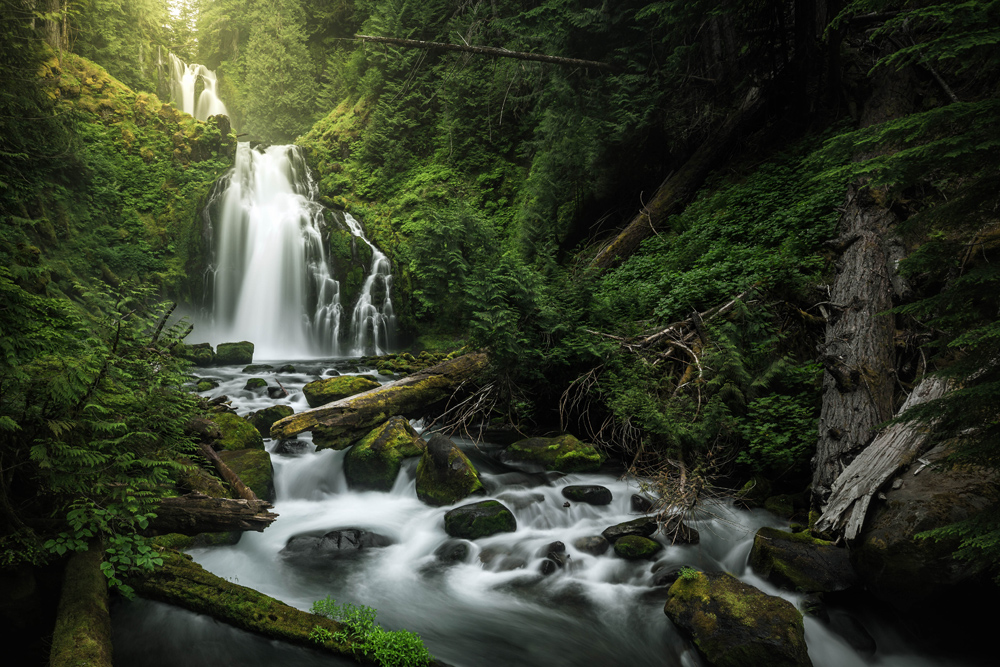
I've seen Sahalie Falls about a hundred times, but never like this! What water! As I hiked downstream through pockets of snow and past the also swollen Koosah Falls, the volume - of both water and sound - of the McKenzie blew me away.
The trail downstream of Carmen Reservoir was hard to follow in places where large patches of snow remained. Down trees led to detours off trail, and the normally "dewatered" portion of the river was flooded over the trail in places. All of this is surmountable by an intrepid hiker of course. But then I came to an impassable obstacle - a 100-foot stretch of trail covered in 3 feet of water extending to both sides. No way around but through, and I wasn't going for it. Guess I won't be bringing the hike this way on Saturday...
I drove down to the bottom of the hike section, at Trailbridge Reservoir, to start the hike from there. Up past last year's blown-down trees (that the Forest Service plans to log soon - despite loud opposition from Oregon Wild and many trail users), through classic old-growth groves with blooming Calypso orchids, over lava rock, and finally... a few of Tamolitch Falls!
Some of you who might have been to Tamolitch Pool (aka Blue Pool, pictured at left in the summer months) on this trail before might be wondering why it's also called Tamolitch Falls. There are no falls. There's no river above the pool. The river just magically appears in the pool and heads downstream... Fooled you! This is only true most of the time.
Before EWEB started diverting water for hydropower up at Carmen Reservoir in the 1960s, the currently "dewatered" channel upstream of Tamolitch Pool used to have water pretty frequently, and a waterfall into the Pool was common in the winter and spring. Now, this is a rare event. And though I was expecting some water to be flowing, I did NOT expect this. Wow!
I passed several groups of people on this hike - a lot for a Wednesday afternoon I thought - but somehow got the timing just right so that I had the raging falls and swollen pool all to myself for about a half hour. A truly blissful experience I may never have again.
Let this be a lessen: A familiar trail can always offer something new if you pay attention and try it at different times of the year. Don't take old-standbys for granted!
You can see photos and video of the swollen river and falls here. Or see for yourself by joining me on this hike on Saturday.
Oregon's Niagara Falls?
A day in the Coast Range's Mount Hebo verifying roadless boundaries leads to Niagara Falls?
One of the worst parts of my job at Oregon Wild is when I have to go out into the field. This trip was to verify the accuracy of the maps of areas we're working on protecting. Really, I'd much rather be sitting at my desk all day.
My latest trip was looking like a fairly routine trip out to the Mount Hebo area in the Coast Range (nearish to Tillamook) to make sure the roadless area boundaries are accurate. Having accurate maps of areas we'd like to eventually see protected is important when it comes to our credibility with key decision makers, allies, the Forest Service and elected officials.
Likely due to global warming the coast was surprisingly sunny and Portland was overcast and drizzling. Then the trip got a little more challenging. My destination was the south side of Hebo. I made it up to the top of Mount Hebo just fine, albeit a little carsick from the windy roads. Then hit snow just a few miles before getting to my area of interest. Translation: an hour long detour around Mount Hebo.
After more winding roads and construction delays on back roads along the Nestucca River I realized I was going to go past what looked interesting on the map - did you know Oregon has a Naigara Falls? Being opportunistic, I stopped to check out the waterfall. As you can judge by the picture Oregon's Niagara Falls isn't quite as big as it's more famous east coast cousin, but it's a lot more lush, and very secluded with most days probably not having any visitors. It's a good place to get away from the crowds and cool off in the north Coast Range's most intact roadless area, Mount Hebo. The trail is short, just under a mile one-way. There are some signs, but make sure you bring a good map to be safe.
After finishing the trail, I still had work to do, so I made my way to the survey area. Of course there were several logs over the road meaning I wasn't driving the survey route. Having done this before, I knew to bring my mountain bike which helps cover a lot more ground than by foot when surveying roads. It was a long up hill ride, but the ride down was very fast, and fun...with a few frantic stops when I turned a corner going faster than my mother would like me to and saw those logs across the road approaching very quickly.
I had my GPS points collected and after the downhill adrenaline wore off I worked my way back to the still cloudy Willamette Valley on yet more back roads. Tough day at the office, I wish I had more of these.
Erik Fernandez
Highways, cattle, and... refuges?
Reflection on a recent trip into the heartland of the Klamath Basin's National Wildlife Refuges
When I saw my first pair of posturing Western Grebes in Upper Klamath Lake, a snowy egret balanced atop an irrigation pump, and an America White Pelican wading through toxic waters, I began to understand my job at Oregon Wild much better. My recent travels into the heartlands of the Klamath Basin have confirmed the reality that we must do better than agribusiness on National Wildlife Refuges.
The Klamath Basin was once home to over 350,000 acres of wetlands, shallow lakes, and marshes; and while the upper basin provides scenic views around Upper Klamath Lake and vistas of Winema National Forest, the Bureau of Reclamation Klamath Irrigation Project (est. 1905) has reshaped what were once pristine wetlands and waters. The contrast is startling: Golden Eagles on one side of the road, cattle ranchl