

| Contact: Lauren Anderson, Oregon Wild |
Portland, OR – Yesterday, the Trump administration announced plans to move the Forest Service headquarters from Washington D.C. to Salt Lake City, Utah, shut down all regional offices, and consolidate all research facilities to Fort Collins, Colorado.
The Pacific Northwest Region office in Portland, Oregon, will be shut down.
“Moving the Forest Service headquarters to Utah sends a very clear message. Utah’s leadership is dedicated to dismantling America’s public lands,” said Climate Forests Program Manager Lauren Anderson. “The Trump administration is moving the hen house into the fox den.”
Utah’s legislature has spent millions of dollars both litigating and in a public relations campaign to take control of national public lands. Senator Mike Lee from Utah famously attempted to include language mandating the sale of Forest Service and Bureau of Land Management lands in the Senate reconciliation bill, a move that provoked outrage from across the political spectrum and was ultimately withdrawn.
“The agency’s attempt to move to a ‘state-based model, ‘ led by leadership in Utah, is no coincidence. It is another step towards privatizing management of America’s public lands and transferring control to states and corporate interests,” continued Anderson. “They are gutting environmental protections, suppressing science, and cutting the public out of public lands decisions.”
Yesterday’s announcement came as a shock to local Forest Service employees, some of whom received letters yesterday afternoon notifying them that their positions were subject to the reorganization and/or relocation. The US Forest Service workforce has already lost thousands of employees, approximately 16% of its workforce. The Trump administration’s attempts to relocate the Bureau of Land Management offices in his first term led to an exodus of staff experience and expertise, with 87% of the staff choosing to leave the agency.
Secretary of Agriculture Brooke Rollins’ press release includes: “Additional phases of the reorganization, including the formal elimination of regional and station office structures and the full transition to a state-based model, will be implemented over the coming year.” 10 Regional offices will be replaced with 15 state-based offices led by political appointees. Oregon’s state office will eventually be based in Salem, with the nearest Forest Service operations centers (distinct from ranger stations) being hundreds of miles away in Missoula, MT, and Placerville, CA.
Background:
- National forests in Oregon cover roughly 16 million acres, representing about 25% of the state’s total land area. The US Forest Service manages 11 national forests in Oregon.
- Offices for the U.S. Forest Service Northwest Region Headquarters and the Pacific Northwest Research Station are currently based in Portland, OR.
- A new report from the USDA’s Office of Inspector General shows the USDA lost over 20,000 employees between January and June 2025, nearly one-fifth of its total workforce. The U.S. Forest Service was the hardest hit of all the USDA departments, losing 5,860 employees, or approximately 16 percent of its total workforce.
- This new announcement from Secretary Rollins will result in another wave of layoffs and resignations, further dismantling an already severely damaged agency that is responsible for managing 193 million acres nationwide.
- It is unclear how many people the Pacific Northwest (PNW) Research Station employed before the layoffs, but estimates show between 250 -roughly 500 people, including scientists, technicians, and administrative staff across 11 locations in Alaska, Oregon, and Washington. Beyond the headquarters in Portland, the agency has identified 5 experimental forest stations and three research labs. Learn more about the PNW Research Station here.
###
Oregon Wild represents 20,000 members and supporters who share our mission to protect and restore Oregon’s wildlands, wildlife, and water as an enduring legacy. Our goal is to protect areas that remain intact while striving to restore areas that have been degraded.
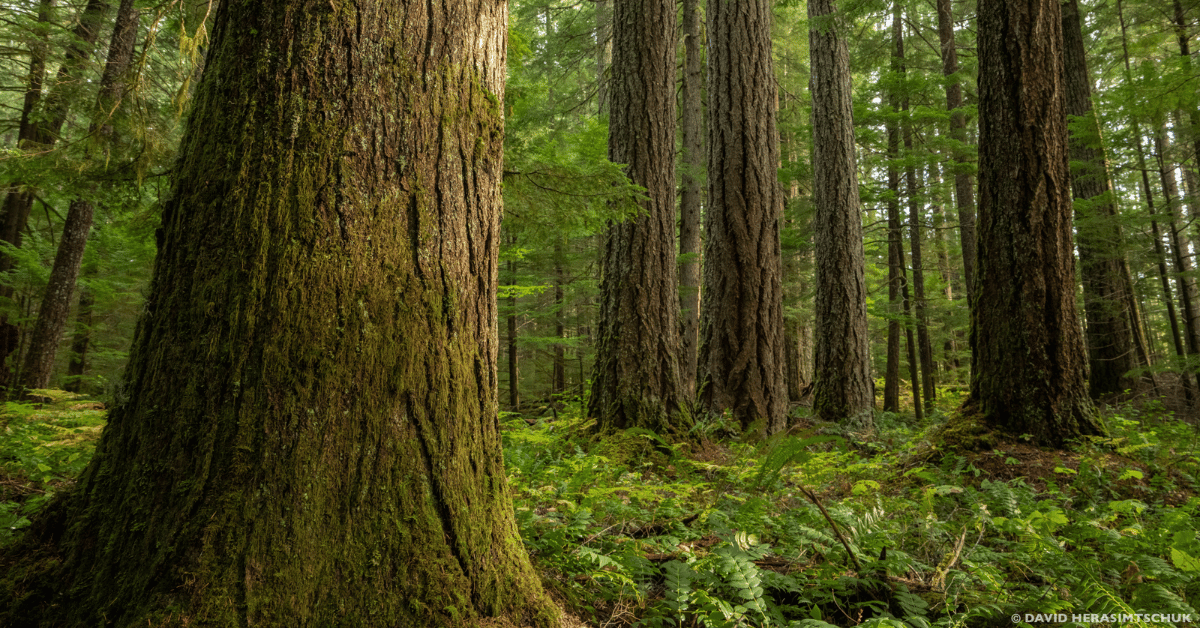
Photo by David Herasimtschuk