




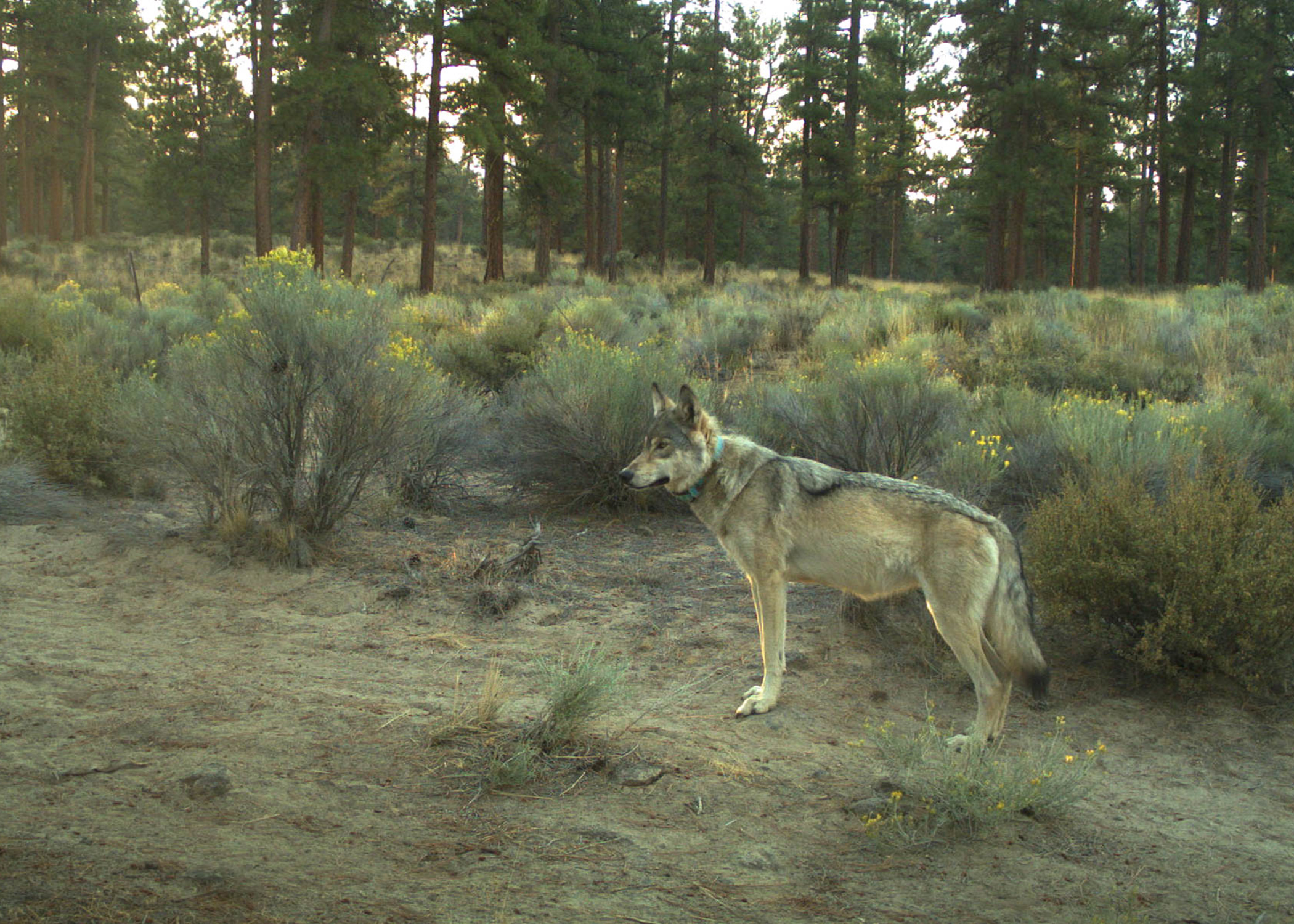
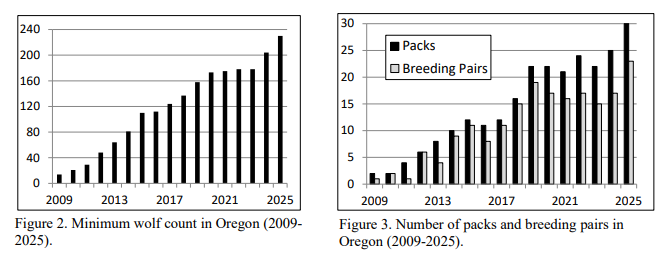
Today, the Oregon Department of Fish and Wildlife released its 2025 Wolf Conservation and Management report, documenting the overall health of Oregon’s wolf population. According to the report, the known wolf population increased by 26 wolves, from 204 to 230.
Oregon Wild’s Wildlife Program Manager Danielle Moser released the following statement:
“Wolves are dispersing from eastern Oregon and growing in population throughout the Cascades, a testament not only of the resilience and perseverance of wolves as a species, but the dogged science-based advocacy that has given them the space to do so.
A concerning revelation in the 2025 Oregon Wolf Report is the so-called accidental killing of two wolves by agents from the US Department of Agriculture’s Wildlife Services. The methods of this controversial agency led to the 2019 banning of cyanide bombs (M-44s) in Oregon because of their indiscriminate killing of wildlife, pets, and endangerment of people. The wolf report does not specify how the wolves were killed, but if it were by M-44 poisoning, that would be against Oregon law. If they were shot, the responsible agents must be removed from their post immediately. More information must be disclosed to the public about this unacceptable incident.
The Trump administration has made no effort to disguise its hostility to wolf recovery and wildlife in general. Politicians are attacking wolves’ protected status, eliminating funding for non-lethal technical assistance, and encouraging grazing on public lands wolf habitat that will lead to more conflict. That this coincides with the increased killing of wolves in protected areas by federal agents is no coincidence.
Reducing conflict is not only investing in non-lethal tools and prevention, but also protecting habitat. Roadless areas, Wilderness, and migration corridors are vital refuges for not only wolves, but their preferred prey. The more we protect our landscapes, the more wolves can have a chance to thrive.
The Oregon legislature has authorized new money for coexistence work and non-lethal tools. With these new resources, we urge wildlife managers to prioritize non-lethal tools to diminish conflict before resorting to killing wolves.”
2025 updates by the numbers
| Population | 230 |
| Breeding Pairs | 23 |
| Total Mortality | 42 |
| Poaching or Under Investigation | 4 |
| Government-killed | 27 |
| Killed by vehicle collision | 3 |
| Human killed (% killed of known population) | 39 (14%) |
Despite persistent claims from some lobbyists and politicians, there is no publicly credible evidence to support the existence of a large, uncounted population of wolves in Oregon. Though often quoted uncritically, these claims have never been independently investigated.
###
Oregon Wild works to protect and restore Oregon’s wildlands, wildlife, and water as an enduring legacy for future generations.