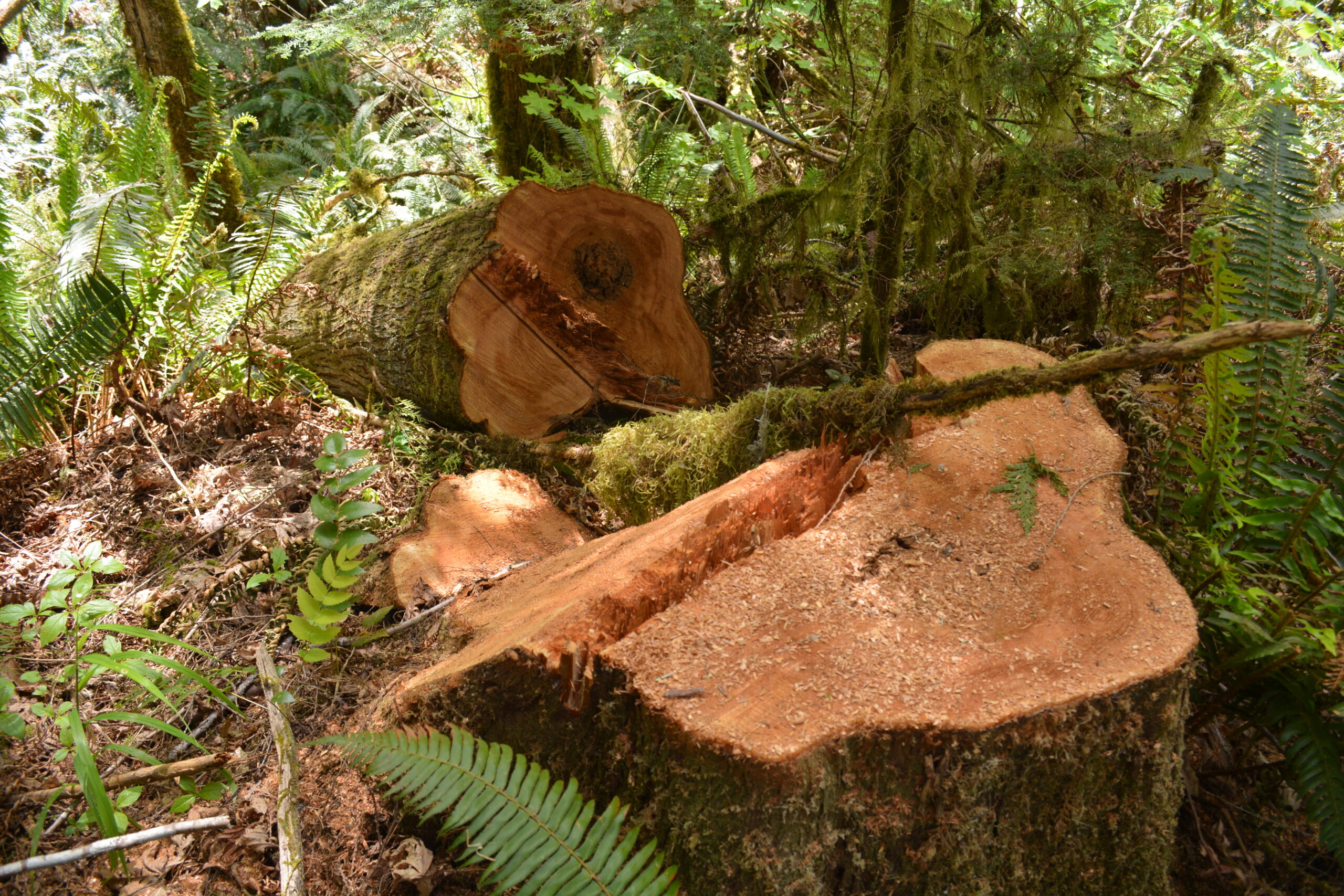
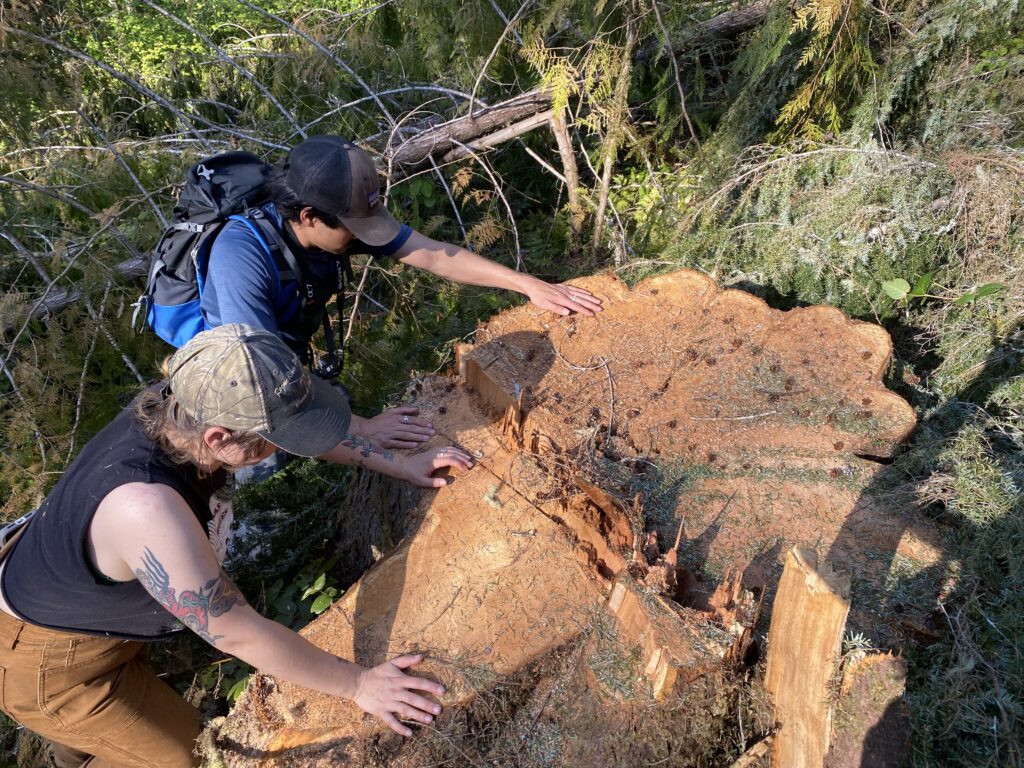
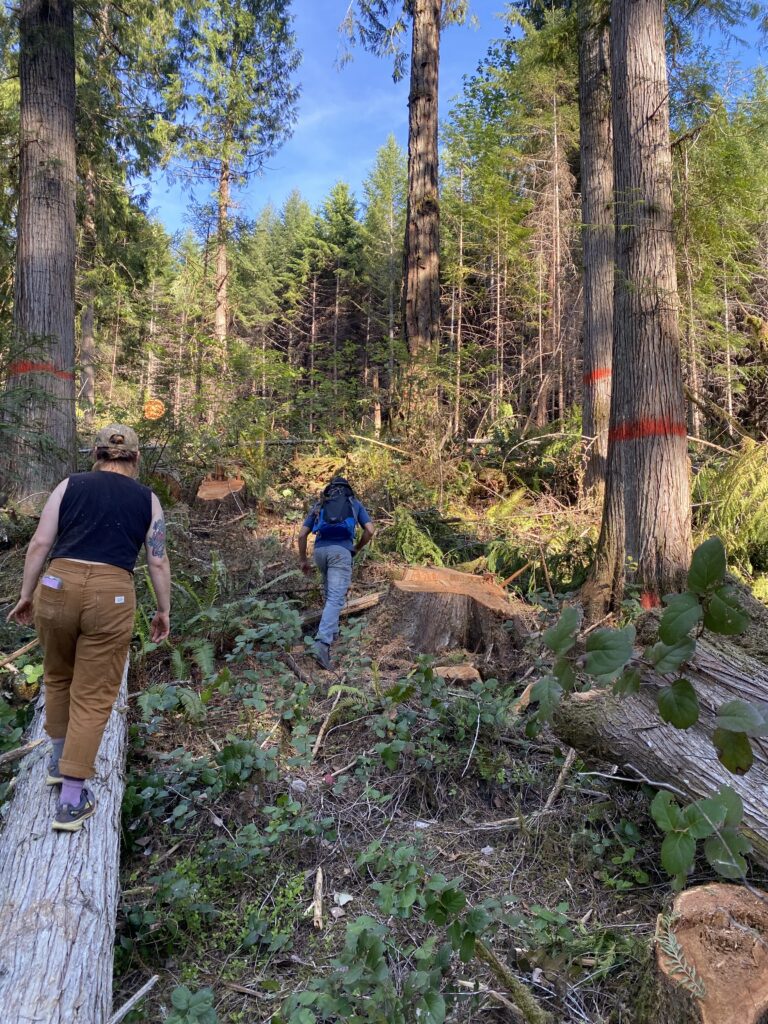
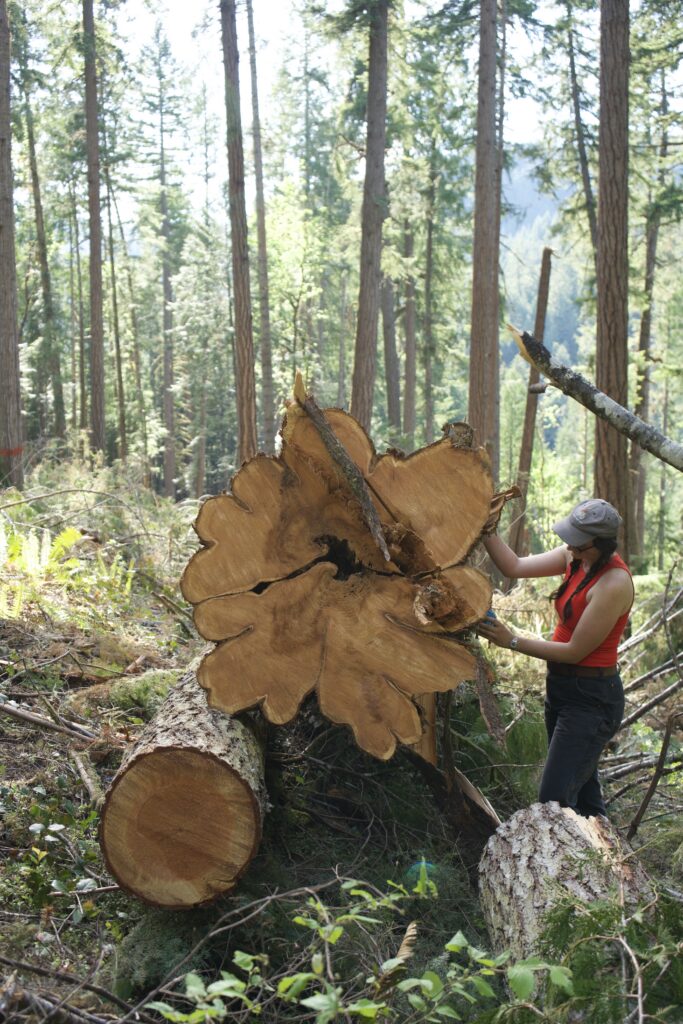
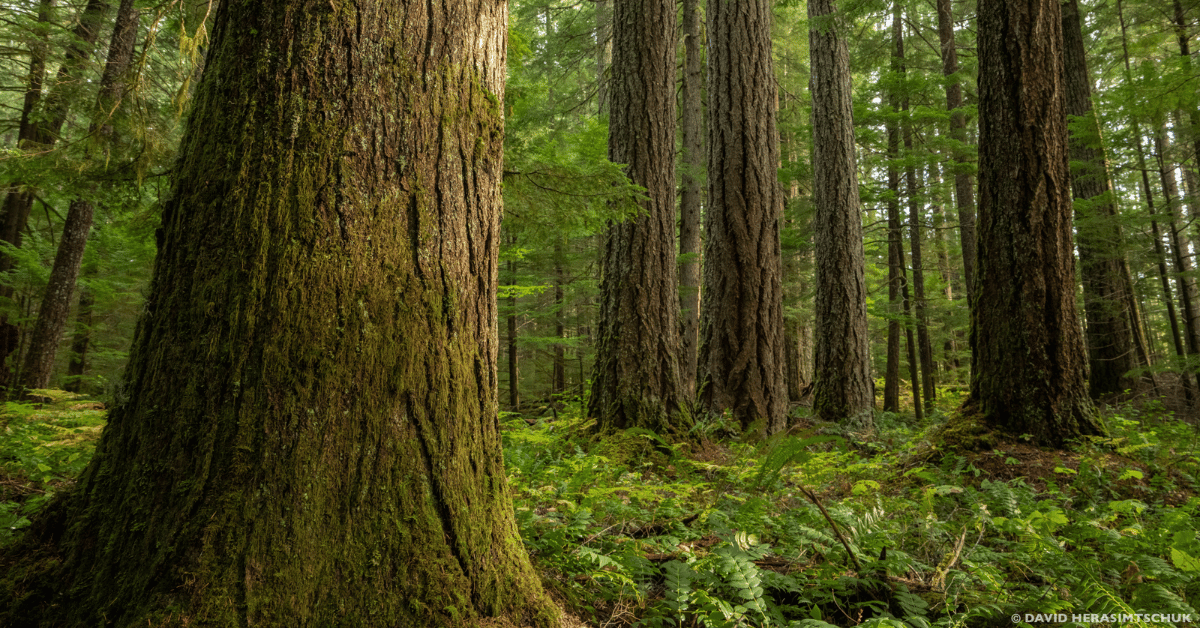
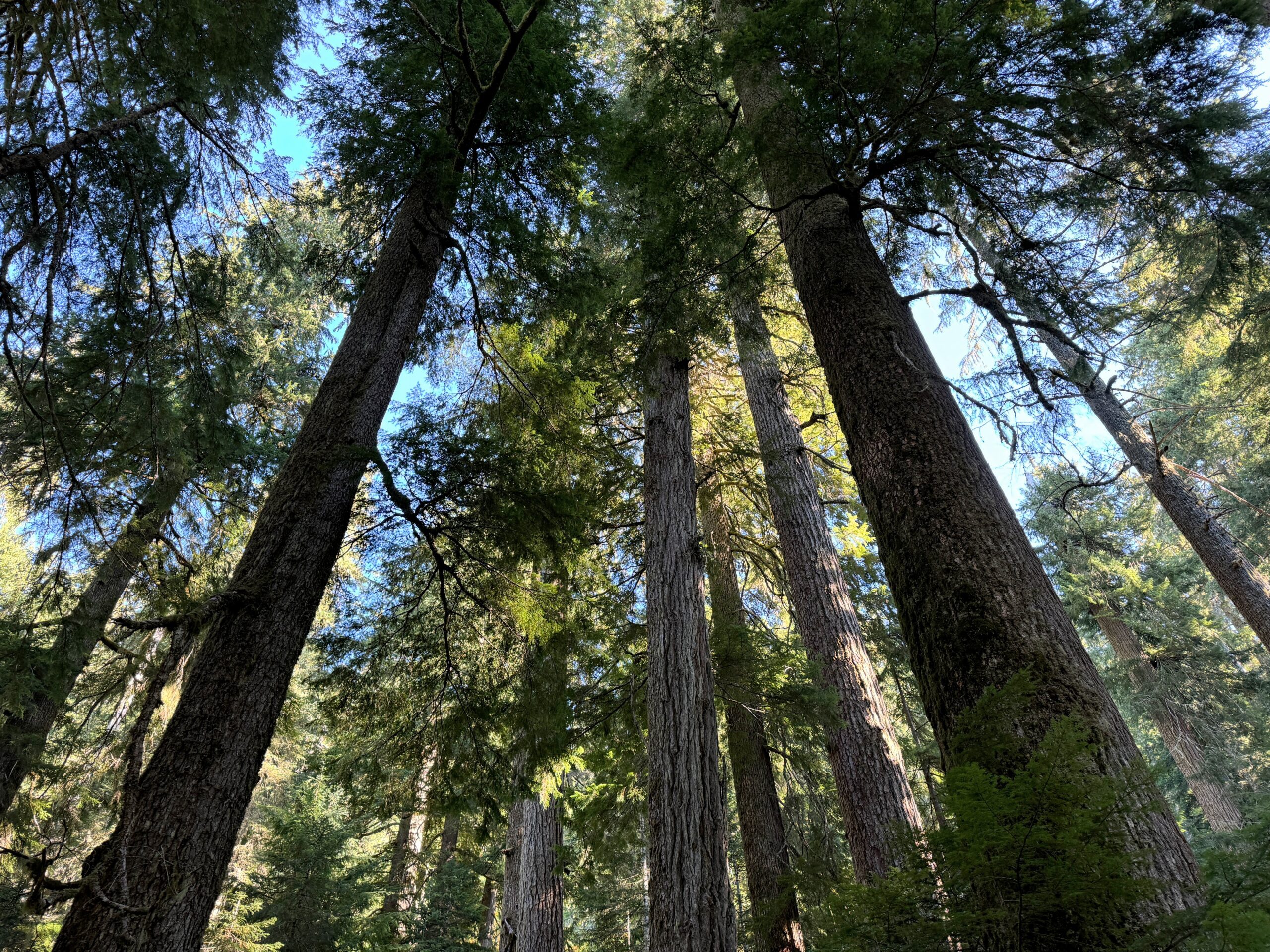
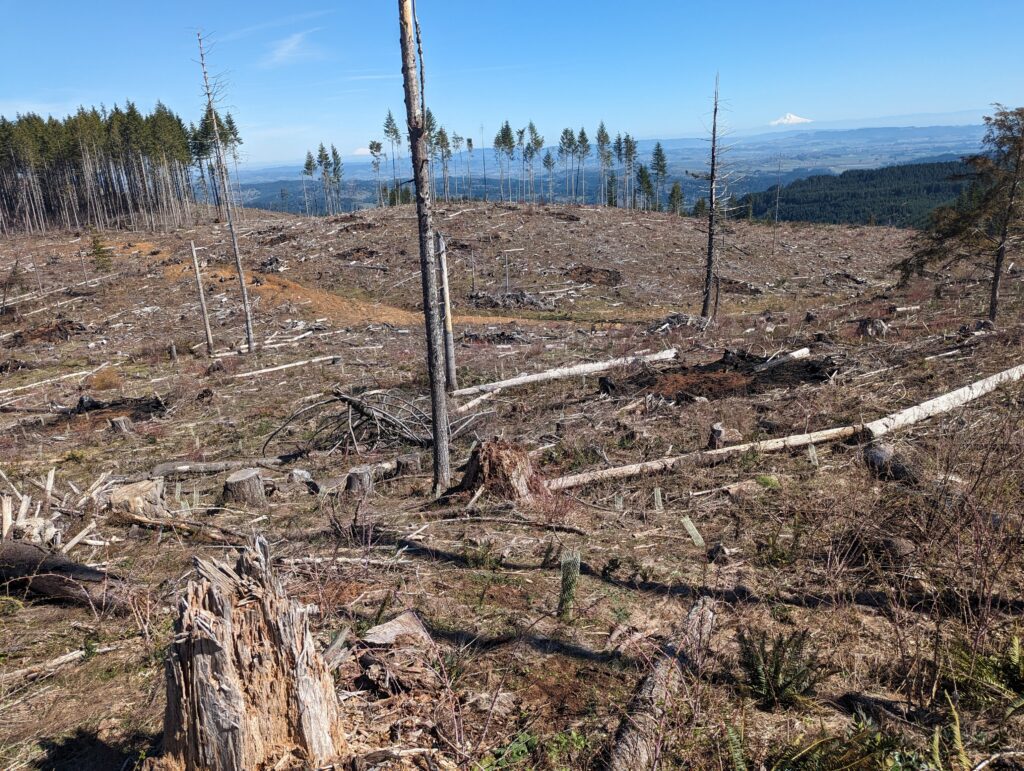
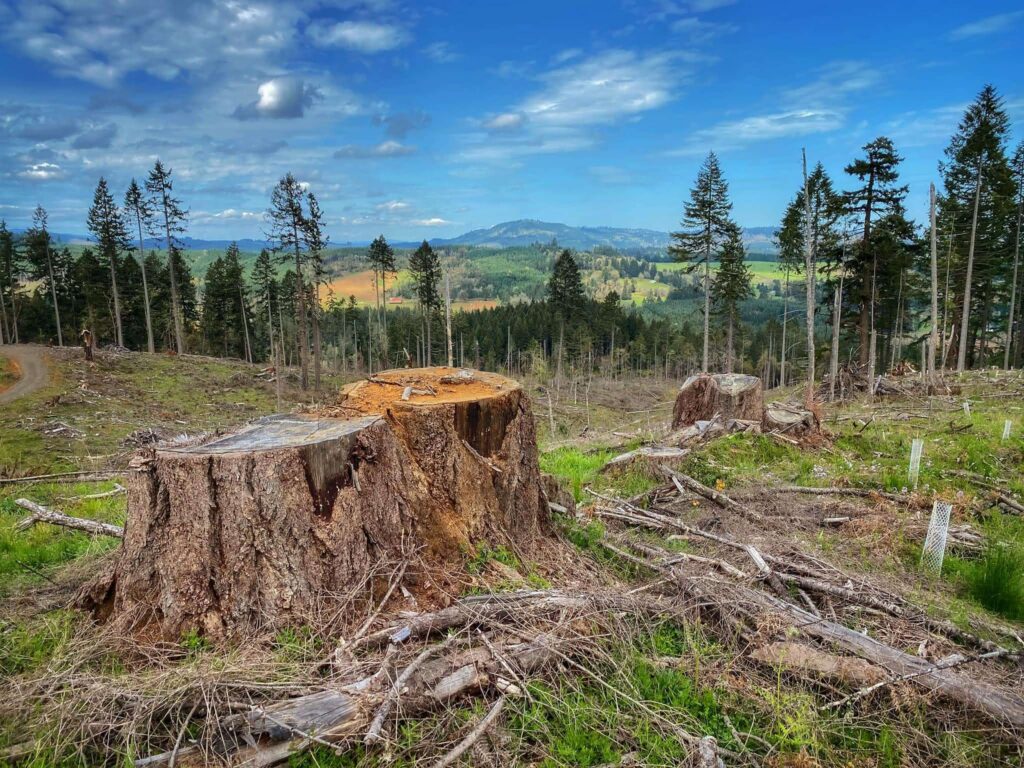
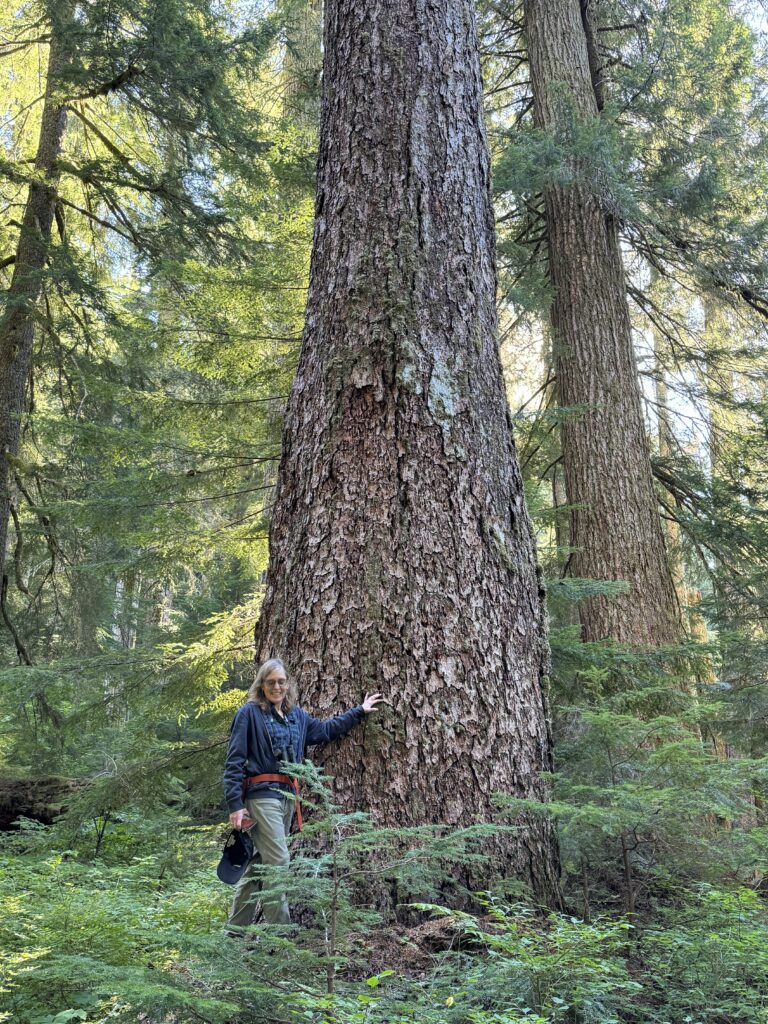
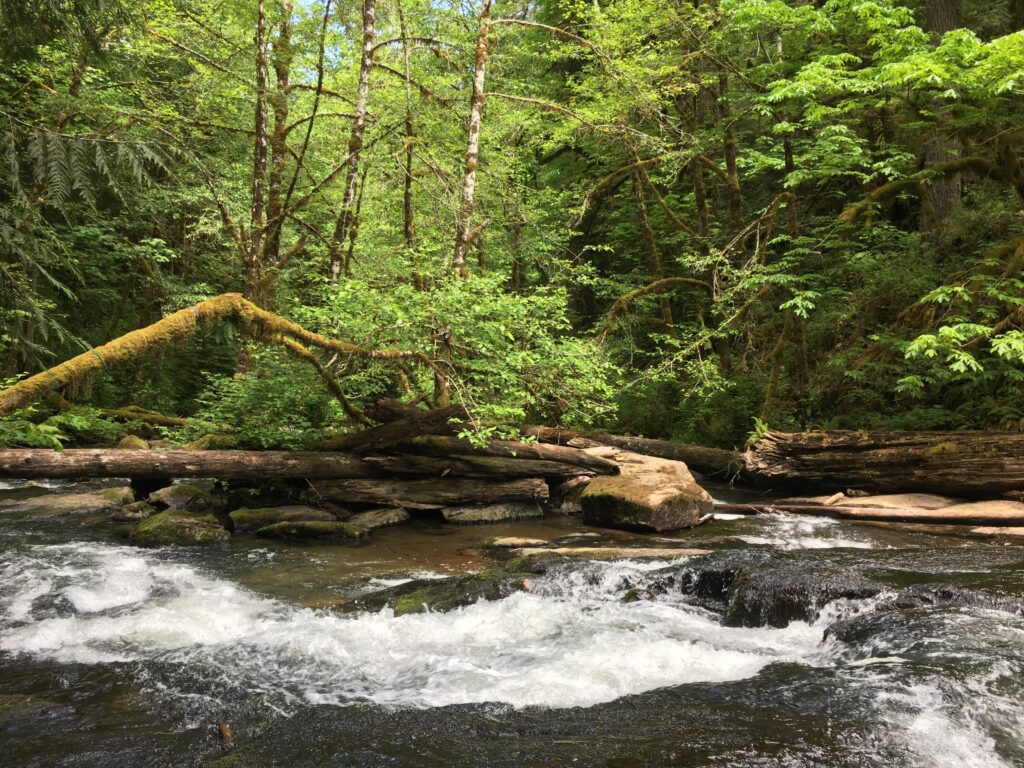
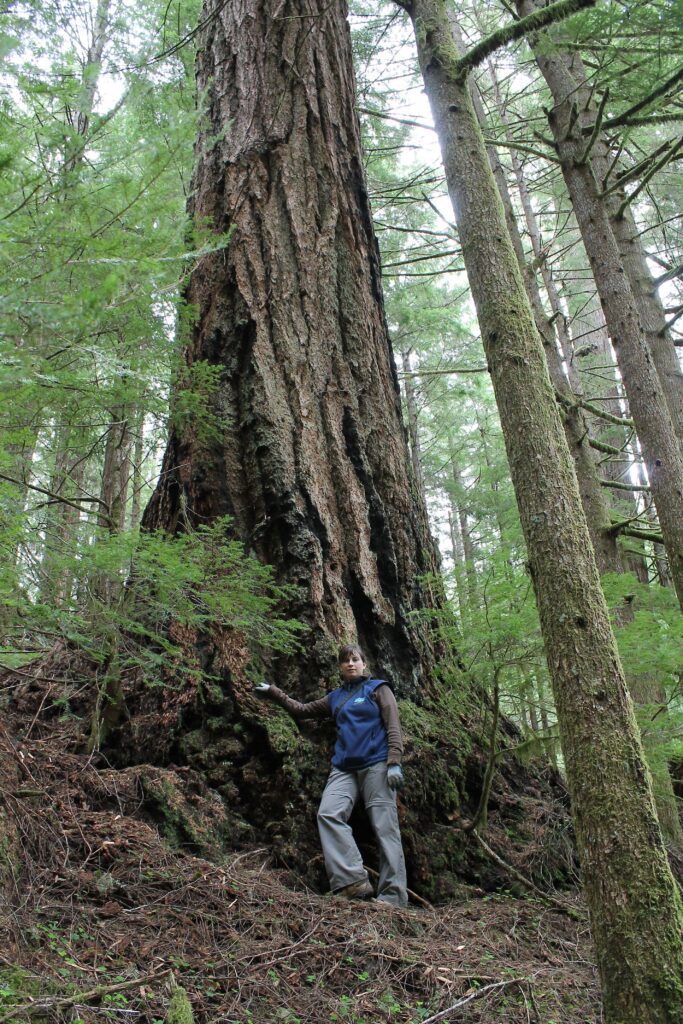
Yoncalla, OR — In response to illegal logging of old-growth forest recently documented in the Bureau of Land Management’s (BLM) Blue and Gold timber sale located in the Oregon Coast Range, conservation organizations Cascadia Wildlands, Oregon Wild, and Umpqua Watersheds filed a Motion for a Temporary Restraining Order and Preliminary Injunction in District Court to stop any further cutting. Volunteers documented the logging of old-growth trees, some of which are estimated to be 250 years old and are required to be protected by the BLM’s own rules, while camping near the contested area in the lower Umpqua River watershed this past weekend.
“The Bureau of Land Management initially denied that this old-growth forest even existed in the project area, but this was proven untrue by our volunteers and agency whistleblowers. After being caught in that lie, BLM pivoted and assured the Court that the agency would take measures to protect these unique legacy trees,” said Nick Cady, Legal Director at Cascadia Wildlands. “This unsurprisingly was also a fabrication; the BLM simply cannot be trusted to oversee our public forests.”
The conservation organizations initially filed a lawsuit against the Blue and Gold timber sale, which proposes to log 3,200 acres of public forest, in September 2024, argued the case in November 2025, and have been awaiting a decision from the District Court. The recent observation of the illegal old-growth logging and subsequent filing for a restraining order comes on the heels of a discovery that BLM had fabricated or manipulated the underlying timber sale data to make the project appear feasible. The motion filed today will expedite a ruling.
Plaintiffs have alleged numerous violations of federal environmental laws in their case, including the Federal Land Policy and Management Act and the National Environmental Policy Act. Central to the claims are impacts to old-growth forests and species that require older forest habitat for their survival, including the northern spotted owl and marbled murrelet, both which are listed on the federal Endangered Species Act. The unit where old-growth logging was recently documented is home to an occupied northern spotted owl site, which BLM is failing to protect despite its obligations under the bedrock statute.
“These remaining parcels of old-growth forests in the Coast Range are critical for the habitat values they provide, the clean water they filter, and the carbon they store to help mitigate climate change,” said Janice Reid, Conservation Chair of Umpqua Watersheds. “Unfortunately, the Bureau of Land Management is shirking its legal duties to protect the old-growth with its mission to ramp up the cut.”
Per its own forest management plan, the Bureau of Land Management is not legally permitted to log old-growth forests, and specifically those trees established before 1850 and larger than 40” wide at breast height. The logging documented this past weekend included trees that fit this criteria, including some up to 67” in diameter.
“Even if the agency can somehow explain why logging these ancient trees is allowed under its plan, it was required to let the public know as part of the project planning process, and explain what the effects of cutting those trees would be on the surrounding forests and habitats. BLM instead said the forests were much younger, obfuscating the impacts that we are now seeing as these ancient trees are being cut,” said Meriel Darzen, Senior Staff Attorney at Crag Law Center, which represents the plaintiff organizations along with their own in-house attorneys.
“The BLM is failing to uphold even the most basic safeguards for our largest and oldest trees. They’re cutting down old-growth when they think the public isn’t paying attention,” said John Persell, Senior Staff Attorney for Oregon Wild. “This is just a preview of the destruction we’ll see across western Oregon’s ancient forests as the Trump administration pursues its reckless logging agenda.”
Even as the Bureau of Land Management is attempting to push through reckless timber sales like Blue and Gold under the existing policy framework, the Trump administration is working to revise the agency’s 2016 Resource Management Plans for 2.5 million acres of western Oregon forests. It is hoping to quadruple the cut with the revision and make logging the sole focus of these lands over other values, such as recreation, habitat, carbon storage, and clean water.
The organizations are represented by attorneys from Crag Law Center, Cascadia Wildlands, and Oregon Wild in the matter.
The declarations with the documentation of the old-growth logging can be found here and here.
####* Photos for press use. Find high-resolution photos of the illegal logging and the threatened forests in the Blue and Gold timber sale here.Photo credits: Cascadia Wildlands.
Over 50 Oregon businesses sign letter supporting protections for roadless wildlands
In a letter sent to Oregon’s congressional delegation today, a coalition of over 50 Oregon businesses from across the state voiced their support for roadless forest protections. The signatories–from breweries to farmers to outdoor outfitters and guides–are calling on Congress to oppose the Trump administration’s plan to repeal the Roadless Area Conservation Rule.
The Roadless Rule is a popular federal policy that protects 2 million acres of wild, public forestlands across Oregon and nearly 60 million acres nationwide from roadbuilding, commercial logging, and development. The businesses are also urging lawmakers to prioritize the passage of the Roadless Area Conservation Act (H.R.3930 & S.2042) in the next Congress. This legislation would codify the Roadless Rule in federal law. Currently, Oregon’s entire delegation, except for Val Hoyle (OR-4) and Cliff Bentz (OR-2), is a co-sponsor of the bill.
In the letter, the businesses note: “Oregon’s businesses rely heavily on public lands, clean water, healthy watersheds, and intact forests. According to a 2022 analysis, spending on outdoor recreation in Oregon exceeded $16 billion and supported 192,000 jobs. A recent analysis by Earth Economics found that protected Roadless Areas in Oregon alone contribute $2.5 billion in annual economic benefits to our state.”
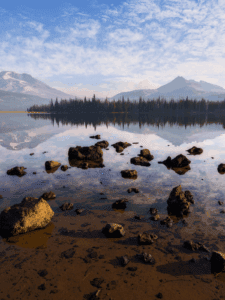
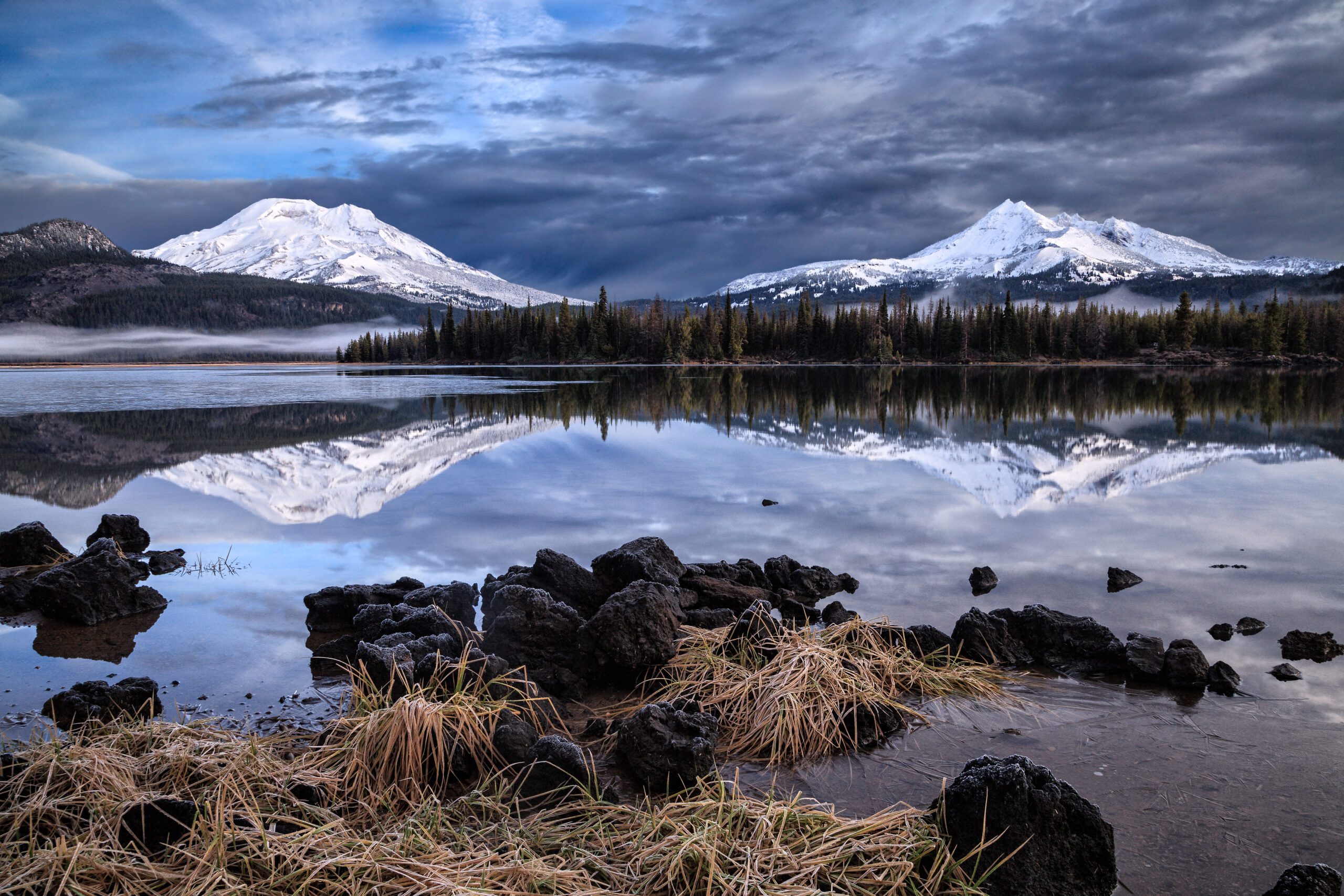
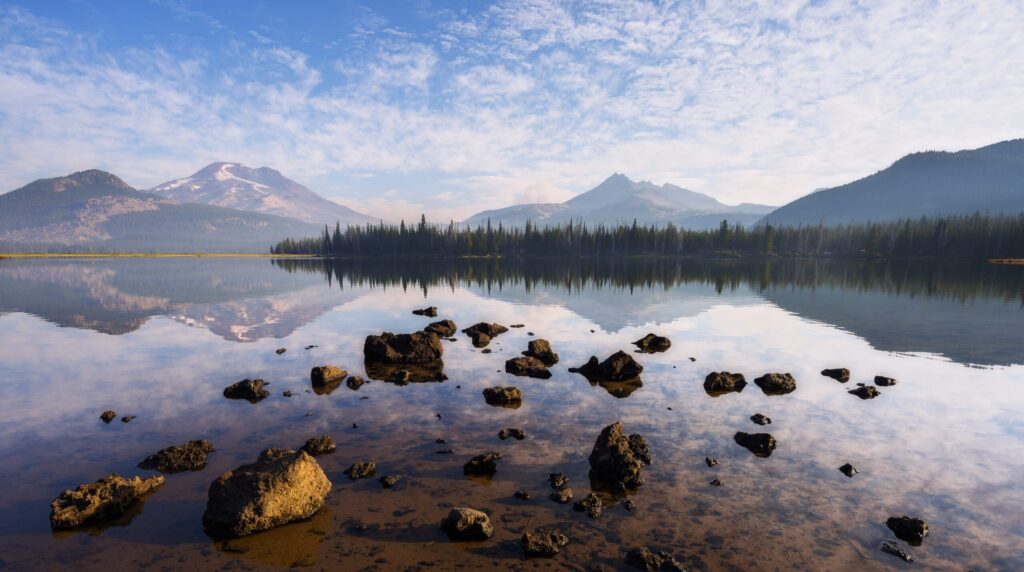
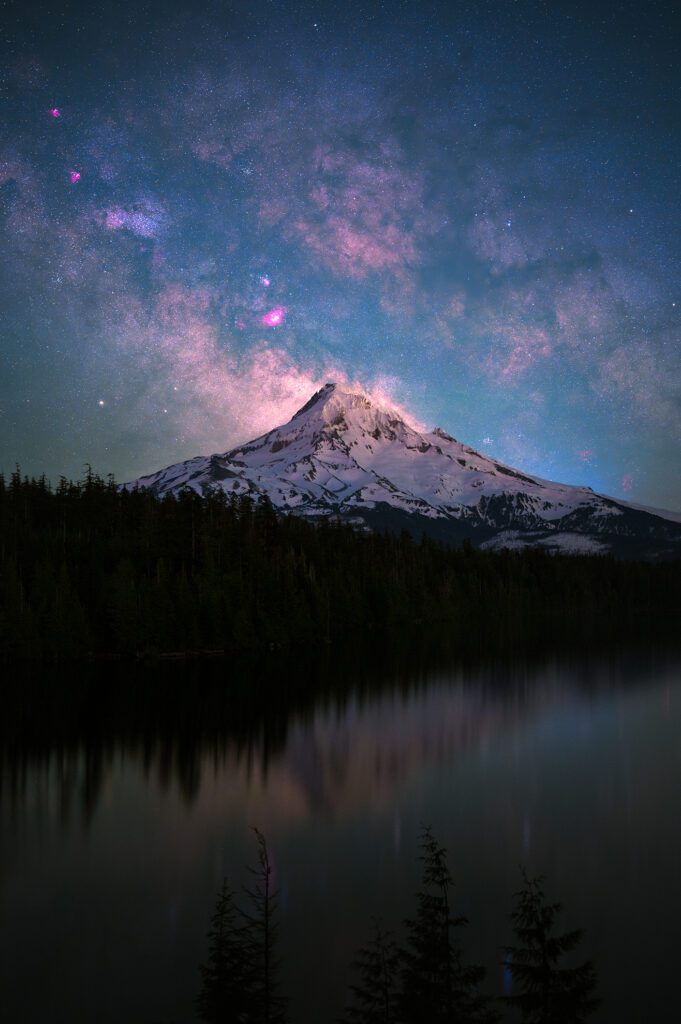
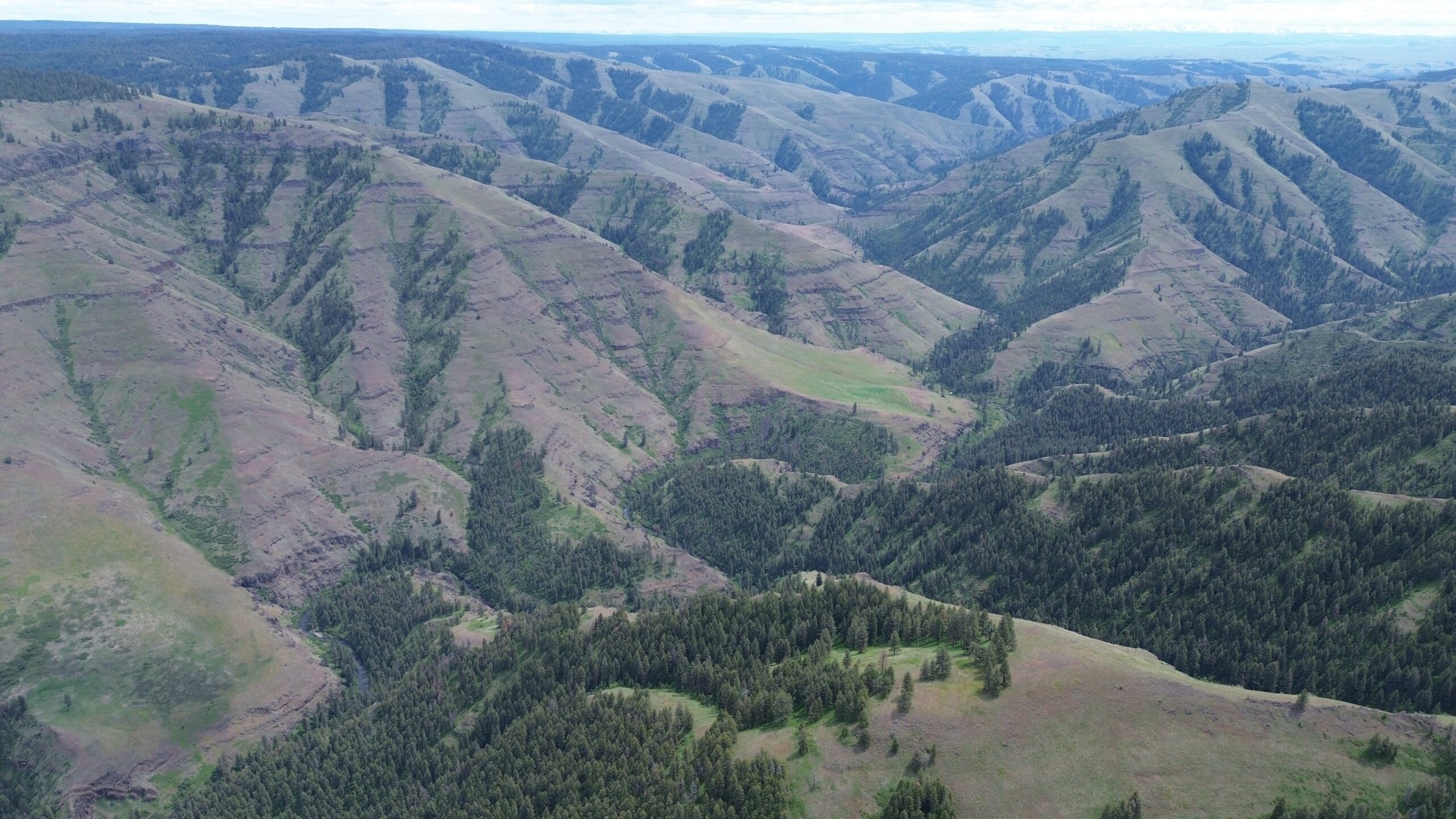
Sparks Lake by Scott SmorraPaint Daniel Gomez’s incredible photograph of the Milky Way from Lost LakeJoseph Canyon Roadless Area
“Roadless forests are some of the last truly wild places we have, and protecting them matters for our environment, our communities, and even our local businesses,” Ryan Still, co-founder of Lazy Days Brewing Co. in Portland, said. “Clean water and healthy ecosystems are essential to brewing, but they’re also part of what makes Oregon feel like home.”
The letter comes ahead of the anticipated US Department of Agriculture’s draft Environmental Impact Statement for the Roadless Rule repeal. The process that began last year, and resulted in over 99% of the 600,000 comments submitted citing opposition to the plan, will soon enter a second public comment period.
“Protecting roadless forests on public lands is vital to preserving valuable habitat for the fish my business relies on,” said Chris Daughters, owner of the Caddis Fly Shop in Eugene. Daughters added, “I support passing the Roadless Area Conservation Act.”
In Oregon, the Roadless Rule covers beloved public lands like Tumalo Mountain and the Cascade Lakes in Deschutes National Forest, Larch Mountain in the Columbia River Gorge, Rough and Ready Creek and the wild rivers of the Siskiyou Mountains, and Joseph Canyon in the Wallowa-Whitman National Forest. The businesses caution that eliminating protections for these intact public lands “puts our natural heritage and economic well-being at risk.” “I believe conserving Roadless Areas conserves Oregon’s ethos,” stated Megan Kellner-Rode, co-owner of Boundless Farmstead, outside of Bend. “Roadless Areas are good for everyone, from the flora and fauna, to hunters and hikers, to anyone who desires clean water and clean air. We must fight to keep Oregon’s pristine forests roadless and untouched.”
Additional Quotes
“Wild forests provide us with not only clean water, abundant wildlife, and world-class recreational opportunities, but are a critical part of local cultural heritage. We named Blossom Barn Cidery after Blossom Bar rapid on the Wild and Scenic Rogue River.” Jeremy Hall, owner of Blossom Barn Cidery near Grants Pass.
“Bend is well-known for being home to many amazing breweries, all of which rely on a clean water source as the most essential ingredient in the beer we make. Protecting Roadless Areas is a priority we take seriously in order to make sure this precious resource is not compromised.” Bryon Pyka, Terranaut Beer owner and brewer in Bend.
“Outdoor recreation directly benefits our business by promoting tourism and recreation that is made possible by the roadless lands in the Sisters area. Many of our customers stop to get a coffee or breakfast on their way to do outdoor activities in the area.” Jesse Durham, co-owner of Sisters Coffee Company.
Signers
“It is vital to protect natural resources for all of our citizens who enjoy the benefits of the natural world that surrounds us. Whether you are a hiker or hunter, bird watcher or angler, we all know the places where we connect to nature are too valuable to lose to corporations for exploitation.” Jeffrey Perrin, owner of The Fly Fisher’s Place in Sisters.
“Outside of designated Wilderness, roadless areas are the last truly wild places in our national forests. They deserve to be managed for wildlife, clean water, and recreation — not carved up for short-term profit.” Sarah Cuddy, owner of Wallowa Llamas in Baker City.
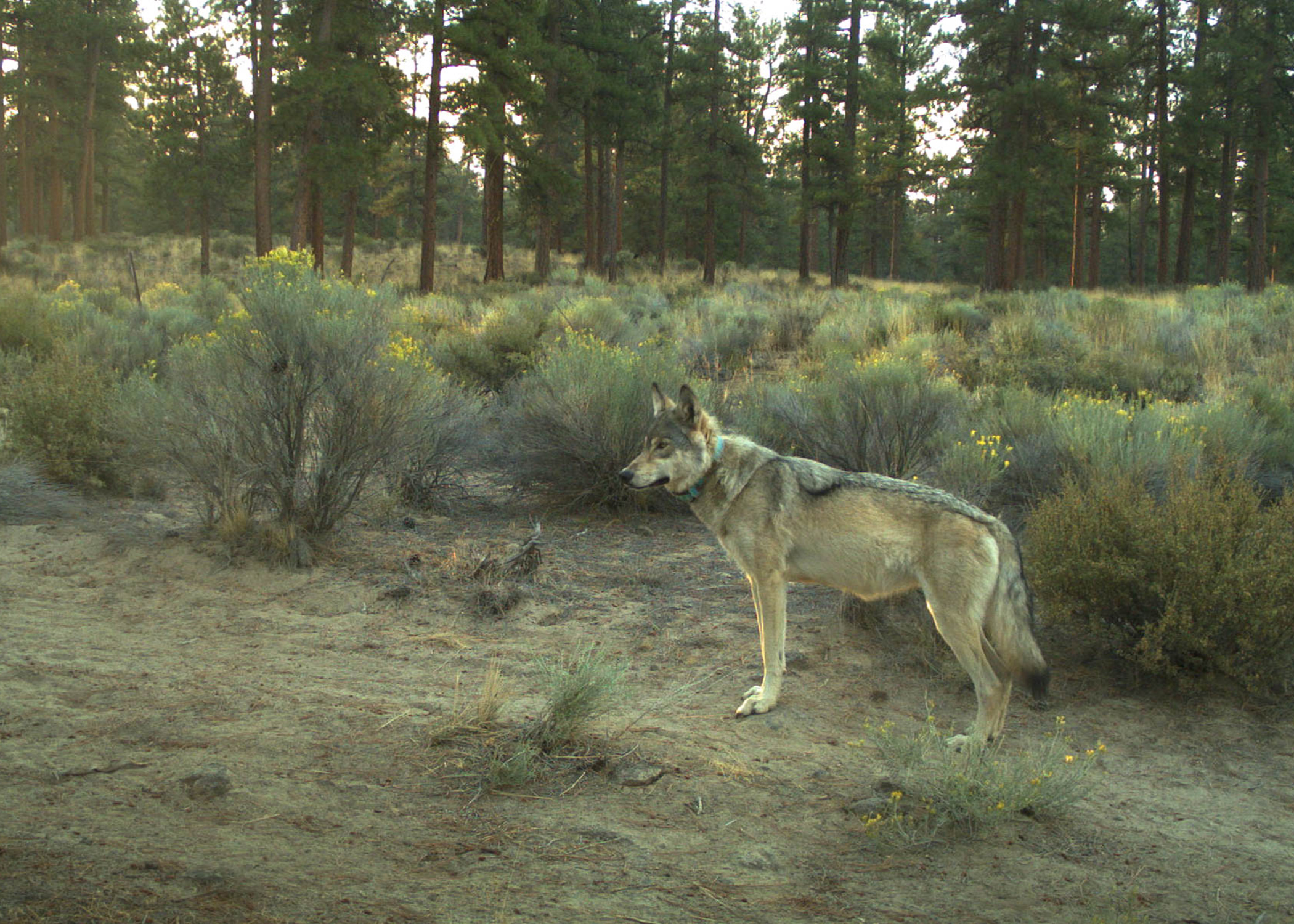
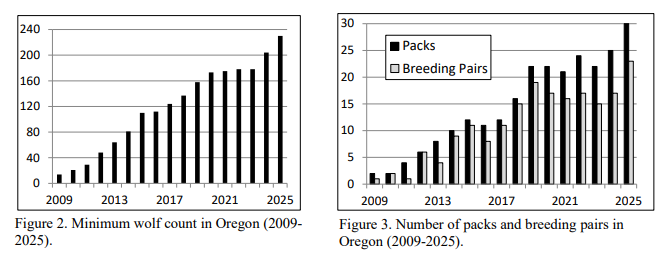
Today, the Oregon Department of Fish and Wildlife released its 2025 Wolf Conservation and Management report, documenting the overall health of Oregon’s wolf population. According to the report, the known wolf population increased by 26 wolves, from 204 to 230.
Oregon Wild’s Wildlife Program Manager Danielle Moser released the following statement:
“Wolves are dispersing from eastern Oregon and growing in population throughout the Cascades, a testament not only of the resilience and perseverance of wolves as a species, but the dogged science-based advocacy that has given them the space to do so.
A concerning revelation in the 2025 Oregon Wolf Report is the so-called accidental killing of two wolves by agents from the US Department of Agriculture’s Wildlife Services. The methods of this controversial agency led to the 2019 banning of cyanide bombs (M-44s) in Oregon because of their indiscriminate killing of wildlife, pets, and endangerment of people. The wolf report does not specify how the wolves were killed, but if it were by M-44 poisoning, that would be against Oregon law. If they were shot, the responsible agents must be removed from their post immediately. More information must be disclosed to the public about this unacceptable incident.
The Trump administration has made no effort to disguise its hostility to wolf recovery and wildlife in general. Politicians are attacking wolves’ protected status, eliminating funding for non-lethal technical assistance, and encouraging grazing on public lands wolf habitat that will lead to more conflict. That this coincides with the increased killing of wolves in protected areas by federal agents is no coincidence.
Reducing conflict is not only investing in non-lethal tools and prevention, but also protecting habitat. Roadless areas, Wilderness, and migration corridors are vital refuges for not only wolves, but their preferred prey. The more we protect our landscapes, the more wolves can have a chance to thrive.
The Oregon legislature has authorized new money for coexistence work and non-lethal tools. With these new resources, we urge wildlife managers to prioritize non-lethal tools to diminish conflict before resorting to killing wolves.”
2025 updates by the numbers
Population
230
Breeding Pairs
23
Total Mortality
42
Poaching or Under Investigation
4
Government-killed
27
Killed by vehicle collision
3
Human killed (% killed of known population)
39 (14%)
Despite persistent claims from some lobbyists and politicians, there is no publicly credible evidence to support the existence of a large, uncounted population of wolves in Oregon. Though often quoted uncritically, these claims have never been independently investigated.
###
Oregon Wild works to protect and restore Oregon’s wildlands, wildlife, and water as an enduring legacy for future generations.
April 9, 2026 – Oregon breweries know better than anyone that“Great beer starts with clean water!”
We are fortunate to have some of the best drinking water on the planet and clean Oregon drinking water is the #1 ingredient in each and every beer brewed across our state. Clean Oregon water is our most precious resource and one that is at the heart of Oregon’s world-class brewing community.
Unfortunately, this incredible resource is more threatened now than ever before. Over the past 15 months, the Trump administration has launched an unprecedented assault on our public lands, forests, and watersheds. These multi-faceted threats include efforts to rescind the Roadless Rule (which protects 58 million acres nationwide and two million acres in Oregon), weaken protections for two million acres of forests in western Oregon, and erode Northwest Forest Plan safeguards for millions more acres across Oregon’s national forests.
To help raise awareness about these threats and to build support for watershed conservation, the Oregon Brewshed® Alliance is launching its 4th Annual Wild & Scenic Earth Day Collaboration Series this month. Coleman Hops, Yakima Chief Hops and Indie Hops, generously discounted several Salmon-Safe certified hop varieties while new partners Country Malt Group, Montana Craft Malt, and Admiral Maltings discounted malt for all 17 brews. These breweries in turn crafted special beers to honor their respective brewsheds and raise awareness about the need to defend and protect Oregon’s watersheds.
Participating breweries
BearKat Brewing
Binary Brewing
Deschutes Brewery
Double Mountain Brewery
Foreland Brewing
Grand Fir Brewing
Hetty Alice Beer
Hopworks Brewery
Lazy Days Brewing
Leikam Brewing
Level Beer
Living Haus Beer Co.
Parallel 45 Brewing
Silver Falls Brewing
Sunriver Brewing
Terranaut Beer
Tiny Giants Brewing
Worthy Brewing
Xicha Brewing
In addition to defending these watersheds against current threats, the Oregon Brewshed® Alliance is also working to advance the River Democracy Act. This historic legislation would protect over 3,200 miles of Oregon’s waterways as federally designated Wild & Scenic Rivers and better protect the drinking watersheds for nearly one out of every four Oregonians.
“Seeing the snow-capped peaks just beyond the hop fields reminds us how lucky we are to have access to such pristine water. It is also a reminder that we have the responsibility to protect these river systems, not just for the next harvest but also for the next generation. We don’t just grow hops in the Pacific Northwest, we live and recreate here. Scenic and healthy waterways are an important part of our lives. We are thrilled to partner with our friends at Coleman Agriculture to support the environmental advocacy work of the Oregon Brewshed® Alliance,” says Levi Wyatt, Yakima Chief Hops Manager of Corporate Social Responsibility.
“From the field to the glass, this is about stewardship and shared values,” said Ivy Hover of Coleman Agriculture. “We grow Salmon-Safe certified hops across all of our farms, and this year 11,000 pounds were designated through Yakima Chief Hops for philanthropic projects like Wild & Scenic. Oregon continues to lead the charge, with more than 80% of hop acreage certified Salmon-Safe. Clean water, and reducing environmental impact matters, and we are proud to stand with those who believe the same.”
“Oregon’s clean water is a resource that we can never, ever taken for granted. Breweries know how priceless our clean water is to our communities, our ecosystems, our economy, and our beer. Protecting our watersheds is absolutely paramount and we are honored to have such incredible partners adding their voice to this critical work,” said Oregon Wild’s Jonathan Jelen.
About the Watersheds & the Beers They Inspired
Hood River Brewshed – The West Fork Hood River and Cold Springs Creek (Tamanawas Falls) are two of the key waterways in this brewshed that would gain protections via the River Democracy Act.
Love Shed Wild IPA, Double Mountain Brewery (draft & reusable bottles) – The water in Hood River is made for world class beer. We need to protect it. Together with our friends at Coleman Hops and Montana Craft Malt, we’ve combined forces to raise awareness for one of our most precious commodities. With Citra hops leading and a throwback malt-forward grain bill, this IPA will remind you of what is good and right in the world. Let’s protect it together. Drier, more complex, and with more PNW hop aromas, but it retains the lovely ruby hue you know and love from our flagship.
“From the start, Double Mountain Brewery has been excited to brew with pristine local water, without adjustments. We find that the slightly soft Hood River water is ideal for our hop forward NW Ales and Lagers. The water is an integral part of our flavor and style. We embrace this terroir.”
Greg Balch, Head Brewer, Double Mountain Brewery.
Upper Deschutes Brewshed – Fall River and key tributaries of the iconic Metolius River both stand to gain new protections via the River Democracy Act.
Protect & Restore West Coast Pale Ale, Sunriver Brewing (draft & cans) – This amazing beer features Mosaic T90 hops from Lakeside Ranches, Amarillo Cryo and Strata Cryo from Coleman Agriculture, and Goschie Promise pale malt from Goschie Farms. All of these ingredients are Salmon-Safe and create a wonderfully unique beer that is representative of the terroir of Oregon’s Willamette valley. This pale ale is light, crisp, and has hoppy notes of fresh citrus, blueberries, passionfruit, and cannabis.
“Great beer requires great water, and as such, we’re obligated to promote stewardship and protection of our water sources. Ultimately, it’s an investment into both beer quality and our natural resources.” – Brett Thomas, Director of Brewing Operations, Sunriver Brewing
Tumalo Creek / Bridge Creek Brewsheds – The namesake Tumalo Creek as well as the headwater streams like Bridge Creek are some of the waterways in this brewshed that stand to gain new protections via the River Democracy Act.
Oregon Wild West Coast IPA, Deschutes Brewery (draft at Bend Public House) – A hint of malt sweetness balances with big hop character and aroma from Citra, Mosaic, Simcoe and Amarillo hops provided by Yakima Chief and Coleman Hops.
“Protecting Oregon’s rivers is paramount to our craft, our passion for the outdoors, and our home. Thanks for all the hard work Oregon Wild!“ – Robin Johnson, Head-brewer, Deschutes Public House
(There Is No) Planet B Extra Pale Ale, Terranaut Beer (draft) – A clean, high-quality drinking water source is the most essential ingredient in the beer we make, and it’s one we can’t take for granted as we watch current leaders make decisions that put long-term access to that resource at risk. With that in mind, we brewed this Extra Pale Ale in collaboration with Oregon Wild. This beer helps advance the conservation work of Oregon Wild and the Oregon Brewshed® Alliance, including public education and advocacy supporting the River Democracy Act, which aims to protect over 3,000 miles of Oregon waterways. Built on a clean malt base featuring Montana Craft Malt, this XPA stays crisp and focused, showcasing Coleman Agriculture’s salmon-safe Citra hops in full force. It’s bright, expressive,and a reminder of what clean water makes possible. – Bryon Pyka, Terranaut Beer
Safe From Salmon WC IPA, Worthy Brewing (draft) – Featuring Simcoe from Coleman Hops Alluvial Farm, as well as Centennial and Strata from Indie Hops.
“In Bend, our forests and rivers are part of everyday life. As a brewer, clean water and healthy public lands are not abstract ideas. They are the foundation of every pint we make. Earth First, Beer Second.“ – Nick Robbins, Brewmaster, Worthy Brewing
Bull Run Brewshed – Oregon Wild and partners helped to increase protections for Portland’s drinking water in 1996 and further protected it in 2001.
Downstream Session IPA, Hopworks Brewery (draft) – Using Salmon-Safe Goschie Promise malt from Goschie Farms, plus Cascade and Lorien hops from Coleman Agriculture and Indie Hops, this session IPA is a showcase for sustainability.
“Clean water does not just make up the heart of our beers at Hopworks, it makes up the core of who we are as brewers and residents of the beautiful Pacific Northwest. We breathe the oxygen produced by our verdant forests, drink our clean water from mountain snowpack, and hike, bike, fish, and enjoy the bounty of the wilderness around us. All of this is only possible due to the clean waters that flow through these watersheds.”
-Ryan Pappe, Brewery Director
Third Stone From the Sun IPA, Leikam Brewing (draft) – A crisp and clean West Coast IPA featuring hops from Yakima Chief, Coleman Hops and Indie Hops. Also, showcasing malt from Country Malt Group.
“Water is essential to beer production and we have the best water in the world! The beautiful Bull Run watershed is perfect for making clean, crisp beers. We need to protect our water and make sure that we continue to have this incredible and vital resource.”
-Sonia Marie Leikam, Owner, Leikam Brewing
Tight Lines Rye Pale Ale, Grand Fir Brewing (draft) – Hopped with Krush Citra, and Simcoe.
“The best beer starts with the best ingredients. We are so incredibly fortunate to be living in the beautiful and lush PNW where our drinking water is so pure. Like an artist, brewing beer with this pristine water is like having the best canvas which, in turn, provides the ultimate foundation in order to craft the perfect beer. I feel so lucky to be able to not only be using these waters for my craft, but to be supporting the conservation and protection of our Oregon’s rivers and watersheds.” – Whitney Burnside, Owner, Grand Fir Brewing
Tellus More West Coast Pilsner, Lazy Days Brewing (draft) – West Coast pilsner with an approachable bitterness profile. Expressions of grassy, citrus, floral, currant, tropical fruit, and a hint of dank.
Friendly Fog Hazy IPA, Hetty Alice Beers & Living Haus Beer collab (draft & cans) – Brewed with our best pals at Living Haus Beer, Friendly Fog pours like peach nectar with bright white foam. Tremendous aromas of peach rings, limoncello and papaya precede bright flavors of nectarine, mango and candied citrus before a long, satisfying finish. Featuring Salmon Safe hops from our Friends at Coleman Agriculture. 6.9% ABV 100% PALS.
“Part of the reason that we chose to name our company after my maternal grandmother is that we knew it would provide us with a compass to follow. It would allow us to ask ourselves “Would this decision make Hetty proud?” This compass led us to join 1% for the Planet, a global network of thousands of businesses that have pledged 1% of their annual revenue to approved environmental non-profits.
Oregon Wild is the state’s oldest statewide environmental non-profit and has been fighting to protect public lands for decades. With this beer, we are proud to join the Oregon Brewshed Alliance. Hetty loved the water, and we like to think she’d be delighted to know that the proceeds of this beer will go toward protecting this precious resource.
Gavin Lord, Owner of Hetty Alice Brewing
Cascade Cup Pale Ale, Level Beer (draft) – Brewed in collaboration with John I. Haas using Coleman Greenleaf’s award-winning Cascade hops.
Ash Creek / Luckiamute River Brewshed – Consisting largely of state and private forestlands, this brewshed benefits from the Private Forest Accord, which Oregon Wild and partners helped advance to improve forest management practices across ten million acres of private forestlands.
2 Wild 2 Scenic: Hop Drift West Coast IPA, Parallel 45 Brewing (draft) – A big, juicy West Coast IPA featuring Coleman-grown Simcoe and Indie Strata Hops; paired with Great Western Oregon Pure Malt.
“Access to clean water is key to brewing beer. From being the primary ingredient in beer, to its use for growing the barley, adjunct grains, and hops; clean water is essential to making great beer.”
– Ryan Booth, Owner, Parallel 45 Brewing
North Santiam Brewshed– A 22+ mile stretch of the North Santiam River stands to get Wild & Scenic River protections as part of the River Democracy Act, as well as the Breitenbush River, Whitewater Creek, and French Creek, which all feed into the North Santiam River.
Alta Costa Pale Ale, Xicha Brewing & Tiny Giants collab (draft & cans) – A San Diego-style Pale Ale featuring 100% Salmon-Safe ingredients: Admiral Maltings’ Goschie Promise malt, along with Coleman-grown Citra, plus Chinook and Strata whole cone hops from Indie Hops.
Abiqua & Silver Creek Brewshed – Consisting largely of state and private forestlands, the Abiqua and Silver Creek brewsheds benefit from Oregon Wild’s work to advance the Private Forest Accord as well as work to secure Habitat Conservation Plans for the Santiam forest that safeguards waterways with larger buffers and upland protections.
Straight From the Source IPA, Silver Falls Brewery (draft) – A West Coast IPA made with Goschie Promise malt, paired with Meridian, Lorien and Audacia hops from Indie Hops.
“At our core, we are deeply committed to preserving nature, protecting clean water, and safeguarding public lands so they can be enjoyed for generations to come.” – Jacob Hutter, Brewer, Silver Falls Brewing
Mid-Willamette / Tualatin River Brewshed – Consisting largely of state and private forestlands, this brewshed benefits from the Private Forest Accord, which Oregon Wild and partners helped advance to improve forest management practices across ten million acres of private forestlands.
River Routed IPA, BearKat Brewing (draft & cans)– West Coast IPA that is brewed and double dry hopped with Centennial, Citra and Strata hops from Coleman Agriculture and Indie Hops.
“For our beer release night, we’re donating 100% of proceeds from River Routed IPA to Oregon Wild.”
Run Salmon Run IPA, Binary Brewing (draft)– A smooth West Coast IPA with powerful passionfruit, orange, and strawberry aromas. Goschie Farms Pure Oregon malt delivers a yellow gold brew whose slightly honeyed edge balances the hop bitterness for a delightful quaff. Indie Hops Strata, Coleman-grown Citra and Crosby Farms estate grown Chinook.
“Without clean streams and air, Oregon could not support our beloved foods, beverages, and activities. What’s good for the world is good for humans.”
– Roger Wood, Owner, Binary Brewing
About the Oregon Brewshed® Alliance / Coleman Agriculture / Yakima Chief Hops
Launched by Oregon Wild in 2015, the Oregon Brewshed® Alliance is a coalition of brewing businesses, brewing community partners, and conservationists who understand the value of clean water and protected forest watersheds. The Oregon Brewshed® Alliance supports Oregon Wild’s conservation work to protect and restore the wild lands, wildlife, and waters that make our state a great place to live, work, and enjoy great beer. Great beer doesn’t start at the tap – great beer begins with clean water. Beer is over 90% water, after all, and that water is a product of the land that it flows through.
Coleman Agriculture has been a proud member of the Oregon Brewshed® Alliance for the last five years. As hop growers, the Oregon watershed is crucial to our day-to-day operations. As a seventh generation family farm, maintaining the Oregon watershed is crucial to the sustainability of the farm for the next generation. We are hyper-conscious not only of the water we use for irrigation, but also the effect we have on the watersheds via our management practices. This is why we take measures to limit our water inputs via drip irrigation, minimize runoff and erosion with cover cropping and participate in sustainability certification programs such as Salmon Safe to limit our use of inputs that might negatively affect watersheds.
Hops require a significant amount of irrigation to grow, and the quality of that water directly affects the yield and health of the plants. Elevated alkalinity levels in irrigation water can lead to an increase in the soil pH, which can make certain nutrients like zinc, manganese, and iron less available for uptake. Coleman has experienced firsthand the need to treat irrigation water due to poor quality and understand the very real business and environmental costs associated. By designating more river coastlines as Wild & Scenic via the River Democracy Act, we protect our watershed from potential industry related contaminants that could compromise the water quality we depend on to grow our hops.
Yakima Chief Hops – Land use change and water availability are the greatest environmental risks facing the hop industry. Working in partnership with conservation organizations such as Oregon Wild, YCH is helping to invest in watershed protection and restoration programs in hop producing regions to ensure access to clean water for growers, brewers and recreationalists alike. These agroforestry efforts also benefit freshwater ecosystems as well as our communities. Since its inception in 1988, YCH has been rooted in environmental stewardship, with the firm understanding that healthy hops require healthy waterways. YCH values the opportunity to expand our reach by partnering with Oregon Wild on initiatives such as the River Democracy Act, which actively advocates on behalf of our local landscapes and stakeholders.
Salem, Ore., – Governor Kotek signed HB 4134, the 1.25% for Wildlife bill, the culmination of over a decade of advocacy to secure dedicated funding for wildlife and their habitats. Conservationists lauded the new law as a historic accomplishment, demonstrating a model for other states that have struggled to fund their wildlife conservation programs.
“This is a visionary policy not just for Oregon, but for wildlife conservation nationwide. At a time when many states are struggling to fund basic protections, Oregon has stepped up with a solution, and shown other states a way forward,” said Danielle Moser, Wildlife Program Manager for Oregon Wild.
Through a modest increase in the statewide lodging tax, HB 4134 funds wildlife and habitat conservation, primarily the implementation of the state’s Wildlife Action Plan. In 2025, the state identified over 300 species of greatest conservation need. A 2023 NatureServe report ranked Oregon fifth in the nation for the percentage of at-risk animals, with more than half of amphibians, one in five reptiles, and roughly one in ten bird species already in decline.
At the same time, the Trump administration has pursued changes to Endangered Species Act protections that make it more difficult to recover species and safeguard critical habitat. Coupled with budget cuts and staff reductions at the US Fish and Wildlife Service, the responsibility for wildlife conservation has fallen to the states.
In her signing statement, Governor Tina Kotek noted that Oregon’s natural lands and wildlife are foundational to the state’s identity and economy. “Oregon’s long-term prosperity depends on the health of our fish and wildlife populations and the natural environment that underpins our tourism economy. By directing stable funding, this bill helps ensure that Oregon has resilient natural resources capable of supporting strong communities and a vibrant economy for generations to come.”
A broad coalition of conservation, hunting, fishing, forestry, farming, ranching, and business stakeholders supported HB 4134. During its consideration in the Oregon legislature, the public was overwhelmingly in favor of the bill, with over 84% of submitted testimony supporting it.
“This investment is about the Oregon we want to leave to future generations,” continued Moser, “An Oregon where healthy wildlife populations and thriving ecosystems continue to support our values, communities, and way of life.”
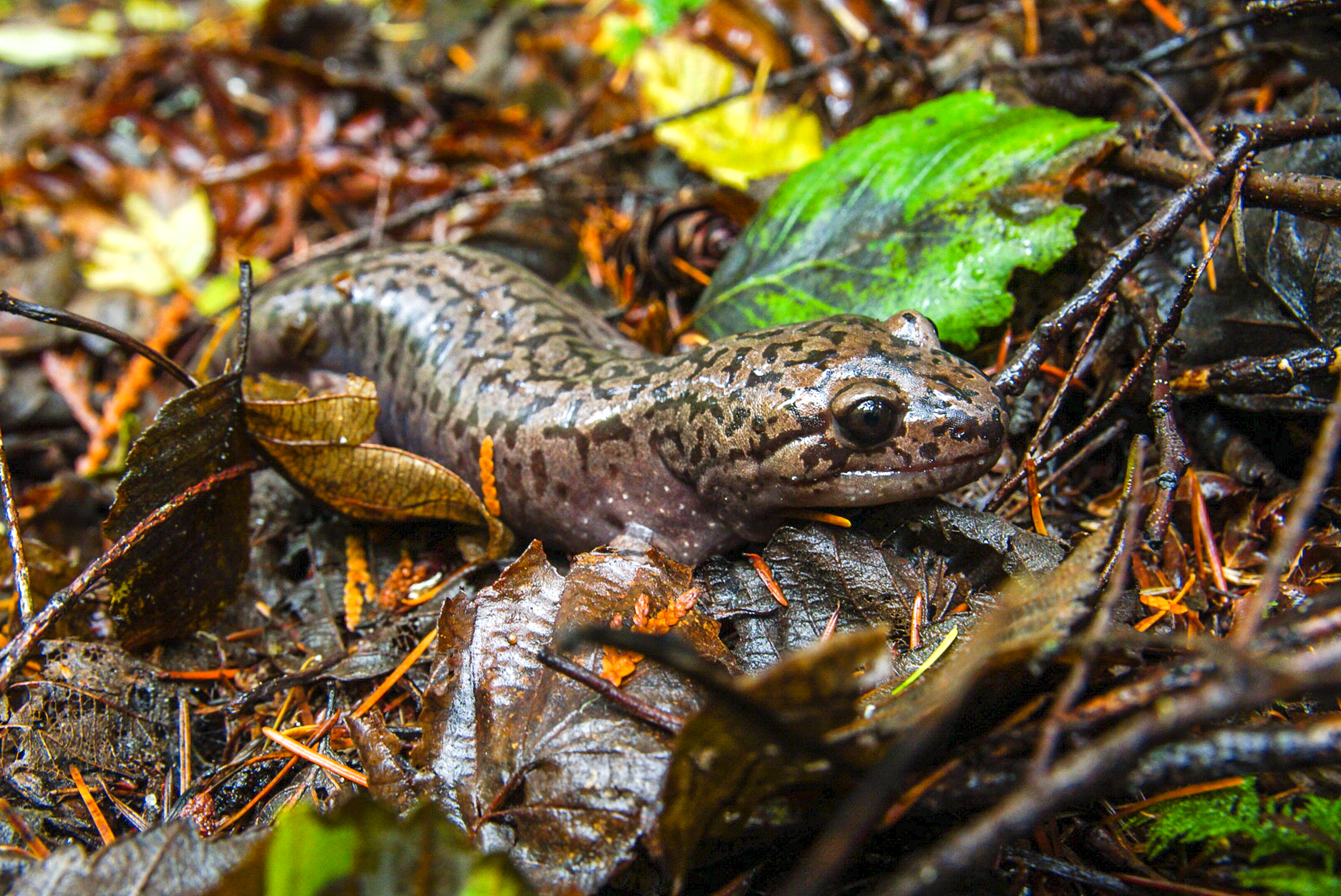
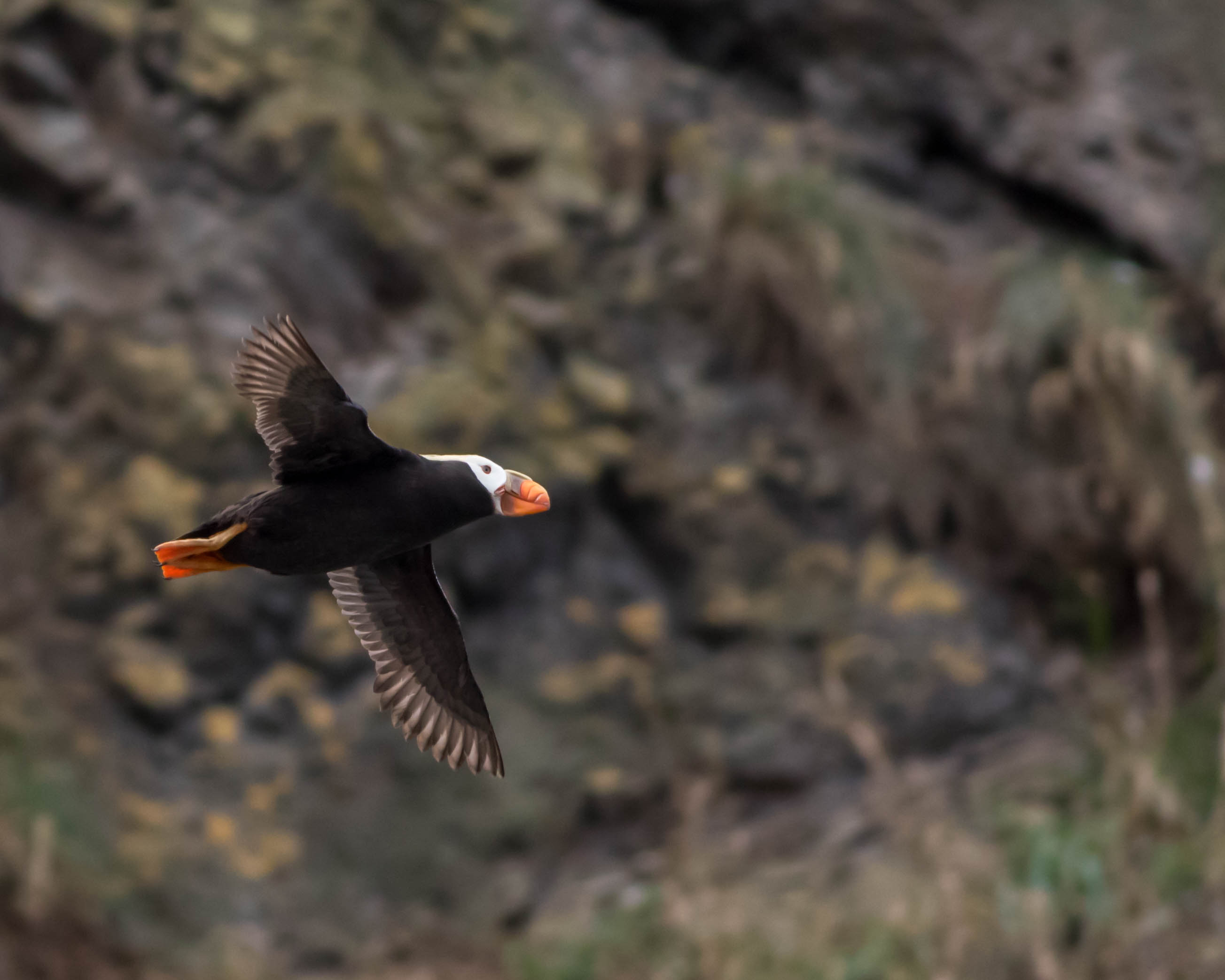
Species included as having the greatest conservation need are sea otters, Sierra Nevada red foxes, American pikas, silver-eared bats, North American porcupines, pygmy rabbits, western painted turtles, tufted puffins, great grey owl, desert horned lizard, Pacific lamprey, western bumblebee, and monarch butterfly.
Also included in the proposal is support for fighting poaching, promoting habitat connectivity, combating invasive species, funding wildlife coexistence, wildfire risk reduction, and conservation workforce programs.
Today, Greater Hells Canyon Council and Oregon Wild filed a legal challenge to the Ellis Integrated Vegetation Project. The Ellis Project is located southwest of Pendleton on the Heppner and North Fork John Day Ranger Districts of the Umatilla National Forest.
A core purpose of the project is to improve elk habitat, enabling them to stay on public lands and reducing conflict with neighboring private lands. After consistently centering improvements to elk habitat as a main priority, the Forest Service abruptly changed course, removing longstanding road management elements from the project. The elimination of habitat protections and failure to analyze resulting impacts violates the Umatilla National Forest’s own management plan and other environmental laws.
Numerous organizations and agencies expressed concerns about these changes and filed objections to the draft decision, including the Confederated Tribes of the Umatilla Indian Reservation, the Oregon Department of Fish and Wildlife, Blue Mountains Biodiversity Project, Greater Hells Canyon Council, Oregon Hunters Association, Oregon Wild, the Theodore Roosevelt Conservation Partnership, and the Rocky Mountain Elk Foundation.
“Keeping elk on public lands was one of the driving motivations in the development of the Ellis Project. The Forest Service has spent the last 7 years saying this project was going to improve elk habitat, benefitting both elk and elk hunters, and reduce conflicts on adjacent private lands,” said Jamie Dawson, Conservation Director for Greater Hells Canyon Council. “They’ve found that some road closures are necessary. Now they’ve fundamentally changed the project at the last second in a way that will harm elk and everyone who cares about them. Reasonable road management can protect both public access and wildlife habitat.”
The project area hosts some of the highest densities of Rocky Mountain elk in the state, but public lands in the area have too many roads to allow elk to find security when they need it. A key goal of the Ellis Project is to improve habitat quality and reduce disturbance in parts of the National Forest. Studies from the Forest Service’s Starkey Experimental Forest and Range have found that reducing road densities in the Blue Mountains of Eastern Oregon can be a very effective tool. Doing so will also have many other benefits to fish, wildlife, water quality, and recreation. Community stakeholders have supported strategic closure and decommissioning of some roads in this densely roaded landscape.
Every alternative that the Forest Service considered included road closures alongside proposed logging, except the no-action alternative. The road closures were a key component to gaining support from a broad group of interested members of the public. However, the Forest Service’s final decision created a new alternative that threatens the project’s stated objectives. This occurred without notice to stakeholders or the legally required scientific analysis, and is a major departure from the intent of the project and the nature of its development.
“I’ve been working with the agency and diverse stakeholders on this project for nearly a decade,” said Rob Klavins, Oregon Wild’s Northeast Oregon Field Coordinator based in Wallowa County. “It now appears Forest Service leadership is unbothered by undermining the hard work and trust their staff built with us and communities across the region. The Ellis Project is just the latest example of decision makers breaking promises and showing disdain for the land, the public, and even their own science.”
The Ellis Project is 110,000 acres and includes roughly 30,000 acres of commercial logging and 73,000 acres of small-diameter thinning. These elements are not being challenged in this litigation.
Greater Hells Canyon Council and Oregon Wild are represented by attorneys Brenna Bell and Oliver Stiefel from the nonprofit Crag Law Center.
Portland, OR – Yesterday, the Trump administration announced plans to move the Forest Service headquarters from Washington D.C. to Salt Lake City, Utah, shut down all regional offices, and consolidate all research facilities to Fort Collins, Colorado.
The Pacific Northwest Region office in Portland, Oregon, will be shut down.
“Moving the Forest Service headquarters to Utah sends a very clear message. Utah’s leadership is dedicated to dismantling America’s public lands,” said Climate Forests Program Manager Lauren Anderson. “The Trump administration is moving the hen house into the fox den.”
Utah’s legislature has spent millions of dollars both litigating and in a public relations campaign to take control of national public lands. Senator Mike Lee from Utah famously attempted to include language mandating the sale of Forest Service and Bureau of Land Management lands in the Senate reconciliation bill, a move that provoked outrage from across the political spectrum and was ultimately withdrawn.
“The agency’s attempt to move to a ‘state-based model, ‘ led by leadership in Utah, is no coincidence. It is another step towards privatizing management of America’s public lands and transferring control to states and corporate interests,” continued Anderson. “They are gutting environmental protections, suppressing science, and cutting the public out of public lands decisions.”
Yesterday’s announcement came as a shock to local Forest Service employees, some of whom received letters yesterday afternoon notifying them that their positions were subject to the reorganization and/or relocation. The US Forest Service workforce has already lost thousands of employees, approximately 16% of its workforce. The Trump administration’s attempts to relocate the Bureau of Land Management offices in his first term led to an exodus of staff experience and expertise, with 87% of the staff choosing to leave the agency.
Secretary of Agriculture Brooke Rollins’ press release includes: “Additional phases of the reorganization, including the formal elimination of regional and station office structures and the full transition to a state-based model, will be implemented over the coming year.” 10 Regional offices will be replaced with 15 state-based offices led by political appointees. Oregon’s state office will eventually be based in Salem, with the nearest Forest Service operations centers (distinct from ranger stations) being hundreds of miles away in Missoula, MT, and Placerville, CA.
Background:
National forests in Oregon cover roughly 16 million acres, representing about 25% of the state’s total land area. The US Forest Service manages 11 national forests in Oregon.
Offices for the U.S. Forest Service Northwest Region Headquarters and the Pacific Northwest Research Station are currently based in Portland, OR.
A new report from the USDA’s Office of Inspector General shows the USDA lost over 20,000 employees between January and June 2025, nearly one-fifth of its total workforce. The U.S. Forest Service was the hardest hit of all the USDA departments, losing 5,860 employees, or approximately 16 percent of its total workforce.
This new announcement from Secretary Rollins will result in another wave of layoffs and resignations, further dismantling an already severely damaged agency that is responsible for managing 193 million acres nationwide.
It is unclear how many people the Pacific Northwest (PNW) Research Station employed before the layoffs, but estimates show between 250 -roughly 500 people, including scientists, technicians, and administrative staff across 11 locations in Alaska, Oregon, and Washington. Beyond the headquarters in Portland, the agency has identified 5 experimental forest stations and three research labs. Learn more about the PNW Research Station here.
###
Oregon Wild represents 20,000 members and supporters who share our mission to protect and restore Oregon’s wildlands, wildlife, and water as an enduring legacy. Our goal is to protect areas that remain intact while striving to restore areas that have been degraded.
Salem, Ore., – Today, the Oregon Senate passed HB 4134, the “1.25% for Wildlife” bill. The bill had previously passed the Oregon House of Representatives with bipartisan support and now heads to Governor Tina Kotek’s desk to be signed into law.
HB 4134 was supported by a broad coalition of conservation, hunting, fishing, forestry, farming, ranching, and business stakeholders. Public testimony has been overwhelmingly in favor of the bill, with over 84% in support.
“We applaud Oregon lawmakers for their efforts and recognize that this was not an easy vote for many. But it was the right vote,” said Danielle Moser, Wildlife Program Manager for Oregon Wild. “With 1.25% for Wildlife, we are investing in our fish and wildlife, in the landscapes and communities that sustain us, in our drinking water, health, and safety. While HB 4134 is focused on wildlife and their habitats, it is really a commitment to future generations: that the Oregon we know and love today is the one we are determined to pass along to those who come next.”
Through a modest increase in the statewide lodging tax, HB 4134 will fund wildlife and habitat conservation, primarily the implementation of the state’s Wildlife Action Plan, which has identified over 300 species as having the greatest conservation need.
“This landmark legislation is a labor of over a decade, and its success positions Oregon as a national leader in addressing species and habitat decline, many of which are also critical to our tourism industry,” said Sristi Kamal, Deputy Director at Western Environmental Law Center. “From the Oregon Coast to the Wallowas and all across the state, Oregonians have come together to support this bill and what makes Oregon special – our rich natural heritage. Over 300 of our most vulnerable wildlife, from northern red-legged frogs to northwestern pond turtles and spotted bats, have a lifeline now.”
Species included as having the greatest conservation need are sea otters, Sierra Nevada red foxes, American pikas, silver-eared bats, North American porcupines, pygmy rabbits, western painted turtles, tufted puffins, great grey owl, desert horned lizard, Pacific lamprey, western bumblebee, and monarch butterfly.
Also included in the proposal is support for fighting poaching, promoting habitat connectivity, combating invasive species, funding wildlife coexistence, wildfire risk reduction, and conservation workforce programs.
Salem, Ore., – Today, the Senate Committee on Finance and Revenue approved HB 4134, sending the bill to the full Senate for consideration. HB 4134 would fund wildlife and habitat projects across the state through a modest increase in the statewide lodging tax. The legislation has garnered support from a broad coalition of conservation, hunting, fishing, forestry, farming, ranching, and business stakeholders.
Testimony on the bill has been in favor of the proposal, with over 84% of the over 2000 pieces of submitted testimony indicating support.
“Oregonians have shown up in force for wildlife, rallying at the Capitol, calling and emailing, and submitting an overwhelming number of comments in support of this bill,” said Danielle Moser, Wildlife Program Manager for Oregon Wild. “The Senate should respect that broad, bipartisan backing and send HB 4134 to the Governor’s desk without delay.”
Background
HB 4134 comes at a critical time for the Oregon Department of Fish and Wildlife (ODFW), which has identified nearly 300 species in decline. Under the Trump administration, federal agencies are cutting back on wildlife science and conservation, and dismantling protections for imperiled species and their habitats. States like Oregon are being told to take on a greater share of the burden, but ODFW lacks the funding needed to proactively conserve non-game species and the habitats they depend on. Investing now can help prevent future conflicts and avoid the far greater ecological and financial costs that arise when species become endangered.
Also included in the proposal is support for fighting poaching, combating invasive species, and funding wildlife coexistence programs.
HB 4134 would modestly increase Oregon’s statewide lodging tax, currently one of the lowest in the country, so that visitors help fund the very natural beauty that draws them here in the first place. From elk in Eastern Oregon to seabirds along the coast, wildlife is one of the state’s biggest tourism assets.
An economic analysis found that the fee increase would not deter tourism and could actually boost outdoor recreation spending in Oregon by improving visitor experiences and protecting iconic wildlife and landscapes.
Salem, Ore., – Today, the Oregon House of Representatives voted 36 to 22 to pass HB 4134, the “1.25% for Wildlife” bill. The legislation has garnered broad support from conservation, hunting, fishing, ranching, and farming groups, as well as businesses across the state. The bill passed with the required three-fifths majority and now advances to the Oregon Senate.
“HB 4134 unites Oregonians from trailheads to working lands around the values we all share: safeguarding Oregon’s wildlife and habitats now, so future generations inherit the state we love,” said Danielle Moser, Wildlife Program Manager for Oregon Wild.
HB 4134 comes at a critical time for the Oregon Department of Fish and Wildlife (ODFW), which has identified nearly 300 species in decline. Under the Trump administration, federal agencies are cutting back on wildlife science and conservation, and dismantling protections for imperiled species and their habitats. States like Oregon are being told to take on a greater share of the burden, but ODFW lacks the funding needed to proactively conserve non-game species and the habitats they depend on. Investing now can help prevent future conflicts and avoid the far greater ecological and financial costs that arise when species become endangered.
Also included in the proposal is support for fighting poaching, combating invasive species, and funding wildlife coexistence programs.
HB 4134 would modestly increase Oregon’s statewide lodging tax, currently one of the lowest in the country, so that visitors help fund the very natural beauty that draws them here in the first place. From elk in Eastern Oregon to seabirds along the coast, wildlife is one of the state’s biggest tourism assets.
An economic analysis found that the fee increase would not deter tourism and could actually boost outdoor recreation spending in Oregon by improving visitor experiences and protecting iconic wildlife and landscapes.
Conservationists say proposal to “maximize” logging across nearly 2 million acres of Western Oregon BLM lands would devastate fish, wildlife, and threaten communities
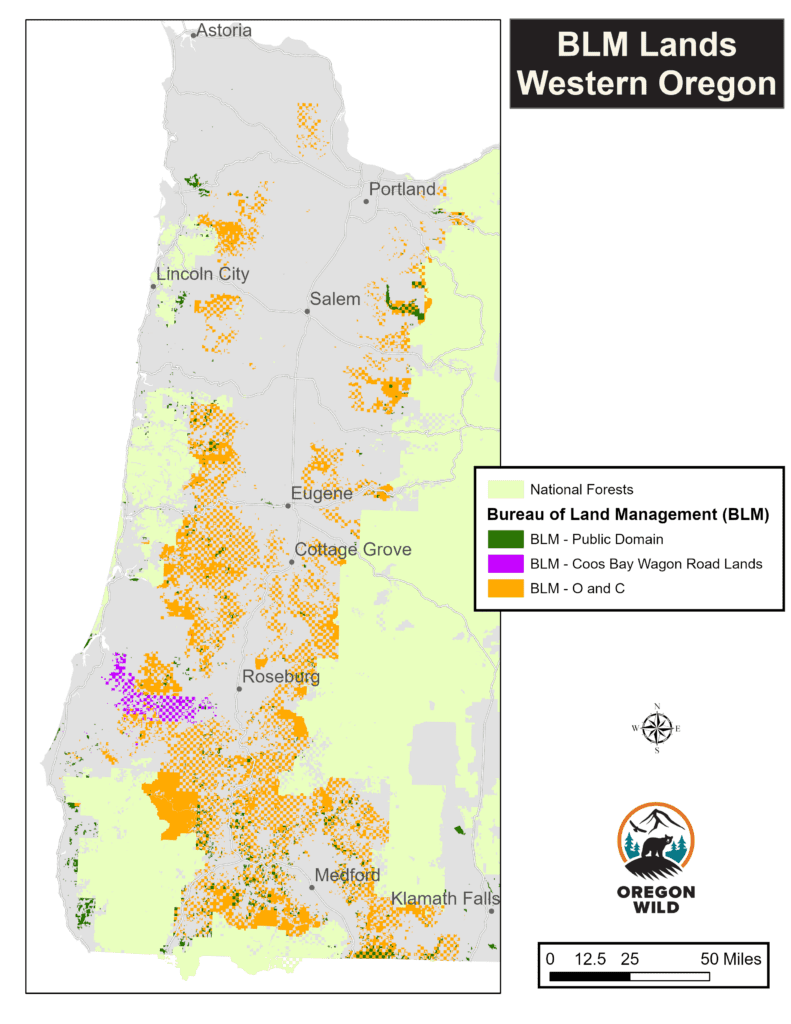
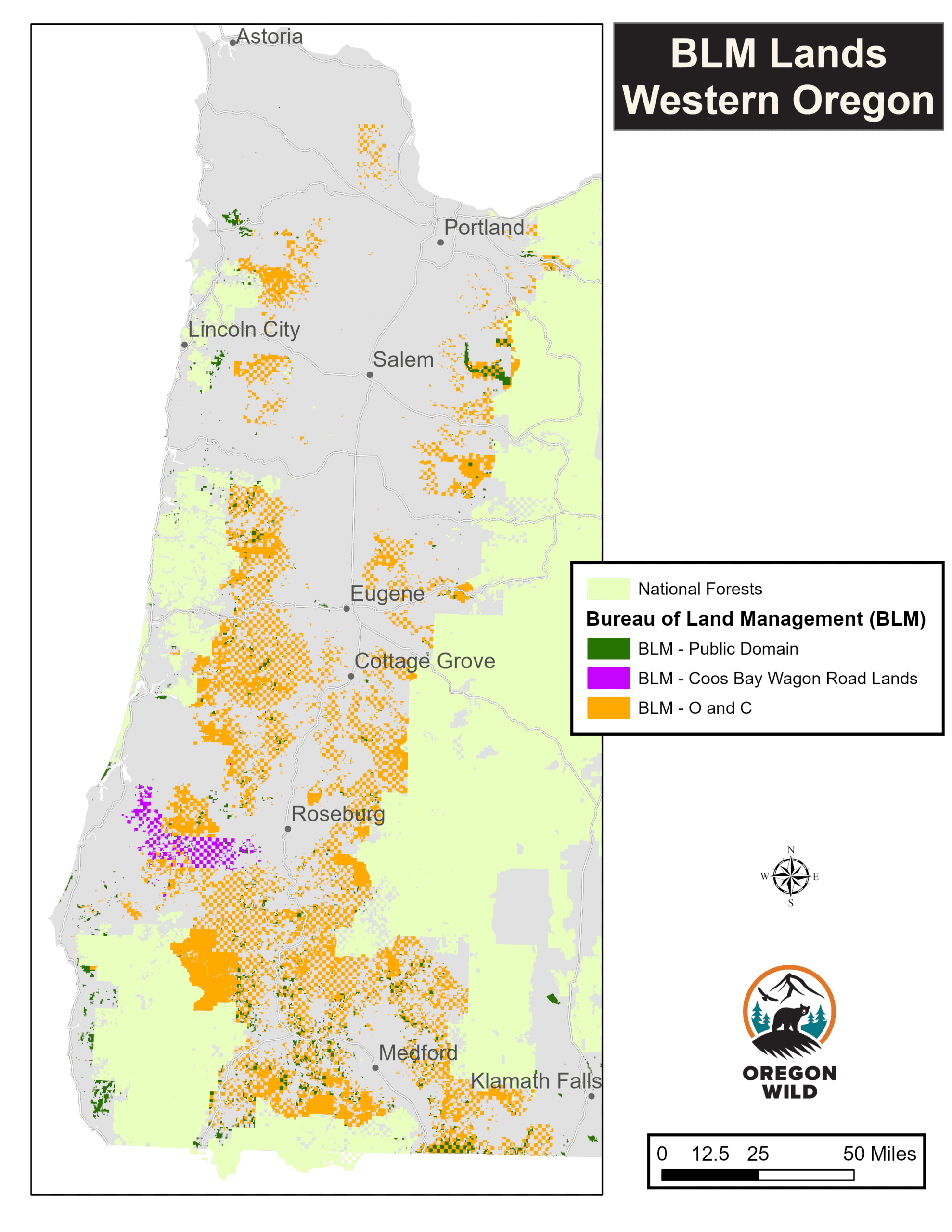
Portland, Ore., – Tomorrow, the Trump Administration will publish a notice of proposed revisions for management plans that encompass Western Oregon Bureau of Land Management (BLM) forests, seeking to eliminate old-growth and wildlife protections in order to facilitate “maximum” logging capacity across nearly 2 million acres of public lands. The proposal includes reducing logging buffers for endangered fish, potentially eliminating old-growth reserves, and expanded clearcutting and similar aggressive logging practices, which the agency has previously acknowledged increase fire risk.
BLM manages scattered parcels across western Oregon, which contain some of the last remaining low-elevation old-growth forests in the state. Notable areas threatened by the proposal include parts of the Sandy River and North Fork Clackamas, the Valley of the Giants, the Upper Molalla River, Mary’s Peak, Crabtree Valley, Alsea Falls, and many more. See a map.
BLM Lands and Logging Projects: Silver Lining and Nails Creek
The notice suggests the proposal will include:
Nearly 2 million acres of public lands with reduced protections targeted for logging, including old-growth forests and other lands previously set aside for conservation
Shrinking logging buffers around rivers and streams to 25-100 feet, scientifically insufficient to protect endangered fish like coho salmon and steelhead
Placing logging above all other public lands uses, like recreation, wildlife habitat, and drinking water, in violation of the O&C Lands Act of 1937 and subsequent environmental laws and court rulings
“The BLM is already logging old-growth. They’re already clearcutting,” said Oregon Wild Staff Attorney John Persell. “This proposal would double down on the most destructive aspects of public lands management across even more of the landscape, prioritizing greed and political favors over the long-term health of our forests and communities. It puts wildlife habitat, salmon recovery, drinking water, and nearby communities at greater risk.”
This proposal is the latest in a set of Trump administration executive orders, rollbacks to environmental protections, and reductions in public transparency and engagement that impact for public lands and forests across the country.
Threatened Forests and Rivers on Western Oregon BLM Lands
After finalizing its 2016 Resource Management Plans for Western Oregon, which withdrew BLM lands from the Northwest Forest Plan and significantly weakened conservation protections, the agency began to propose increasingly aggressive logging projects. Oregon Wild and other conservation groups in Oregon have challenged numerous BLM logging proposals in recent years that have targeted mature and old-growth forests.
Courts have sided with conservation groups, highlighting that, even under the significantly weaker safeguards of the 2016 RMPs, the agency has regularly violated its own rules and bedrock environmental laws in order to facilitate commercial logging projects. In recent litigation, the BLM has even been accused by those who worked for the agency of fabricating analysis that would allow more aggressive logging.
“The public does not want to go back to the days of rampant old-growth clearcutting. They don’t want to go back to dead salmon and polluted rivers, or see their favorite places on public lands liquidated in order to maximize profits for the greedy few,” said Chandra LeGue, Senior Conservation Advocate for Oregon Wild. “These are treasured public lands, and we’re going to fight for them.”
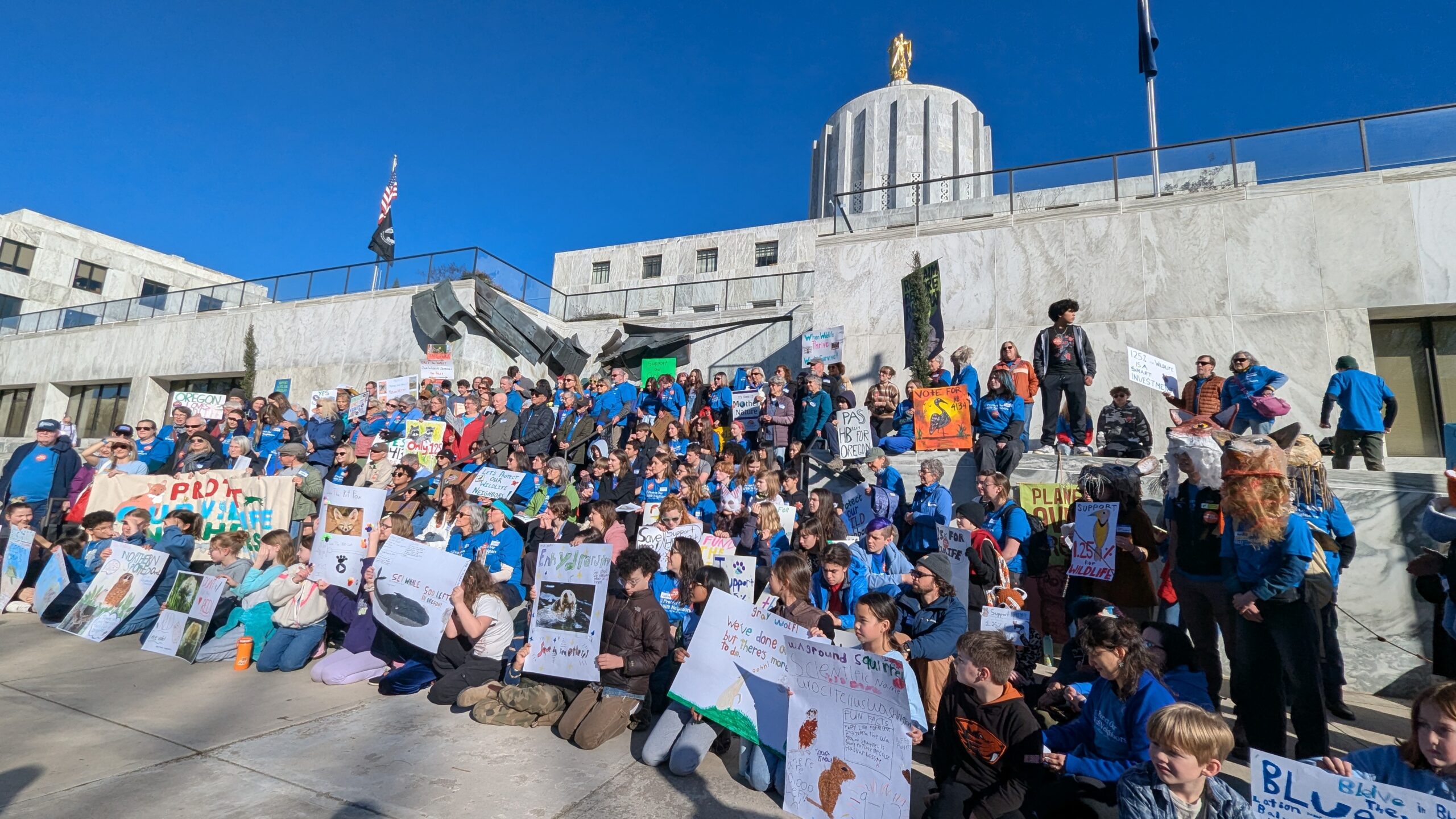
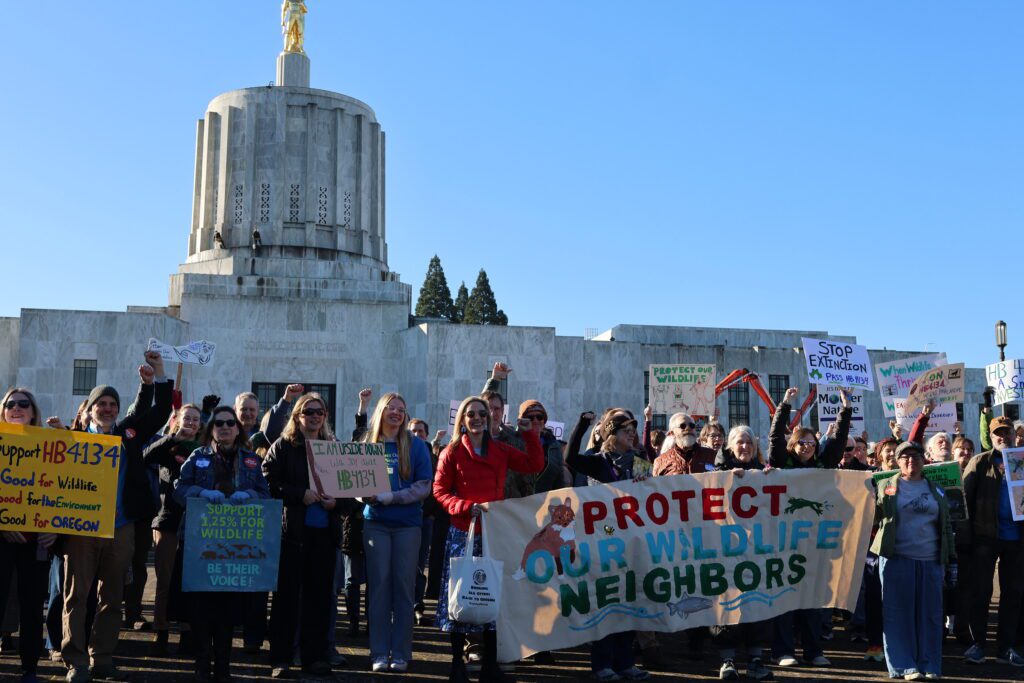
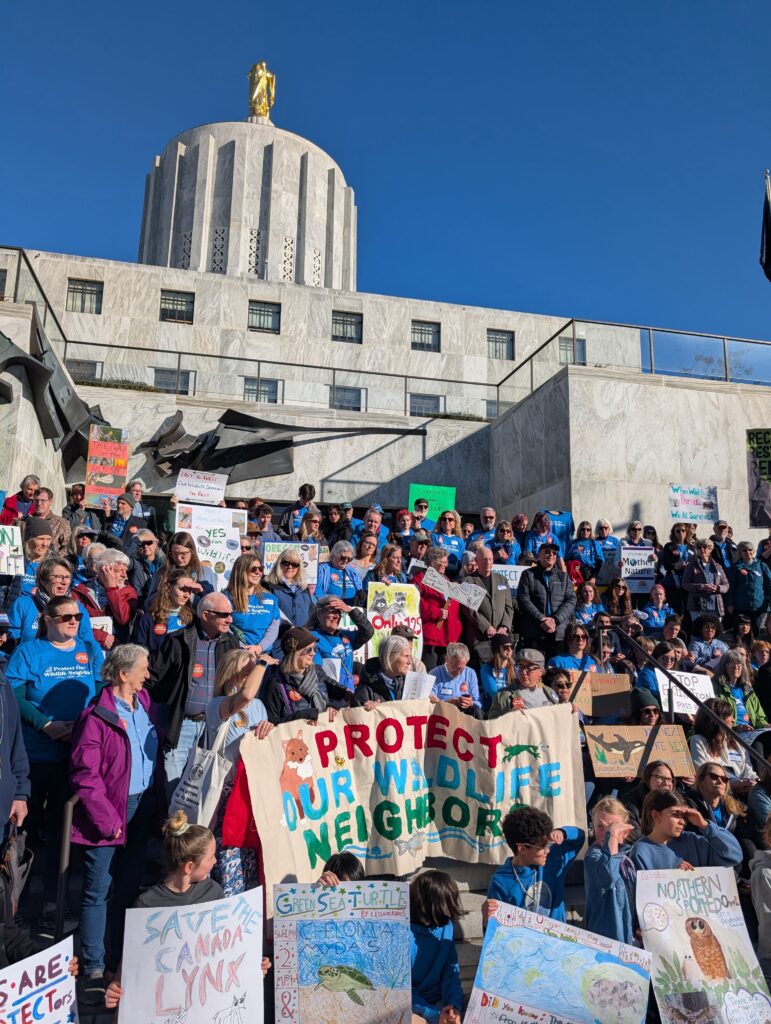
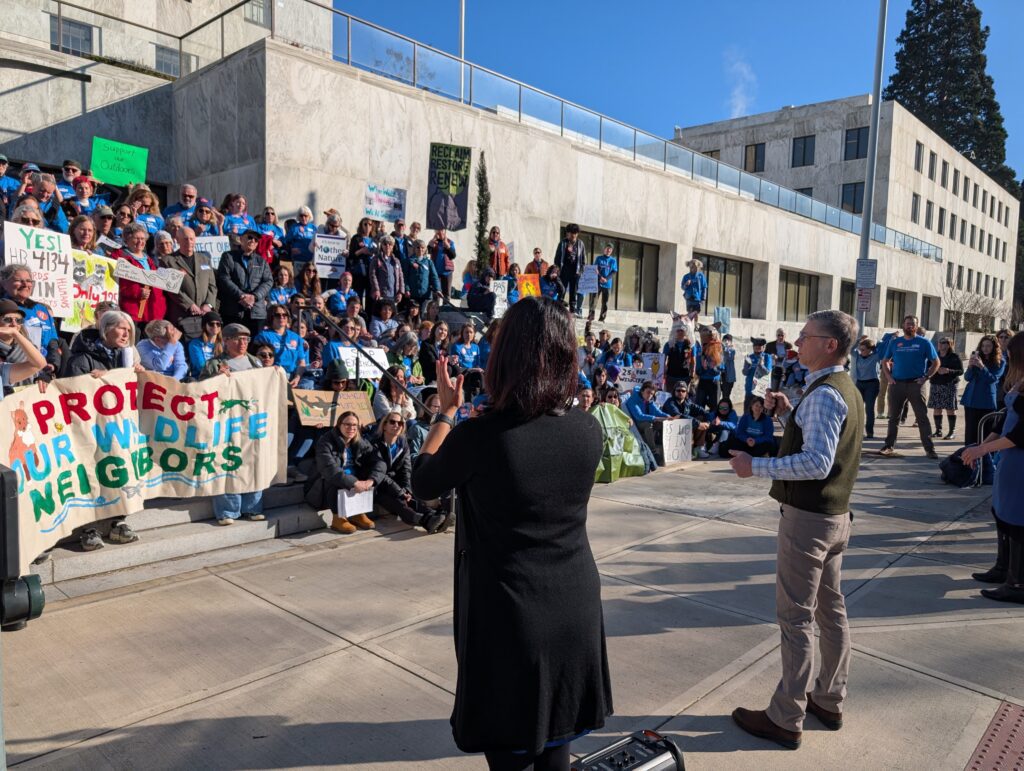
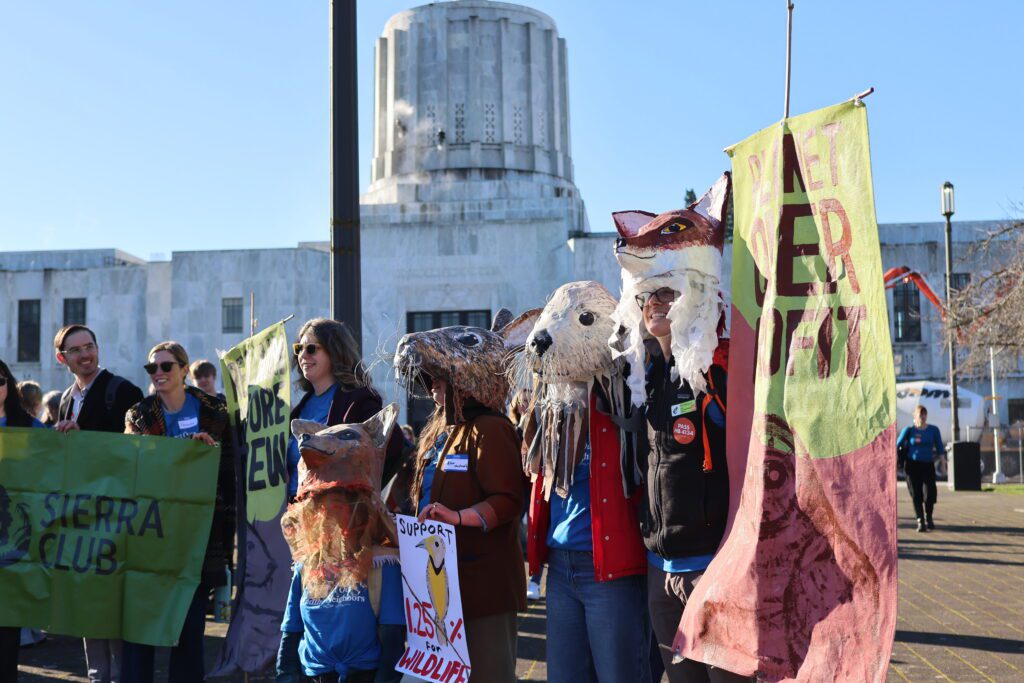
Salem, Ore., – Hundreds of wildlife and habitat advocates from across the state gathered in Salem today in support of HB 4134, the “1.25% for Wildlife” legislation. HB 4134 has garnered broad, bipartisan support from a diverse coalition of hunters, anglers, farmers, ranchers, conservationists, rural and urban communities, and over 100 businesses from across the state.
“This bill must pass this year,” said Oregon Wild Wildlife Program Manager Danielle Moser before the crowd gathered on the Capitol steps. “The longer we wait to address species and the habitats that sustain them, the more costly it becomes, and the more difficult it becomes.”
Oregon House Representative Ken Helm also addressed the crowd, calling the bill a “unicorn” because it had bipartisan, bicameral support.
After the rally, participants dispersed to attend pre-scheduled meetings with their elected representatives to discuss the importance of investing in Oregon’s natural heritage and how wildlife conservation and other aspects of the bill relate to their own experiences and values.
Healthy ecosystems support clean drinking water, reduce wildfire risk, sustain Oregon’s outdoor economy, and protect public health. Early investments in conservation can prevent species from declining to crisis levels, avoiding higher costs and greater conflict in the future.
HB 4134 would dedicate a small portion of Oregon’s lodging tax to support wildlife conservation, habitat restoration, wildfire risk reduction, and conservation workforce development. Supporters say the proposal represents a forward-looking and fiscally responsible approach to protecting Oregon’s natural legacy while investing in Oregon’s outdoor recreation economy.
Join Our
Newsletter.
Staying informed is the first step to becoming a public lands and native wildlife advocate.
Cookie Consent
We use cookies to improve your experience on our site. By using our site, you consent to cookies.
Cookie Preferences
Manage your cookie preferences below:
Essential cookies enable basic functions and are necessary for the proper function of the website.
Name
Description
Duration
Cookie Preferences
This cookie is used to store the user's cookie consent preferences.
30 days
Google reCAPTCHA helps protect websites from spam and abuse by verifying user interactions through challenges.
Name
Description
Duration
_GRECAPTCHA
Google reCAPTCHA sets a necessary cookie (_GRECAPTCHA) when executed for the purpose of providing its risk analysis.
179 days
Statistics cookies collect information anonymously. This information helps us understand how visitors use our website.
Google Analytics is a powerful tool that tracks and analyzes website traffic for informed marketing decisions.
Contains information about the traffic source or campaign that directed user to the website. The cookie is set when the GA.js javascript is loaded and updated when data is sent to the Google Anaytics server
6 months after last activity
__utmv
Contains custom information set by the web developer via the _setCustomVar method in Google Analytics. This cookie is updated every time new data is sent to the Google Analytics server.
2 years after last activity
__utmx
Used to determine whether a user is included in an A / B or Multivariate test.
18 months
_ga
ID used to identify users
2 years
_gali
Used by Google Analytics to determine which links on a page are being clicked
30 seconds
_ga_
ID used to identify users
2 years
_gid
ID used to identify users for 24 hours after last activity
24 hours
_gat
Used to monitor number of Google Analytics server requests when using Google Tag Manager
1 minute
_gac_
Contains information related to marketing campaigns of the user. These are shared with Google AdWords / Google Ads when the Google Ads and Google Analytics accounts are linked together.
90 days
__utma
ID used to identify users and sessions
2 years after last activity
__utmt
Used to monitor number of Google Analytics server requests
10 minutes
__utmb
Used to distinguish new sessions and visits. This cookie is set when the GA.js javascript library is loaded and there is no existing __utmb cookie. The cookie is updated every time data is sent to the Google Analytics server.
30 minutes after last activity
__utmc
Used only with old Urchin versions of Google Analytics and not with GA.js. Was used to distinguish between new sessions and visits at the end of a session.
End of session (browser)
Marketing cookies are used to follow visitors to websites. The intention is to show ads that are relevant and engaging to the individual user.
Facebook Pixel is a web analytics service that tracks and reports website traffic.