“This bill is a direct assault on what makes public lands public: it stymies science-based forest management, muzzles community input, and endangers the fish, wildlife, and communities that rely on our forests.”
S. 1462, the “Fix Our Forests Act,” passed out of the Senate Agriculture Committee. Conservation organizations from across the nation have voiced strong concerns with the content of the bill and have opposed its passage. The bill now heads to a full Senate vote.
Oregon Wild Wilderness Program Manager Erik Fernandez released the following statement:
“Today, the US Senate advanced its latest attack on public lands, the so-called “Fix Our Forests Act” (FOFA). This bill is a direct assault on what makes public lands public: it stymies science-based forest management, muzzles community input, and endangers the fish, wildlife, and communities that rely on our forests. It also fails to provide dedicated funding for the types of wildfire strategies that save lives and livelihoods — home hardening, defensible space, and emergency planning.
The legislation authorizes 15 square-mile-sized logging projects with little to no public input and environmental analysis, making this one of the scariest plans to face public lands in a generation.
Trump and his logging industry backers have made no secret of the fact that they see public land forests as tree farms, and view any science, transparency, and accountability from the public as an obstacle to profit. FOFA is nothing less than a corporate handout and a further step towards that dystopian vision. It is a betrayal of the very idea of public lands.
Over the past several months, we have seen an incredible movement develop, first to oppose public lands sales proposed by Senator Mike Lee of Utah, then as an unprecedented outpouring of support for the Roadless Rule that protects some of our nation’s last wild places from reckless logging and development. Over 99% of those public comments opposed the Trump administration’s efforts to rescind these public lands protections.
Unfortunately, too many politicians in Washington DC, including Senate Democrats like Amy Klobuchar, still don’t get it.
Public lands may be managed by agencies like the Forest Service, the Bureau of Land Management, and the National Park Service, but they belong to all of us. They’re held in trust for the American people, not for industry lobbyists or corporate logging interests. As caretakers of these lands and as believers in the democratic vision they represent, we will continue to remind our elected officials that these places are ours, and that efforts to privatize, profit, and remove public oversight will not be forgotten.”
The U.S. Department of Agriculture and Forest Service has concluded a three week public comment period on the Trump administration’s plan to rescind the landmark Roadless Rule. The rule protects approximately 44.7 million acres of National Forest System lands, including nearly 2 million acres in Oregon, but the Trump administration wants to open these wild areas up for logging and mining.
Hundreds of thousands of comments were submitted from across the country, including thousands of unique and personalized comments from Oregonians. A coalition of conservation organizations, including Oregon Wild, Central Oregon LandWatch, Central and Eastern Oregon Bitterbrush Broadband, Klamath-Siskiyou Wildlands Center, Cascadia Wildlands, Blue Mountains Biodiversity Project, Greater Hells Canyon Council, and Oregon Sierra Club helped facilitate this outpouring of public input.
An initial analysis by the Center for Western Priorities found that opposition to dropping safeguards for Roadless Areas was nearly unanimous, with 99.2 percent of comments supporting keeping Roadless protections in place.
“The American people have clearly and forcefully rejected this attack on our wild public lands,” said Sami Godlove, Central Oregon Field Coordinator for Oregon Wild. “Proceeding with the rescission of the Roadless Rule after such an overwhelming outpouring of opposition would be another example of how the Trump administration allows campaign donors, like those in the logging industry, to buy the policies they want, even when the public has spoken nearly unanimously against them.”
Adopted in 2001 after the most extensive public involvement process in federal rulemaking history, the Roadless Rule safeguards some of America’s last intact national forest landscapes. These areas provide clean water, critical wildlife habitat, and world-class recreation opportunities while sustaining rural economies.
“Roadless areas contain much of our last remaining mature and old-growth public forests, which absorb climate pollution and provide refuge for vulnerable fish and wildlife,” said Grace Brahler, Wildlands Director with Cascadia Wildlands. “Targeting these areas for destructive extractive practices would further erode the ecological resilience we need in the face of a warming climate.”
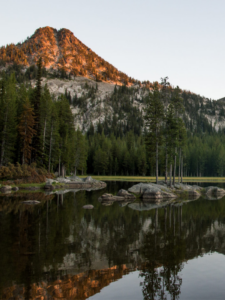
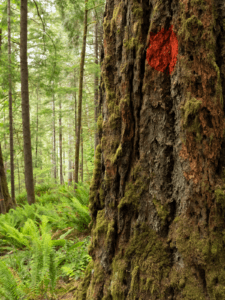
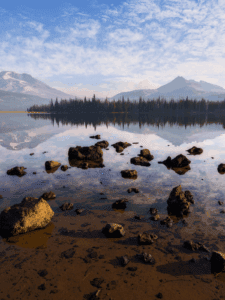
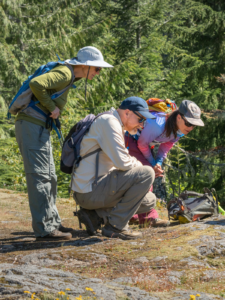
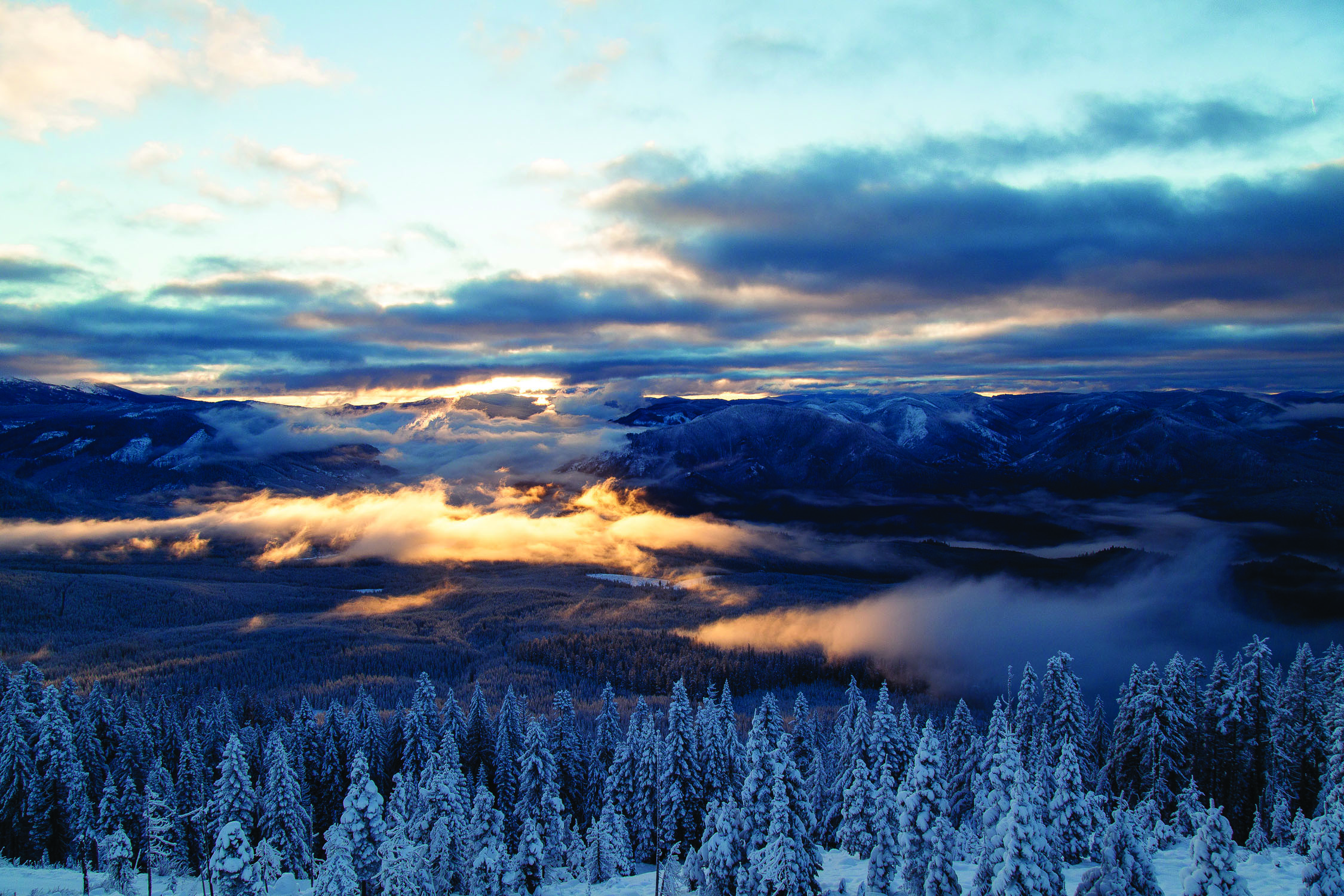
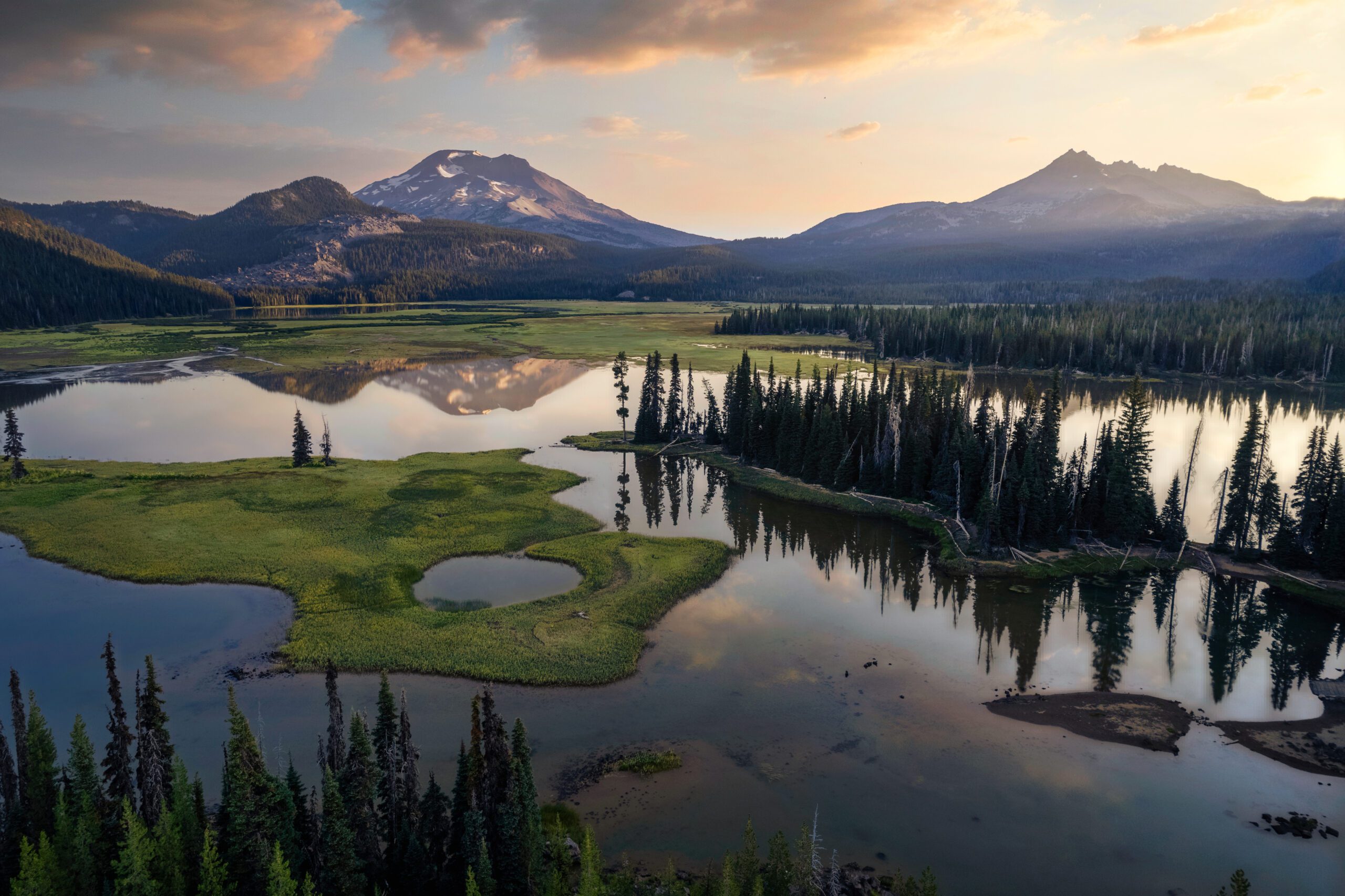
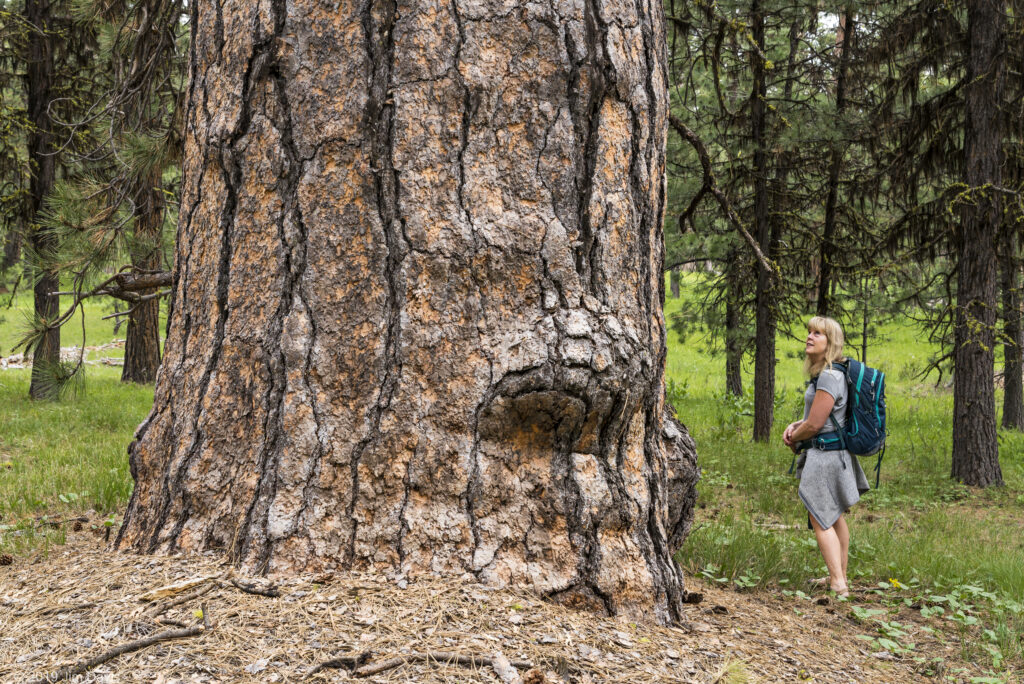
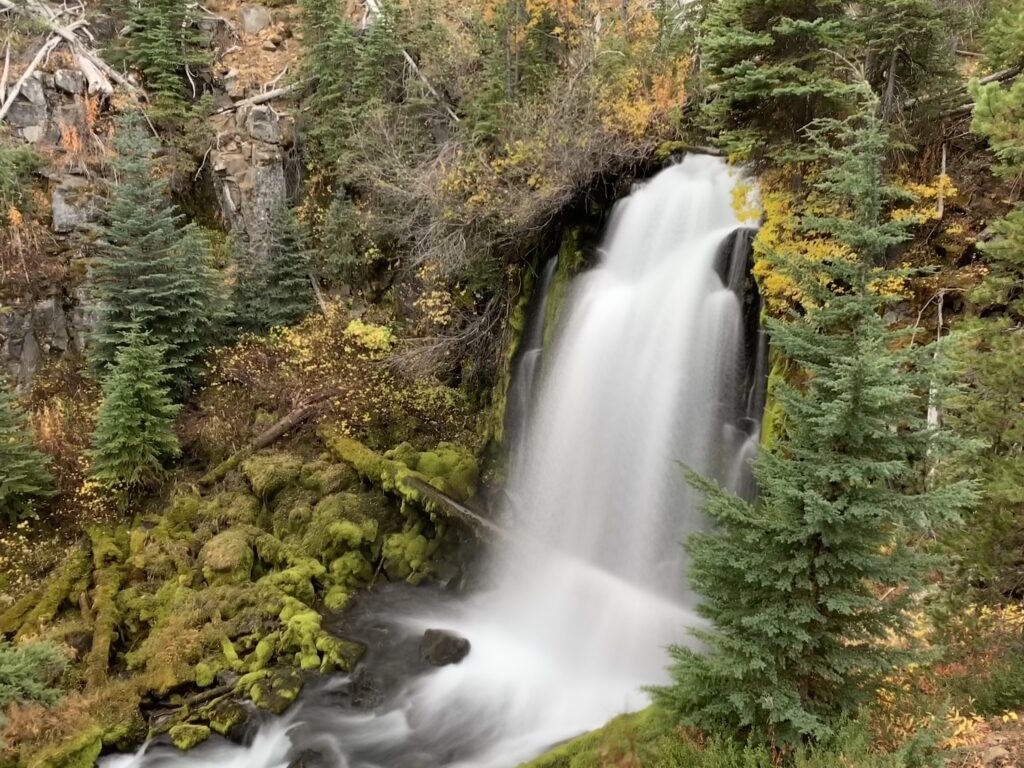
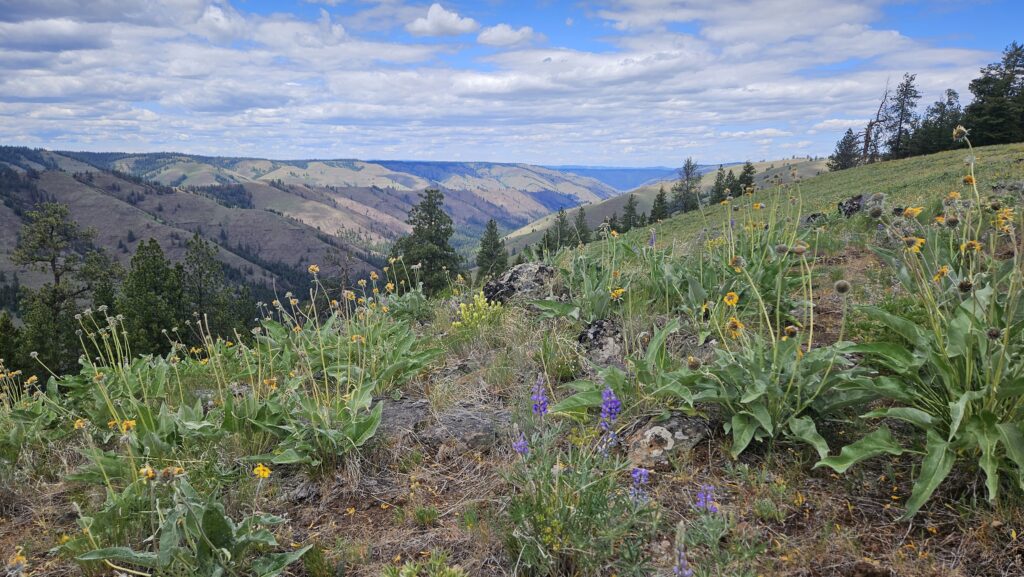
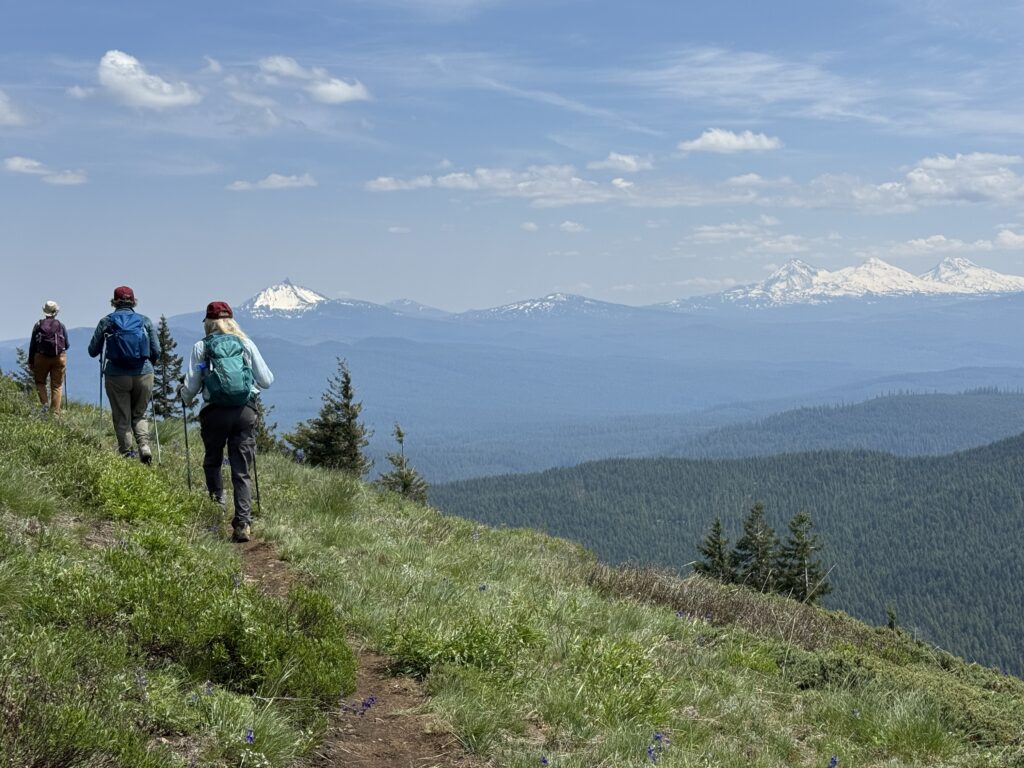
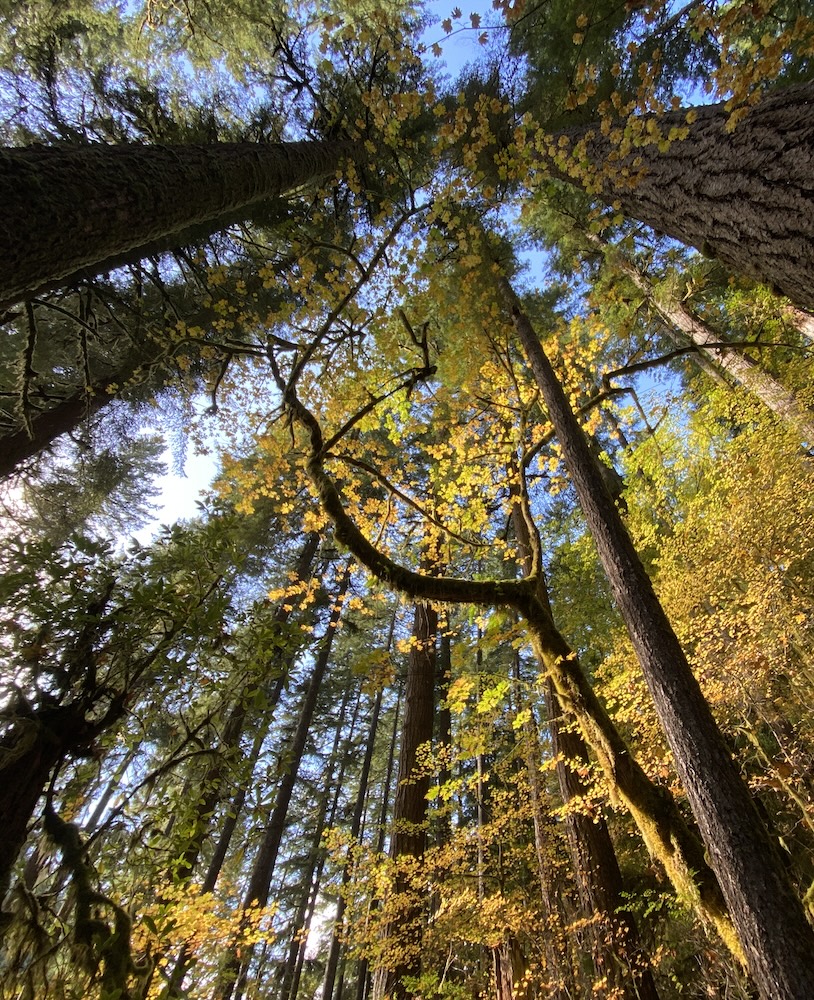
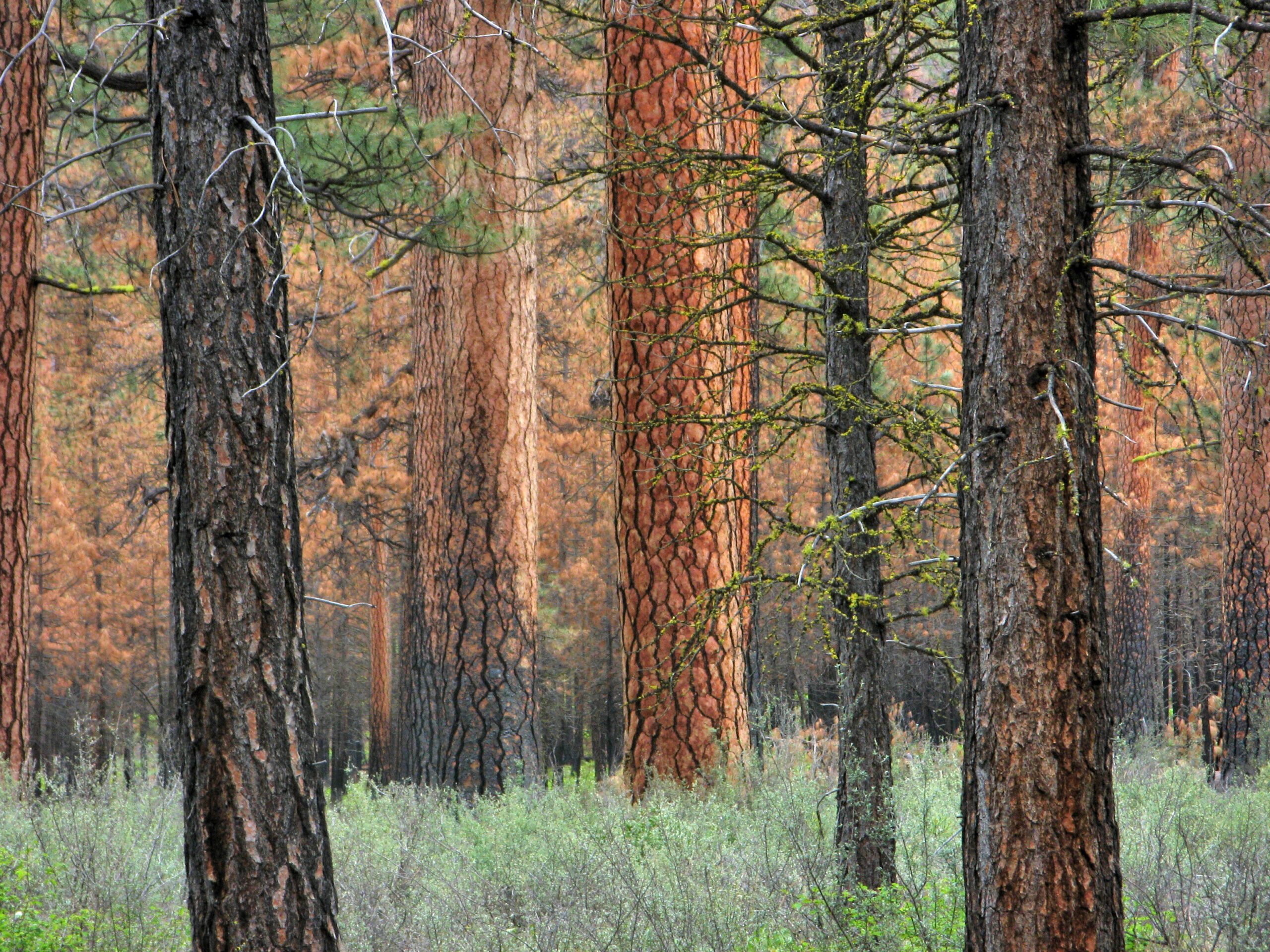
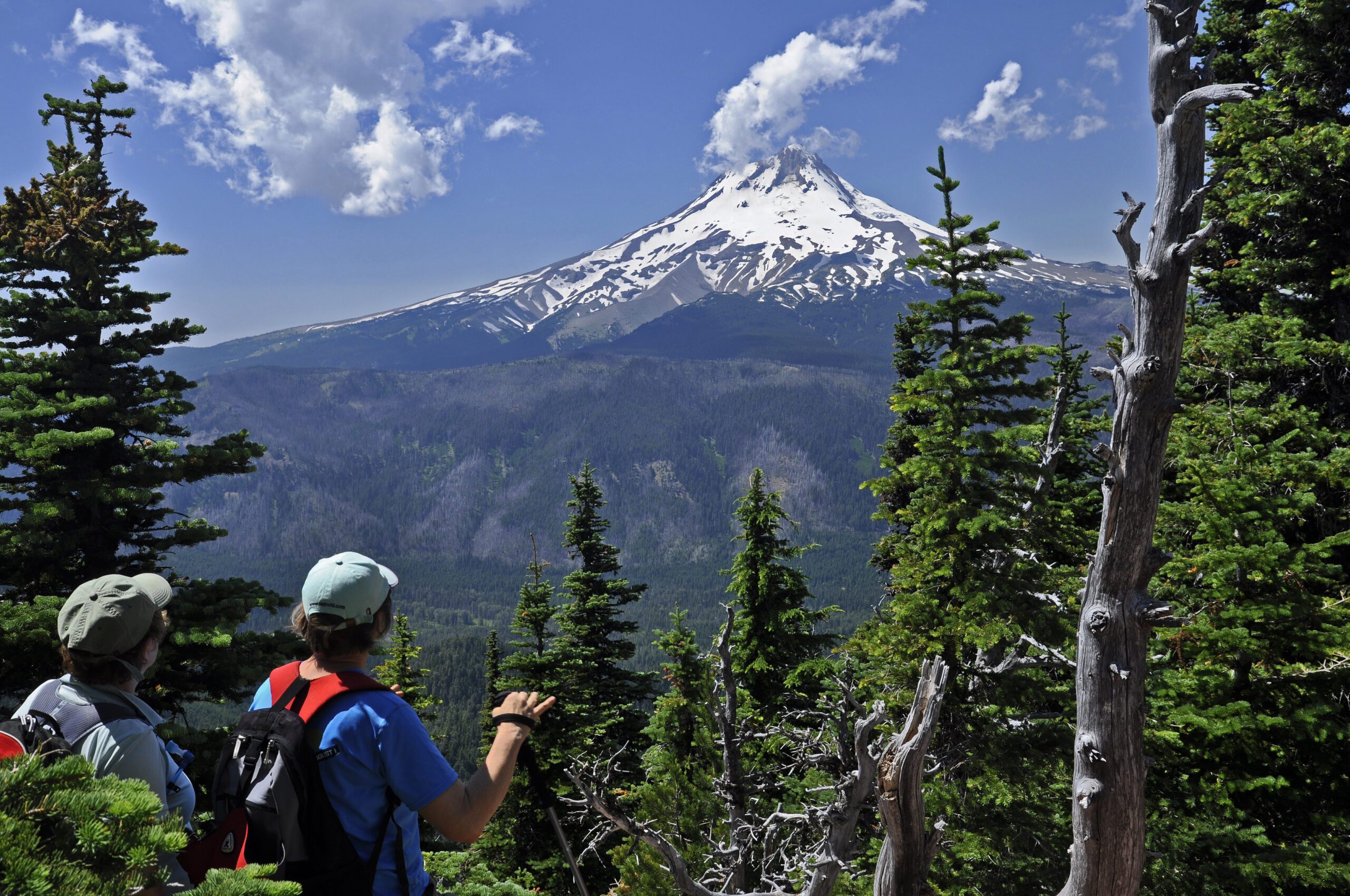
Jim Davis. A hiker marvels at a large, old-growth ponderosa pine tree in the Lookout Mountain Roadless Area.Sami Godlove. Bridge Creek in the Tumalo Mountain Roadless Area supplies clean drinking water to the city of Bend.David Mildrexler. The dramatic canyonlands of the Joseph Canyon Roadless Area. Chandra LeGue. Hikers in the Iron Mountain Roadless Are, Willamette National Forest.
Roadless Areas are also some of the most fire-resilient landscapes. Because they are remote and intact, they experience fewer human-caused ignitions. Building new roads would dramatically increase the number of man-made fire starts and redirect scarce firefighting resources away from protecting homes and communities. Instead of focusing on strategic fuel reduction projects near communities where it matters most, the logging industry is pressuring agencies to pursue logging in unroaded backcountry areas where timber is more lucrative. Logging in these areas would make them more vulnerable to fire, fragment wildlife habitat, and degrade water quality. Road construction and the sediment runoff that follows are already among the greatest threats to clean drinking water across the West.
“Even the Forest Service’s own research shows that building more roads neither improves forest health outcomes nor mitigates wildfire risks. More roads lead to more fires, pulling vital wildfire response resources away from where they’re needed most,” said Fiona Noonan of Central Oregon LandWatch. “Rolling back of the Roadless Rule is not only scientifically baseless — it’s reckless, putting people and ecosystems at greater risk.”
The Trump administration’s attempt to roll back the Roadless Rule is part of a broader campaign to weaken bedrock environmental safeguards. Other targets include the Endangered Species Act, the National Environmental Policy Act, individual Forest Management Plans, and the Bureau of Land Management’s Public Lands Conservation Rule. The administration has also slashed staff at the Forest Service and is attempting to relocate experienced staff and leadership away from the Pacific Northwest. These efforts undermine public accountability while falsely claiming to be about “local control.”
“Rescinding the Roadless Rule would put clean drinking water at risk for people in downstream communities,” said Paula Hood of the Blue Mountain Biodiversity Project. “National Forests provide clean drinking water to millions of people nationwide, and Roadless areas are strongholds for the cleanest, coldest water.”
Meanwhile, most of Oregon’s congressional delegation has signed on in support of the Roadless Area Conservation Act, legislation that would make the rule permanent. The only two members who have not cosponsored the bill are Representative Val Hoyle and Representative Cliff Bentz.
“Eliminating the Roadless Rule would be a disaster for Oregon’s forests and communities,” said Jamie Dawson of Greater Hells Canyon Council. “Building new roads in these wild places opens the door to invasive species and habitat fragmentation. Once these areas are cut apart, we lose the clean water, wildlife, and solitude they provide forever.”
The next step in the Forest Service process will be to analyze the public comments and issue a draft plan, likely in the spring.
Oregon’s Roadless Wildlands
Oregon’s roadless forests are among our state’s most spectacular and irreplaceable landscapes. From the flower-studded meadows of Iron Mountain in the Willamette National Forest, to the dramatic canyons and cultural homelands of the Nez Perce Tribe in Joseph Canyon, to the clean drinking water flowing from Tumalo Mountain into the taps of more than 100,000 people in Bend, these places embody the best of Oregon’s natural and cultural heritage. They also sustain recreation economies and wildlife habitats.
Other iconic areas include Lookout Mountain in the Ochocos, where diverse forests and meadows form the headwaters of critical streams; Rough & Ready Creek, a unique botanical wonderland threatened by mining in southwest Oregon; and Larch Mountain, a lush old-growth haven just minutes from Portland. These and dozens of other roadless areas across Oregon safeguard clean water, biodiversity, cultural values, and recreation opportunities that are impossible to replace once lost.
PORTLAND, OR — Conservation groups sued the U.S. Fish and Wildlife Service today for denying protections to the imperiled North Oregon Coast population of red tree voles. The voles spend most of their lives in the upper branches of the Oregon Coast’s mature and old-growth forests.
The Service’s 2024 decision to deny life-saving Endangered Species Act protections to the North Oregon Coast population echoes a similar 2019 Trump administration denial, which also sparked a lawsuit. Those decisions were made despite studies showing that these red tree voles are threatened by habitat loss and fragmentation, largely due to logging and climate change-fueled wildfires.
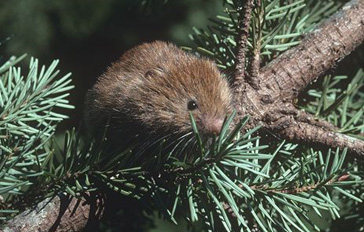
Red tree vole by Stephen DeStefano, USGS.
“Red tree voles have graced Oregon’s coastal old-growth forests for thousands of years, but we could lose them forever if they don’t get Endangered Species Act protections soon,” said Ryan Shannon, a senior attorney in the Center for Biological Diversity’s endangered species program. “It’s time for the Fish and Wildlife Service to follow the science and do the right thing by stepping up for red tree voles.”
Red tree voles build their nests on complex branch and bole structures found in mature and old-growth forests. The North Coast is dominated by a combination of private industrial timberlands and the Tillamook and Clatsop state forests. Decades of rapacious clearcut logging, as well as a series of historic fires known as the Tillamook Burn, have eliminated most of the area’s old forests along with the red tree voles that once called them home. Red tree voles are an essential species in the last remaining old-growth and mature coastal forests in Oregon and protecting them is necessary for ecosystem recovery.
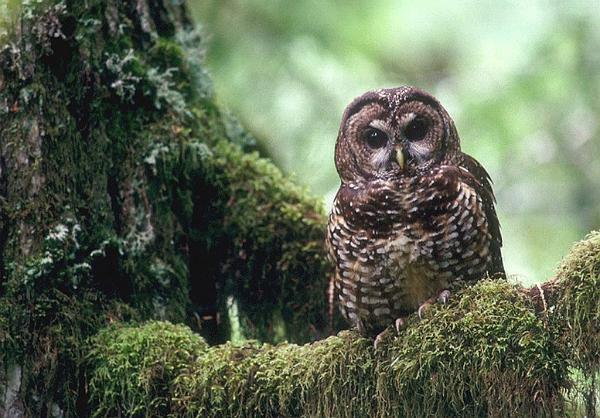
“Red tree voles are a key prey of the threatened northern spotted owl whose population is plummeting,” says Joe Liebezeit, statewide conservation director for Bird Alliance of Oregon. “We need to step up protection of voles to ensure the integrity of forest ecosystem as a whole — including the food web which so much wildlife depends on.”
Remaining North Coast voles are concentrated on federal public lands administered by the U.S. Forest Service and U.S. Bureau of Land Management. Although the Northwest Forest Plan helps protect these remaining small and isolated populations, the long-term survival of the voles depends on improving state and private land forest management and connecting fragmented and isolated red tree vole populations.
Oregon is in the process of adopting a state forest habitat conservation plan that will provide some protection to the vole, but the plan will also allow for continued logging of thousands of acres of potential vole habitat without any surveys to determine if voles are present. There are currently no meaningful protections in private forests.
“The red tree vole is a unique species with adaptations that allow them to live almost their entire lives high in the canopy of mature and old-growth forests,” said Doug Heiken of Oregon Wild. “Its range and habitat are already limited, and without protection for the North Coast population, we could lose red tree voles to irresponsible logging.”
In response to a 2007 Center for Biological Diversity petition, the Service determined in 2011 that protection of the North Oregon Coast population of red tree voles was “warranted but precluded” by other listing priorities. It then moved the voles to a list of candidate species for a decade, repeating its determination that the North Oregon Coast population warranted protection several times before reversing course and denying protections in 2019. A Center lawsuit over the denial resulted in a 2022 settlement directing the Service to reconsider the decision.
“The Fish and Wildlife Service is yet again shirking its duty to this and future generations to prevent the extinction of our most imperiled wildlife species including the red tree vole,” said Bethany Cotton, conservation director for Cascadia Wildlands. “Red tree voles are an important indicator species of forest health; their decline should be a wake-up call to us all to better care for our remaining mature and old-growth forests.”
Bird Alliance of Oregon, Cascadia Wildlands and Oregon Wild are represented by the Center for Biological Diversity in today’s suit.
The Center for Biological Diversity is a national, nonprofit conservation organization with more than 1.8 million members and online activists dedicated to the protection of endangered species and wild places.
Bird Alliance of Oregon was founded in 1902 and works statewide to advocate for Oregon’s wildlife and wild places, and to inspire all people to love and protect birds, wildlife, and the natural environment upon which life depends.
Cascadia Wildlands defends and restores Cascadia’s wild ecosystems in the forests, in the courts, and in the streets.
Oregon Wild works to protect and restore Oregon’s wildlands, wildlife, and waters as an enduring legacy for future generations.
PORTLAND, OR — A budget reconciliation proposal introduced by Senator Mike Lee (R-UT), Chair of the Senate Energy and Natural Resources Committee, to sell off millions of acres of public lands across the West, including in Oregon, was removed. Oregon Wild released the following statement:
The news that Senator Mike Lee’s proposal to sell off America’s public lands has been removed from the Senate reconciliation bill is a major victory for the American people and the millions across the country who stood up in defense of our shared natural heritage.
This win belongs to the public. Hunters, anglers, hikers, tribal communities, rural residents, conservation advocates, and many more joined together to send a clear message: our public lands are not for sale.
But let’s be clear: Senator Lee’s statement makes it evident that he’s not done trying to sell our public lands. However, he has unintentionally helped build a stronger, more unified movement to defend public lands. We’ll be ready when he tries again.
While this development is worth celebrating, the broader reconciliation bill still poses serious threats to our environment, to vulnerable communities, and to the future of public lands. It remains a massive transfer of wealth from everyday Americans to billionaires and should be rejected.
We urge everyone who spoke out to stop this land sell-off to keep going. Call your Representative and tell them to vote down this harmful bill.
SALEM, OR – In the final hours of the 2025 legislative session, a landmark bill to fund wildlife conservation fell short—not for lack of public support, bipartisan backing, or legislative merit, but because of cynical obstruction from a small group of Republican senators. Democratic leadership in the Senate had the power to stop them, but chose to give in.
HB 2977, which passed the Oregon House with a three-fifths bipartisan majority and cleared the Senate Rules Committee, would have modestly increased Oregon’s statewide transient lodging tax—currently among the lowest in the country—to fund urgently needed wildlife conservation. The Oregon Department of Fish and Wildlife (ODFW) has identified nearly 300 species in decline, yet lacks the general fund resources to act.
“This bill was built on compromise, unity, and a shared love for Oregon’s wild places,” said Danielle Moser, Wildlife Program Manager at Oregon Wild. “It brought together hunters, anglers, conservationists, and rural community leaders, people who often don’t agree. And it showed what’s possible when we put politics aside. Unfortunately, a few obstructionist senators decided to stand in the way of that hope.”
Senators Daniel Bonham and Cedric Hayden used procedural gimmicks to block a floor vote on the bill, despite growing momentum and a written minority report ready to be set aside. While a few Republican legislators defied their caucus to vote for HB 2977, the obstructionists prevailed—for now.
Still, advocates say the coalition and public engagement behind this bill have created a wave of political will that won’t disappear.
“Every legislator and staffer I talked to had heard from Oregonians about this bill,” said Casey Kulla with Oregon Wild. “Phone lines rang off the hook. Inboxes were flooded. People showed up. This was grassroots democracy at its best, and it worked, even if the final vote didn’t happen. We are just getting started.”
While Republican obstruction was central to the bill’s defeat, conservation advocates are also pointing to internal resistance among some Democrats, and Democratic leadership’s decision not to advance the bill to the floor, as a missed opportunity that can and must be corrected.
“We’re disappointed,” Moser said. “But we’re not deterred. We’ve built something powerful. Next session, we’re coming back stronger.”
Oregon Wild and the statewide coalition behind HB 2977 are already preparing for the 2026 short session.
“The need to fund wildlife and their habitats remains, and the broad public support has never been clearer. This was the closest Oregon has come in decades,” Kulla added. “And next time, we’re going to finish the job.”
SALEM, OR – A landmark bill to fund wildlife conservation in Oregon is being held up in the State Senate, despite passing the House with strong bipartisan support and clearing Senate Rules. HB 2977, backed by a broad and diverse coalition across Oregon (listed at the bottom of this release), is now stalled due to obstruction by two Republican senators, Daniel Bonham and Cedric Hayden, who are using procedural tactics to try to kill the bill.
“This bill has support from every corner of the state,” said Amy Patrick of the Oregon Hunters Association. “It’s a smart, fair solution to address a wildlife funding crisis, and it’s been shaped by everyone from hunters and anglers to birders and business owners. The House did its job. The Senate Rules Committee did its job. I urge the two senators attempting now to derail it to respect the extensive work done by stakeholders and legislators alike, and allow the bill to move forward.”
The so-called “minority report” being wielded to delay the bill has already been written and is available to view, but Senators Bonham and Hayden refuse to officially submit it.
According to the rules of the Oregon Legislature, Senate President Rob Wagner has the ability to put HB 2977 for a vote on the floor.
“Senate President Rob Wagner has the power to put HB 2977 on the floor today—and Oregonians from across the state are calling on him to do so,” said Danielle Moser of Oregon Wild. “This is not a party-line issue. Our wildlife, the habitats they depend on, and the democratic process deserve better.”
Over 70% of the submitted testimony available on the Oregon Legislative Information System (OLIS) is in support of the bill.
“Oregon’s fish and wildlife is big business in Oregon, and this incredible resource is in jeopardy of blinking out,” said Bob Rees of the Northwest Guides and Anglers Association. “The Oregon Legislature is on the precipice of passing its first meaningful funding to turn the tide of these imperiled species through a bipartisan wildlife funding bill. If this bill doesn’t pass, those imperiled species will continue down the path to extinction and, along with it, our community of outdoor enthusiasts that represents one of the greatest transfers of wealth from urban to rural communities in Oregon. We’ll hold those obstructing the passage of this bill personally responsible for its demise, the first real opportunity to recover Oregon’s troubled fish and wildlife species.”
“Rarely has a bill brought a more diverse stakeholder coalition together like HB 2977 has, and with strong bipartisan support in both chambers of the legislature, the bill was set for success,” said Dr. Sristi Kamal, Deputy Director of the Western Environmental Law Center. “But now it is being held hostage by gimmicky tactics such as a minority report by a few Senate Republicans who want to kill HB 2977. They have no interest in unifying rural and urban Oregon and instead thrive by dividing us. We urge the Senate Democratic Party to save HB 2977, and honor the democratic process that got the bill this far.”
Stakeholders are particularly frustrated that genuine compromise and broad consensus are being undermined by obstruction.
“HB 2977 is the result of ranchers, guides, hoteliers, birders, business owners, and sportsmen all pulling in the same direction,” said Tristan Henry, Oregon Field Representative for the Theodore Roosevelt Conservation Partnership. “The Senate has an opportunity now to finish what this broad coalition started and deliver a lasting wildlife-funding solution for Oregon. We urge President Rob Wagner and Senate leadership to use every tool available to move HB 2977 forward and pass it into law.”
HB 2977 would increase Oregon’s statewide transient lodging tax—currently one of the lowest in the nation—to provide long-overdue funding for the Oregon Department of Fish and Wildlife. The agency has identified nearly 300 species in decline, yet lacks the resources to protect and recover them.
A recent economic analysis found that the bill would not deter tourism and could actually boost outdoor recreation spending in Oregon by improving visitor experiences and protecting iconic species and landscapes.
Supporters say the bill is a win-win: funding from tourists to protect the wildlife and landscapes they come to see, and economic benefits for rural communities that rely on outdoor recreation.
“The passage of HB 2977 would be one of Oregon’s most significant environmental achievements in decades,” said Colin Reynolds, senior advisor to the Northwest program at Defenders of Wildlife. “This bill would deliver long-awaited and necessary sustainable funding for Oregon’s essential wildlife conservation programs that support our iconic species like the marbled murrelet, Southern Resident orca and fisher. On behalf of Defenders of Wildlife’s over 40,000 members and supporters in Oregon, I call on the Oregon legislature to pass this bipartisan bill before the end of the legislative session.”
Portland, OR — In a sweeping rollback of one of America’s most broadly supported and legally durable conservation measures, the Trump administration today announced it is eliminating the 2001 Roadless Area Conservation Rule. This move puts nearly 2 million acres of Oregon’s most intact national forest lands at risk, including areas around the Metolius River, the Sandy River, the Oregon Dunes, Mount Hebo, Hardesty Mountain, Tumalo Mountain, and the Upper Hood River Valley.
Oregon Wild strongly condemns this short-sighted decision, which ignores decades of public input, legal precedent, and the irreplaceable ecological value of Oregon’s remaining wild forests.
“Once again, the Trump administration is siding with industry lobbyists and political insiders instead of the people of Oregon and the American public,” said Oregon Wild Climate Forests Program Manager Lauren Anderson. “This decision is an invitation for the most destructive commercial logging, roadbuilding, and development in some of the most remote, ecologically valuable, and unspoiled forests left in the country. These lands belong to all Americans, not just the industrial looters and billionaire donors who have the President’s ear.”
The Roadless Rule was established in 2001 after an unprecedented public process that included more than 600 hearings and 1.6 million comments. The vast majority of comments supported protecting roadless areas from logging and roadbuilding. The rule safeguarded 58.5 million acres of undeveloped national forests, including almost 2 million acres in Oregon, from most commercial development.
The Trump administration’s repeal of the rule comes amid a broader effort to ramp up logging on public forests in Oregon and across the West, as well as threats to sell off millions of acres of public lands, including in Oregon, to pay for Trump’s tax-cut and domestic militarization agenda.
This effort is presented as “fire prevention,” but studies consistently show that roadbuilding and logging in backcountry forests do little to reduce fire risk near communities. In many cases, these activities increase fire risk while degrading clean water, fish and wildlife habitat, and outdoor recreation opportunities.
A recent poll showed that 74% believe the federal government should focus forest management on thinning small trees near homes and emergency services, rather than large-scale commercial logging in more remote areas like those currently protected by the Roadless Rule. Both state and federal policy heavily subsidize logging lucrative large trees in the backcountry in the name of ‘fire preparedness’ over effective ways to safeguard lives and communities.
“Oregon’s roadless forests are not only home to ancient trees and endangered wildlife. They are vital sources of clean drinking water for hundreds of thousands of people and support the state’s outdoor recreation economy,” said Erik Fernandez, Wilderness Program Manager for Oregon Wild. “Removing protections for these forests is not fire management. It is environmental vandalism.”
From the remote forests of the Rogue River-Siskiyou to the high headwaters of the Blue Mountains, Oregon’s roadless areas are among the state’s last best places. These landscapes provide refuge for salmon, steelhead, elk, and eagles. They offer cold clean water for communities like Ashland and Salem. They also offer a haven for hikers, hunters, and anyone seeking solitude in nature.
“Oregonians have made it clear time and again that they value their wildlands, clean water, and wildlife. The Trump administration’s decision is not only an attack on our environment. It is an attack on our values,” said Anderson.
Oregon Wild and its partners will continue to fight this decision in the courts, in Congress, and in communities across Oregon to ensure that roadless forests remain wild for future generations.
Background:
The 2001 Roadless Area Conservation Rule protected 58.5 million acres of undeveloped national forests from new roadbuilding and most forms of commercial logging
Nearly 2 million acres of Oregon’s national forests are protected by the Roadless Rule, including parts of Mount Hood, Hells Canyon, and the Siskiyou Mountains
These areas safeguard drinking water for more than 800,000 Oregonians and provide critical habitat for species like salmon, marbled murrelets, and bald eagles
Roadless lands support a robust outdoor recreation economy and are central to Oregon’s wild backcountry experiences
SALEM, OR – In a major victory for Oregon’s fish, wildlife, and outdoor heritage, the Oregon House of Representatives has passed HB 2977, a bipartisan bill that would raise the state’s transient lodging tax (TLT) to provide long-overdue funding for wildlife conservation. The bill passed with the required three-fifths majority and now advances to the Oregon Senate.
The bill comes at a critical time for the Oregon Department of Fish and Wildlife (ODFW), which has identified nearly 300 species in decline, including some on the brink of extinction. Yet the agency lacks the funding necessary to proactively conserve these species and their habitats.
“This is a smart, fair, and urgently needed investment in the future of Oregon’s wildlife and the habitats that make this state such a great place to live and visit,” said Danielle Moser at Oregon Wild. “Hunters, anglers, birders, ranchers, and conservationists have all come together to say: it’s time to act.”
HB 2977 would modestly increase Oregon’s statewide TLT, currently one of the lowest in the country, so that visitors help fund the very natural beauty and biodiversity that draw them here in the first place. From elk in Eastern Oregon to seabirds along the coast, wildlife is one of the state’s biggest tourism assets.
A recent economic analysis found that the tax increase would not deter tourism and could actually boost outdoor recreation spending in Oregon by improving visitor experiences and protecting iconic species and landscapes.
“This is a win-win,” said Moser. “This proposal supports healthy ecosystems and rural economies, and it ensures that future generations will be able to enjoy the incredible wildlife that makes Oregon special.”
The legislation follows in the footsteps of Hawaii, which recently increased its hotel tax to help fund conservation and climate resilience. With similar broad support and momentum, Oregon is poised to lead the way in showing how tourism and wildlife can thrive together.
The bill now heads to the Senate, where its coalition of supporters hopes it will soon become law.
PORTLAND, OR — A budget reconciliation proposal introduced by Senator Mike Lee (R-UT), Chair of the Senate Energy and Natural Resources Committee, would force the sale of up to 3.2 million acres of public lands across the West, including in Oregon. The bill, released last night, includes a provision requiring both the U.S. Forest Service and Bureau of Land Management to sell off public lands to offset tax cuts and other budgetary expenses (see pg. 30 of the bill).
The minimum land affected would exceed the size of Rhode Island and Delaware together. Oregon is explicitly listed as an eligible state where lands would be sold off.
Recent polling shows 76% of Oregonians oppose selling public lands to pay for an extension of Trump’s tax cuts.
“Public lands belong to everyone. They shouldn’t be pawned off to offset tax breaks for the ultra-wealthy,” said Quinn Read, Executive Director at Oregon Wild. “This bill opens the door to selling off some of Oregon’s most treasured landscapes, potentially turning national forest edges into luxury estates with no real requirements for affordability or community benefit.”
While the bill is framed as a housing initiative, its primary function is to generate revenue. The legislation includes no safeguards to ensure the lands are used for workforce or affordable housing. Vague legislative language leaves room for high-end development on ecologically important and wildfire-prone lands.
An analysis from Headwaters Economics showed that the policy of selling off public lands for housing is complicated by wildfire and drought risks, as well as other development challenges.
“This proposal is deeply unpopular, risky, and short-sighted,” continued Read. “Especially in places like Bend, expanding development deeper into fire-prone public lands doesn’t just damage habitat and recreation, it puts communities at greater risk.”
Just weeks ago, a proposal to sell off public lands in Utah and Nevada was stripped from the House version of the budget reconciliation bill after bipartisan backlash. Oregon Reps. Val Hoyle and Andrea Salinas voted against that amendment; Rep. Cliff Bentz voted in favor.
Portland, OR — Conservation groups intervened today in a lawsuit brought by the timber industry and counties seeking to strip northern spotted owls of protections for their critical habitat across millions of acres of forests in California, Oregon and Washington.
The industry lawsuit attempts to reinstate a critical habitat rollback issued in the final weeks of the first Trump administration that removed nearly 3.5 million acres from the 9.6 million acres that were protected for spotted owls in 2012.
“The logging industry wants to frame this lawsuit as just about the northern spotted owl, but what’s really at stake are our oldest, most resilient forests, forests that also provide cold, clean rivers for salmon, drinking water for communities and cherished places for countless people,” said John Persell, staff attorney for Oregon Wild. “Trump administration officials have made it clear they view these lands as little more than a source of profit. It’s up to all of us to stand up — for owls, salmon, clean water and carbon-storing forests — and say no.”
The northern spotted owl first gained critical habitat protection in 1992, and those were adjusted in 2012 under the Obama administration. That rule was challenged in court by the timber industry, resulting in a settlement and a January 2021 designation excluding 3.5 million acres from critical habitat protection, nearly all on public lands managed by the U.S. Forest Service and Bureau of Land Management.
Just 10 months later, the Biden administration rescinded the final designation and instead finalized a proposed rule that excluded 204,294 acres instead of 3.5 million acres. That Biden administration rule is being challenged by the timber industry’s current lawsuit, which is seeking to reinstate the expanded Trump administration revision.
“The forests these precious owls depend on also provide all of us with benefits like clean water, recreation, jobs and climate resiliency,” said Chelsea Stewart-Fusek, an endangered species attorney at the Center for Biological Diversity. “Given Trump’s relentless assaults on our most cherished wildlife and public lands, it’s no surprise that corporate timber interests are resurrecting their attacks on northern spotted owls and the places they live in the name of short-term profit.”
“This latest attempt by the timber industry to remove protections for northern spotted owls is a cynical move that perpetuates not only the biodiversity and extinction crises, but also the pendulum swing regarding management of the owl’s habitat,” said Susan Jane Brown, attorney with Silvix Resources that represents some of the intervenors. “Rather than accept that the best available science requires the protection of millions of acres of spotted owl habitat to prevent the extinction and foster the recovery of the owl, industry’s lawsuit seeks to unnecessarily stoke controversy.”
“This is a tired story: the timber industry attempting to game the legal system in order to expand logging on our public lands,” said Tom Wheeler, executive director of the Environmental Protection Information Center. “Unfortunately for them, they have to come through us first. We have stood up for the northern spotted owls and science for decades and we aren’t backing down.”
“The lawyers for Big Timber are cherry-picking a courthouse across the country to attack old-growth spotted owl habitat in our neck of the woods,” said George Sexton, conservation director for Klamath-Siskiyou Wildlands Center. “So we’re intervening to stand up for science and our forests.”
“With northern spotted owl population numbers in precipitous decline, the timber industry seeks to remove protections from a full third — 3.5 million acres — of the species’ critical habitat,” said David Woodsmall, attorney at the Western Environmental Law Center. “This is a choice by the industry to drive the northern spotted owl to extinction for private profit, antithetical to the American values of conservation embodied in our laws. Western Environmental Law Center has fought for northern spotted owl recovery for decades, and we will use the power of the law to thwart any action that threatens the survival of this iconic species.”
“Drastically reducing spotted owl habitat protections is not only antithetical to the best science we have for allowing the imperiled species to recover, but puts at risk all the other benefits that protecting these public lands provide to Oregonians, the very people that these lands are supposed to be managed for,” says Nick Cady with Cascadia Wildlands. “Aggressive logging increases wildfire risk, threatens drinking water sources, recreation opportunities, and much more all for the benefit of corporate timber barons.”
“With less than 3,000 spotted owls left and a population that is declining precipitously, this challenge is a slap in the face to conservation and the survival of this species. Any reduction in acreage of critical habitat could be this species’ death knell,” said Joe Liebezeit, statewide conservation director for Bird Alliance of Oregon.
“Everything needs a home to survive,” said Dave Werntz, science and conservation director at Conservation Northwest. “The northern spotted owl is no exception.”
The U.S. Fish and Wildlife Service protected the northern spotted owl, a bird found only in the forests of the Pacific Northwest, as a threatened species under the Endangered Species Act in 1990. In 2020, because of continued loss of the old forests they need to live and competition with the invasive barred owl, the Service found northern spotted owls should now be classified as endangered but has yet to provide stronger protections for the species.
A strong majority of Oregonians disapprove of efforts to weaken environmental protections and privatize public lands, according to a new poll released today. From old-growth forests to endangered species, voters across the state want to see natural resources protected—not handed over to corporate interests.
Key findings include:
76% of Oregonians—including 61% of rural residents—oppose selling off public lands to finance tax cuts. This comes as House Republicans recently advanced a proposal to sell hundreds of thousands of acres of public lands in Utah and Nevada. Oregon Representatives Maxine Dexter and Val Hoyle voted against the amendment in the House Natural Resources Committee, with Cliff Bentz voting for it.
74% believe the federal government should focus forest management on thinning small trees near homes and emergency services, rather than large-scale commercial logging. Both state and federal policy heavily subsidize logging lucrative large trees in the backcountry in the name of ‘fire preparedness’ over more effective ways to safeguard lives and communities.
72% support more protections for mature and old-growth forests. Over 1 million public comments were submitted nationally in favor of stronger safeguards during the Biden administration, but efforts have been stalled by U.S. Forest Service leadership.
67% opposed changing Endangered Species Act protections to remove habitat destruction from the definition of “harm” to wildlife. Right now, the law recognizes that “harm” includes not just directly killing or capturing wildlife—but also habitat destruction that makes it impossible for a species to feed, breed, or shelter.
67% oppose logging projects up to 10,000 acres in size without environmental review or public input—a controversial provision in the Fix Our Forests Act, which passed the U.S. House earlier this year and faces a Senate hearing soon.
Senator Ron Wyden has notably commented that the Fix Our Forests Act “…undermines bedrock environmental laws, and would allow poorly designed, large commercial projects that threaten community drinking water, wildlife and recreation opportunities to proceed with inadequate environmental review.”
65% oppose layoffs of public lands agency employees. The Trump administration has threatened additional “reduction in force” orders that put our public lands and communities at risk.
These views stand in stark contrast to the environmental policies promoted under President Trump and some Oregon lawmakers, including executive orders that placed logging above conservation.
“This poll affirms, once again, that Oregonians overwhelmingly favor policies that protect clean water, wildlife, and public lands for current and future generations—and reject partisan efforts to gut environmental safeguards,” said Oregon Wild spokesperson Arran Robertson.
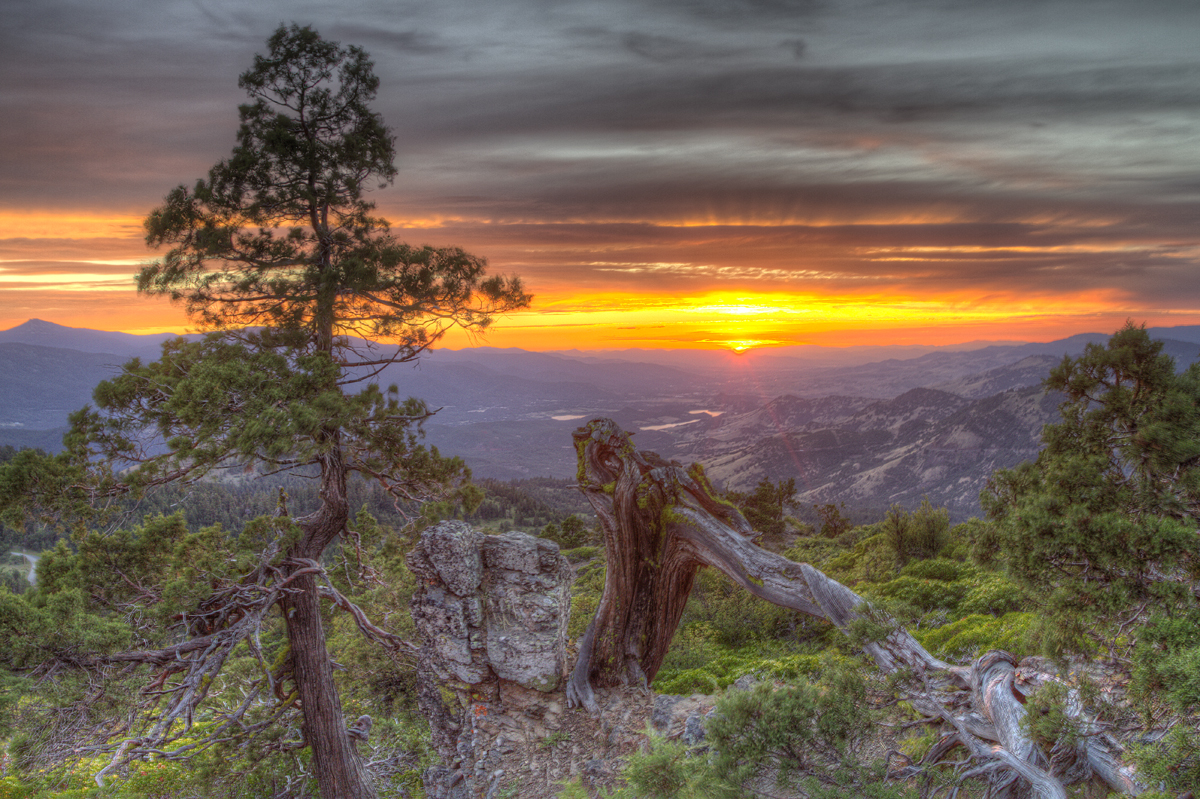
Hobbart Bluff, Soda Mountain Wilderness by Alan Hirschmugl
This week, at nearly midnight, while most of us were asleep, Congressional House Republicans on the Natural Resources committee quietly pushed through a last-minute amendment to sell off thousands of acres of your public lands in Nevada and Utah. No public input. No debate. No explanation. And no analysis, so it wasn’t even clear how much land they were talking about.
The amendment, slipped in by Reps. Mark Amodei (NV) and Celeste Maloy (UT), requires the Interior Department to sell off national public land in Nevada and Utah. While original reporting suggested the bill would only target 11,000 acres, further analysis suggests the amendment could target 500,000 acres in total — or more. Local conservation and Indigenous leaders are rightly pushing back on the amendment.
Corruption
But wait, it gets worse.
Rep. Bruce Westerman, the guy chairing this whole charade, recently bought stock in oil, gas, and mining companies—the exact corporations that would profit if this bill passes.
Westerman was even more unique for buying shares of companies that in many cases develop resources on public lands, an area over which his committee has jurisdiction. He bought stakes in British Petroleum, ConocoPhillips, Shell, Chevron, Suncor and Canadian Natural Resources Limited in the field of oil and gas. He purchased stock in Emerson Electric Company, Siemens and Cummins — corporations that support the oil and gas supply chain. And he acquired shares in mining giants Freeport-McMoRan, BHP and Rio Tinto.
When he got called out? He claimed an advisor did it “without his knowledge” and that he’s “in the process” of selling. How convenient.
A Polluter Wishlist
Meanwhile, this same bill slashes environmental protections, lowers fees for oil and gas drilling, and lets companies buy their way to fast-tracked permits with zero public accountability. It’s a polluter wishlist wrapped in a budget bill—and they passed it with no shame.
While the Republican members sat in silence, refusing to engage in any debate, Oregon was fortunate to have Rep. Maxine Dexter present and forcefully speaking out against this anti-environment, anti-public lands, and anti-public health agenda being passed by the committee.
A Trial Balloon
Oregon’s representatives on the committee, Dexter as well as Val Hoyle, both voted against selling off public lands. But Rep. Cliff Bentz voted for it—even though the lands are in another state, and that state’s own representative opposed the sale. In congressional circles, that’s not just controversial—it’s considered bad form.
Let’s be clear: while this amendment currently targets lands in Nevada and Utah, it opens the door to the wholesale privatization of public lands anywhere in the country. This is a test balloon. If we let it fly, they’ll be coming for more.
What You Can Do (Because They’re Hoping You Don’t)
If you want to go beyond the action form above, here are the next steps. The Senate is our best shot at stopping this disaster. Call your Senators and tell them NO to public land sales and NO to industry-written giveaways in the budget reconciliation bill.
Call your Representative, too. Especially if their name is Bentz, Westerman, Amodei, or Maloy. Let them know you’re paying attention—and that public lands are not theirs to auction off.
Spread the word. Post it. Share it. Shout it from the mountaintops they’re trying to drill into.
Public lands belong to the people
At Oregon Wild, we’ve been fighting to protect public lands for over 50 years. And we’ve seen some outrageous stuff. But this? A secretive midnight vote to sell off our public lands while the committee chair holds stock in the companies that would profit?
This is a new low.
We know our community won’t stand for it. You’ve shown up time and time again to defend wild places. Now’s the time to do it again.
Because public lands belong to the people—not politicians, not billionaires, and definitely not a bunch of fossil fuel shareholders cashing in behind closed doors.
Join Our
Newsletter.
Staying informed is the first step to becoming a public lands and native wildlife advocate.
Cookie Consent
We use cookies to improve your experience on our site. By using our site, you consent to cookies.
Cookie Preferences
Manage your cookie preferences below:
Essential cookies enable basic functions and are necessary for the proper function of the website.
Name
Description
Duration
Cookie Preferences
This cookie is used to store the user's cookie consent preferences.
30 days
Google reCAPTCHA helps protect websites from spam and abuse by verifying user interactions through challenges.
Name
Description
Duration
_GRECAPTCHA
Google reCAPTCHA sets a necessary cookie (_GRECAPTCHA) when executed for the purpose of providing its risk analysis.
179 days
Statistics cookies collect information anonymously. This information helps us understand how visitors use our website.
Google Analytics is a powerful tool that tracks and analyzes website traffic for informed marketing decisions.
Contains information about the traffic source or campaign that directed user to the website. The cookie is set when the GA.js javascript is loaded and updated when data is sent to the Google Anaytics server
6 months after last activity
__utmv
Contains custom information set by the web developer via the _setCustomVar method in Google Analytics. This cookie is updated every time new data is sent to the Google Analytics server.
2 years after last activity
__utmx
Used to determine whether a user is included in an A / B or Multivariate test.
18 months
_ga
ID used to identify users
2 years
_gali
Used by Google Analytics to determine which links on a page are being clicked
30 seconds
_ga_
ID used to identify users
2 years
_gid
ID used to identify users for 24 hours after last activity
24 hours
_gat
Used to monitor number of Google Analytics server requests when using Google Tag Manager
1 minute
_gac_
Contains information related to marketing campaigns of the user. These are shared with Google AdWords / Google Ads when the Google Ads and Google Analytics accounts are linked together.
90 days
__utma
ID used to identify users and sessions
2 years after last activity
__utmt
Used to monitor number of Google Analytics server requests
10 minutes
__utmb
Used to distinguish new sessions and visits. This cookie is set when the GA.js javascript library is loaded and there is no existing __utmb cookie. The cookie is updated every time data is sent to the Google Analytics server.
30 minutes after last activity
__utmc
Used only with old Urchin versions of Google Analytics and not with GA.js. Was used to distinguish between new sessions and visits at the end of a session.
End of session (browser)
Marketing cookies are used to follow visitors to websites. The intention is to show ads that are relevant and engaging to the individual user.
Facebook Pixel is a web analytics service that tracks and reports website traffic.